


Content
TL;DR
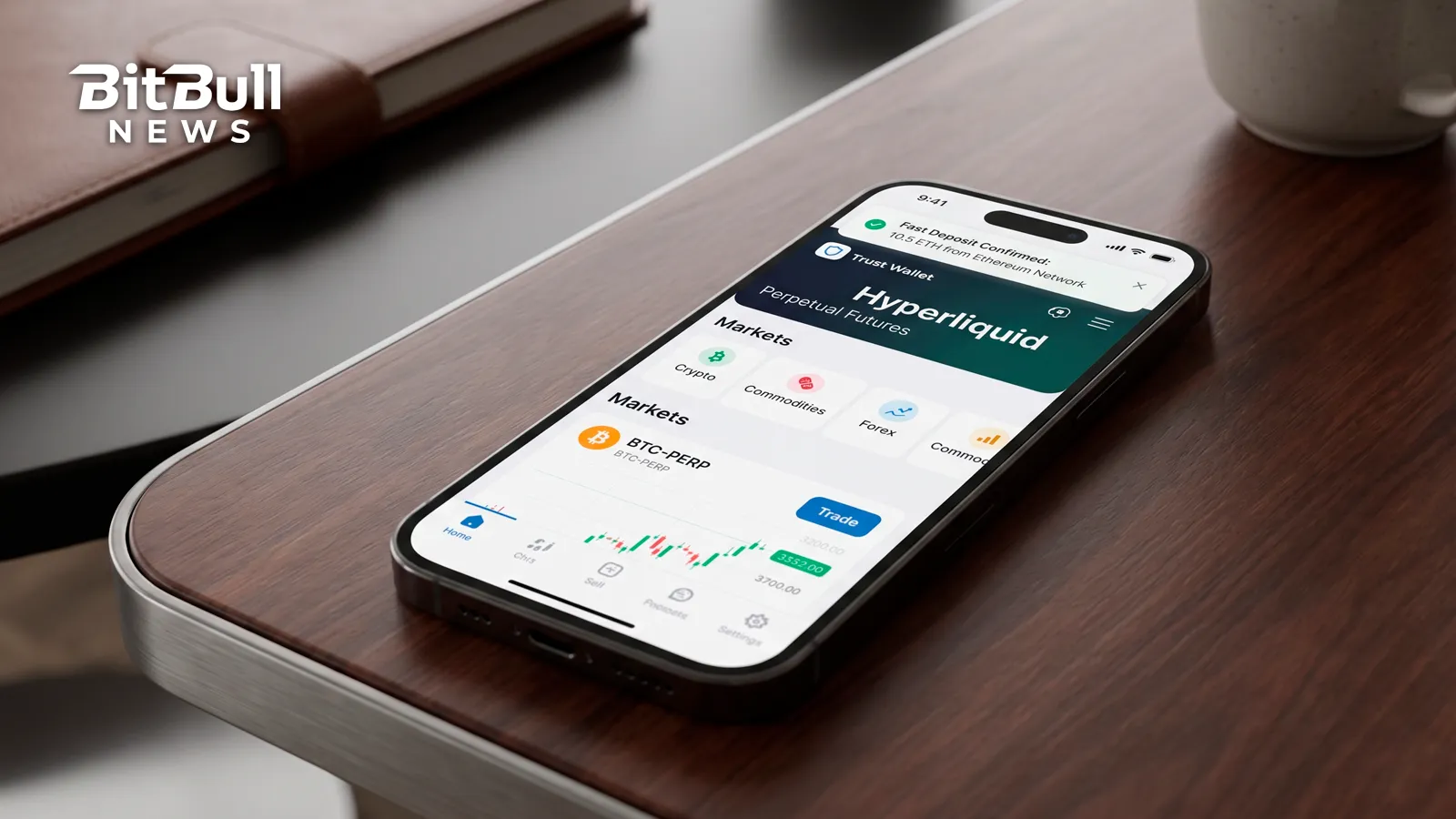
- Trust Wallet has integrated Hyperliquid, bringing perpetual futures trading deeper into its self-custody app.
- Eligible users can access long and short trading directly from the wallet interface.
- Hyperliquid supports 100+ perpetual markets, with max leverage varying by asset.
- The move turns Trust Wallet further into a trading hub, but it also brings liquidation, leverage and funding-rate risks closer to everyday wallet users.
Trust Wallet is bringing decentralized perpetual futures trading closer to its users.
The self-custody wallet has added Hyperliquid trading inside Trust Wallet, giving eligible users a more direct way to access onchain perps without moving into a separate centralized exchange flow. Simply put, Trust Wallet is no longer just helping users hold assets or swap tokens. It is becoming a front door into more advanced onchain trading.
Trust Wallet Is Moving Deeper Into Wallet-Native Trading
The key change is access.
Hyperliquid was already available to users who knew how to connect a wallet, bridge funds and trade through the protocol interface. Trust Wallet now reduces that friction by putting the experience closer to where users already manage their assets.
That matters because perpetual futures are one of the most active parts of crypto trading, but they are still hard for many users to access safely. Wallet-native integrations can make the product easier to use, but they also make risk management more important.
Trust Wallet’s own glossary says users can access perpetual futures through Hyperliquid and Aster DEX while retaining self-custody of funds. That is the product promise: faster access to leveraged markets without handing assets to a centralized exchange.
Hyperliquid Brings The Liquidity And Perps Stack
Hyperliquid has become one of the leading decentralized perpetual futures venues, built around an onchain order book and high-speed trading experience. Its documentation says the platform supports 100+ perpetual assets, with maximum leverage varying by asset from 3x to 40x.
That range is important. Perps let traders go long or short without owning the underlying asset, but leverage can erase margin quickly when the market moves the wrong way. The higher the leverage, the smaller the price move needed to trigger liquidation.
For Trust Wallet, Hyperliquid adds a more serious trading layer. For Hyperliquid, the integration adds another distribution channel into wallet-native users who may not start their trading journey directly inside the Hyperliquid app.
This fits the same broader shift seen in wallet-native prediction markets, where wallets are becoming discovery and execution surfaces rather than passive storage apps.
What Changed
Before this integration, Trust Wallet users could already interact with Hyperliquid through external flows and wallet connections.
Now the product is more directly available inside the wallet experience. That changes the user path. Instead of leaving the app, connecting elsewhere and managing trading access separately, eligible users can move closer to perps from the same interface they already use for assets, swaps and other onchain actions.
The bigger change is product positioning. Trust Wallet is pushing further into the role of a self-custody finance app, not just a crypto wallet. It already supports swaps, real-world asset access, prediction markets and other in-app financial tools. Hyperliquid adds a more active trading category to that stack.
Who It Affects Now
The first group affected is active Trust Wallet users who want access to decentralized perps without using a centralized exchange.
The second group is newer traders. This integration may make Hyperliquid easier to discover, but it also brings advanced products into a simpler interface. That is useful only if users understand leverage, margin, liquidation and funding costs before opening positions.
The third group is wallet competitors. More major wallets are turning into trading terminals, and perps are becoming one of the features that can define a power-user wallet experience.
The same trend is visible across onchain derivatives, where products like S&P 500 perpetual markets on Hyperliquid show how perps are moving beyond simple crypto pairs and into broader synthetic market access.
Why It Matters
This story matters because the wallet is becoming the new trading venue interface.
Users do not necessarily want to jump between exchanges, bridges, dApps and dashboards. They want one place to hold assets, find opportunities and act quickly. Trust Wallet’s Hyperliquid integration moves in that direction.
But the risk side is just as important. Perpetual futures are not spot trades. They use margin, funding rates and liquidation engines. A cleaner wallet interface does not make leverage safer by itself.
The next thing to watch is whether Trust Wallet users actually adopt Hyperliquid trading in meaningful numbers. If they do, wallet-native perps could become a standard feature across major self-custody apps. If usage stays limited, the integration will still show where wallets are heading — but not yet prove that mainstream users are ready for advanced derivatives inside the same app where they hold long-term assets.