


Content
TL;DR
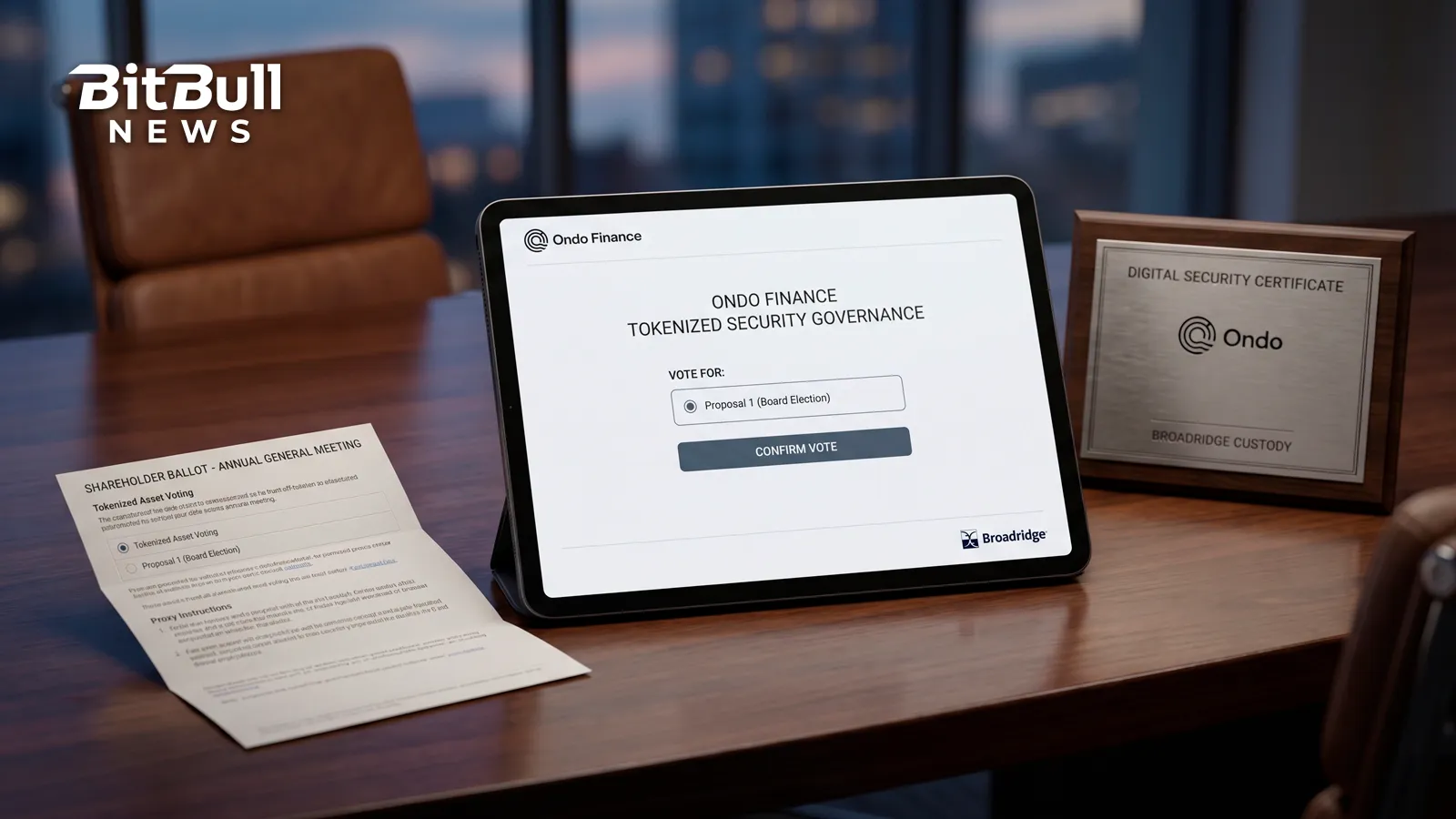
- Ondo Finance is partnering with Broadridge to bring proxy voting and investor communications to tokenized stocks and ETFs.
- Holders of more than 250 Ondo tokenized stocks and ETFs will be able to access voting, regulatory filings, prospectuses and other issuer materials.
- The tokens still do not make holders direct shareholders of the underlying securities; voting works as an expression of preferences to the issuer of Ondo GM Tokens.
- The move adds a missing governance layer to tokenized equities, which have mostly focused on trading access, liquidity and 24/7 market exposure.
Ondo Finance is adding a governance layer to its tokenized stock platform.
The company said it is working with Broadridge to bring proxy voting, regulatory filings and issuer communications to holders of more than 250 Ondo tokenized stocks and ETFs. Simply put, Ondo is trying to make tokenized equities act less like synthetic price wrappers and more like real capital-markets products with investor participation built in.
Ondo Is Moving Tokenized Stocks Beyond Price Exposure
The key change is not just another tokenized asset listing. Ondo Global Markets already gives users onchain exposure to public stocks and ETFs. What changes now is that tokenholders will get a way to access proxy voting workflows and official investor materials through Broadridge’s infrastructure.
That matters because tokenized stocks have a credibility gap. They can offer 24/5 trading, fractional access, blockchain settlement and DeFi compatibility, but many products still fall short on the boring parts that traditional investors expect: filings, voting, governance notices and corporate actions.
Ondo’s own documentation makes the distinction clear. Its tokenized stocks are designed to provide economic exposure to underlying securities, not direct title to those shares. The new Broadridge integration does not erase that legal distinction, but it gives tokenholders a more formal way to express voting preferences on the shares held by the Ondo GM issuer.
This fits the broader shift BitBullNews covered in US bank regulators’ capital guidance for tokenized securities: tokenized markets are becoming more serious when they start matching traditional-market rules, rights and operational expectations.
Broadridge Brings The Missing Governance Infrastructure
Broadridge is not a random Web3 vendor in this story. It already sits deep inside traditional investor communications, proxy voting and market infrastructure. Earlier this month, the company said it had extended its governance platform to support tokenized equities, starting with proxy voting and corporate actions.
That earlier rollout with Galaxy gave this Ondo deal more context. Galaxy CEO Mike Novogratz said at the time that proxy voting is a core feature of equity ownership and that bringing it onchain for a public company is no longer theoretical. That comment matters here because Ondo is now applying a similar governance layer to third-party tokenized stocks and ETFs.
Broadridge says its system can connect digital wallets to proxy workflows, let investors receive materials, confirm holdings and submit votes with a verifiable record. For issuers and intermediaries, the bigger benefit is operational: tokenized holdings can be brought into the same governance view as traditional registered and beneficial holdings.
What Changed
Before this integration, Ondo’s tokenized stocks mainly solved for access and market structure: onchain exposure, fractional holdings, supported chains and liquidity.
Now the product is moving closer to the post-trade and ownership layer. Voting, filings and issuer communications are not flashy, but they are core pieces of equity-market infrastructure. Without them, tokenized stocks risk looking like tradable wrappers rather than serious market instruments.
The important nuance is that tokenholders still do not receive direct shareholder rights from the companies behind the underlying shares. The voting capability lets them express preferences to the Ondo GM issuer about how the issuer should vote the shares it beneficially owns. That distinction matters for investors, platforms and regulators.
Who It Affects Now
The immediate audience is non-U.S. investors using Ondo Global Markets, since the platform is not available in the United States and remains subject to jurisdictional restrictions.
It also matters for wallets, exchanges, custodians and DeFi protocols that support Ondo tokenized stocks. If tokenized equities start carrying more governance and disclosure workflows, integrations will need to handle more than transfers, pricing and balances.
For issuers and market infrastructure firms, the message is also clear: tokenization is moving into the same operational problems that traditional finance already solved over decades. That includes investor communications, recordkeeping, voting, disclosures and corporate actions.
That same pattern is showing up across institutional tokenization. BitBullNews also covered how Bloomberg and Kaiko brought licensed data onchain, another example of traditional-market infrastructure moving into blockchain workflows instead of crypto rebuilding everything from scratch.
Why It Matters
This story matters because tokenized equities need more than 24/7 trading to become credible. If they want to compete with traditional brokerage products, they also need investor protections, disclosures, voting workflows and clear legal treatment.
Ondo and Broadridge are trying to close one of those gaps. The move does not make tokenized stock holders identical to direct shareholders, and that limitation should stay front and center. But it does move the product category closer to the standards investors expect from real securities markets.
The next thing to watch is whether users actually engage with voting and issuer materials, not just trading. If participation is meaningful, governance could become a competitive feature for tokenized equity platforms. If not, it may remain a compliance-friendly feature that looks good on paper but changes little in practice.