


Content
TL;DR
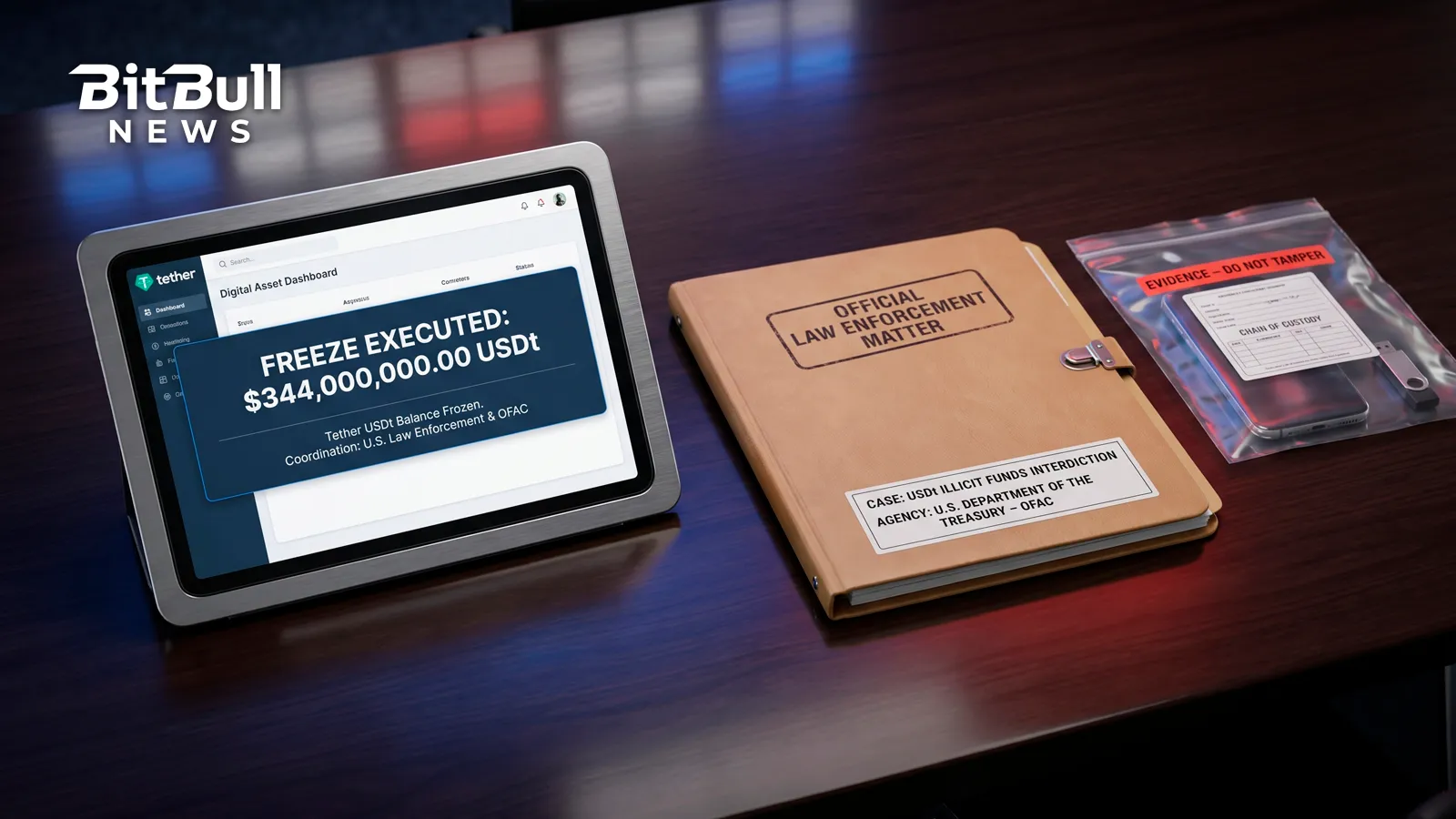
- Tether said it froze more than $344 million in USDT across two addresses in coordination with OFAC and U.S. law enforcement.
- The company said the wallets were tied to unlawful conduct and that the freeze blocked further movement of funds.
- Tether also said it now works with more than 340 law enforcement agencies across 65 countries and has supported over 2,300 cases globally.
- The move adds to a broader pattern of U.S. enforcement that increasingly treats stablecoins as traceable and seizable, not outside the reach of sanctions or fraud investigations.
Tether just carried out one of its biggest public enforcement actions to date.
On April 23, the stablecoin issuer said it helped freeze more than $344 million in USDT across two wallet addresses after U.S. authorities identified the funds. Tether said it took the action in coordination with OFAC and U.S. law enforcement, and that the freeze stopped the assets from moving further.
Simply put, this is a reminder that USDT is not just a dollar token moving around crypto markets. It is also a financial product whose issuer can step in, lock assets, and work directly with investigators when sanctions evasion or other illicit activity enters the picture.
Tether Is Leaning Harder Into Its Role As An Enforcement Gatekeeper
In the announcement, Tether said it can restrict assets when wallets are linked to sanctions evasion, criminal networks, or other unlawful conduct. The company said that kind of coordination has become a routine part of how it responds to lawful requests from authorities in the U.S. and abroad.
Tether also used the announcement to show scale. It said it now works with more than 340 law enforcement agencies in 65 countries, has supported more than 2,300 cases globally, and has frozen more than $4.4 billion in assets overall, including more than $2.1 billion tied to U.S. authorities.
That matters because it pushes Tether further beyond the role of a simple stablecoin issuer. In practice, it is acting more like a compliance chokepoint inside crypto’s dollar system, especially when investigators want fast action before funds move again. That reading is based on Tether’s described coordination model and freeze record.
This Fits A Wider U.S. Push Against Sanctions Evasion And Crypto Fraud
Tether’s statement points to earlier U.S. cases involving roughly $61 million and about $225 million tied to pig-butchering fraud investigations. The Justice Department separately announced a seizure of more than $61 million in Tether in February 2026 and a nearly $9 million Tether seizure in a pig-butchering case in November 2023.
Treasury has also made clear that stablecoins sit squarely inside its sanctions focus. In December 2024, OFAC said a money-laundering network linked to Russian sanctions evasion used dollar-backed stablecoins, including Tether, and Treasury has repeatedly highlighted digital assets as a channel for sanctions evasion and illicit finance.
That gives today’s freeze a bigger market angle. This was not just Tether cleaning up suspicious wallets on its own. It fits a broader U.S. pattern in which stablecoin issuers, law enforcement, and sanctions authorities increasingly work together to freeze or seize funds before they disappear deeper into the system. That conclusion is supported by the cited Treasury and DOJ actions.
Public Blockchains Are Helping Investigators Move Faster
Tether leaned into one familiar argument in the release: public blockchains leave a visible trail. The company said transactions can be followed, wallets can be flagged, and assets can be frozen before they move further, which it framed as an advantage over cash.
That point lines up with how recent U.S. cases have played out. DOJ announcements in fraud matters have repeatedly described investigators tracing Tether or other crypto assets through wallet activity, then moving to seize or freeze funds once they identified the addresses involved.
Why it matters
This story matters because it shows where stablecoin market structure is heading. The bigger USDT becomes in global payments and trading, the more important issuer-level controls become for regulators, banks, and institutions watching compliance risk.
It also sharpens a trade-off the market keeps circling around: stablecoins may run on open blockchains, but the biggest dollar tokens still depend on centralized issuers with the power to block funds. For regulators, that is a feature. For parts of crypto that want censorship resistance, it is the opposite. Either way, this freeze shows that enforcement reach is now a real part of the stablecoin story, not a side note.