


Content
TL;DR
- OKX, BlackRock and Standard Chartered have launched a joint framework that lets eligible institutions use BlackRock’s BUIDL as trading collateral.
- The setup allows clients to hold BUIDL with Standard Chartered while using it for trading on OKX Middle East.
- BUIDL will be treated as fungible with USD, USDC and other dollar-based collateral inside OKX’s margin system.
- The real shift is that tokenized Treasuries are moving from passive yield products into active market infrastructure.
OKX, BlackRock and Standard Chartered are trying to give tokenized real-world assets a more practical role in institutional crypto trading.
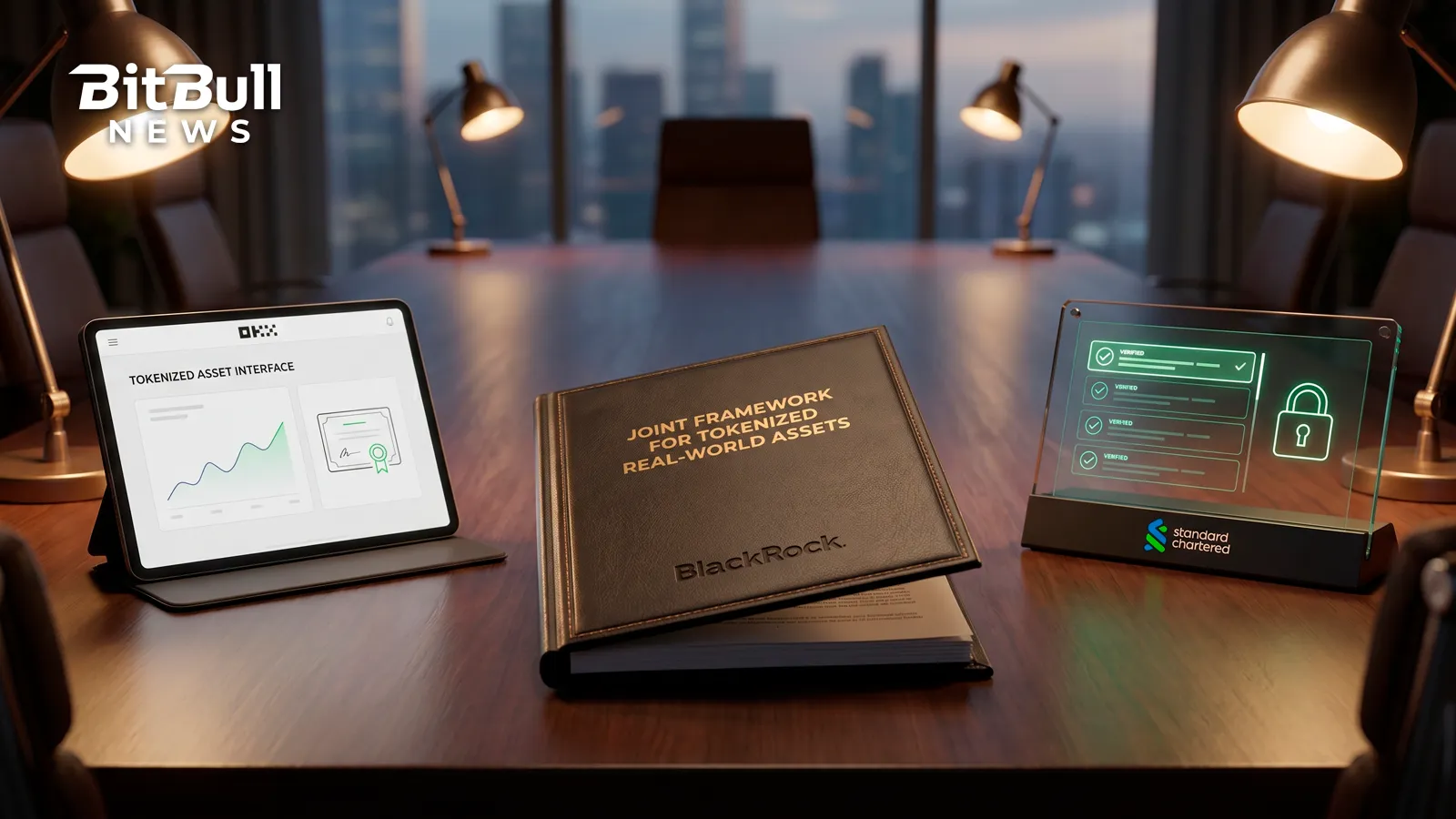
Under the new joint framework for tokenized real-world assets, eligible institutional and VIP clients can use BlackRock’s BUIDL tokenized Treasury fund as collateral while trading on OKX Middle East. Standard Chartered acts as the off-exchange custodian, while OKX manages margin and trading workflows.
Simply put, this is not just another RWA announcement. It turns a yield-bearing tokenized fund into something closer to working trading capital.
BUIDL Is Moving From Yield Product To Margin Asset
The key change is utility.
BUIDL already gives qualified investors onchain exposure to a cash-like portfolio backed by U.S. Treasury bills, repo agreements and cash. But in this new structure, institutions can use that position as collateral rather than leaving it idle in a wallet or fund account.
That matters because institutional traders care about capital efficiency. If a tokenized Treasury fund can keep earning yield while also supporting trading activity, it starts to look less like a passive RWA product and more like part of the collateral stack.
This is the same direction the market has been moving with BUIDL trading through DeFi rails: tokenized funds are no longer just about putting traditional assets onchain. The next phase is making those assets tradable, usable and connected to liquidity.
Standard Chartered Gives The Framework A Bank Custody Layer
The structure also matters because the collateral does not have to sit directly on the exchange.
Standard Chartered holds the assets off-exchange, while OKX handles real-time margining and liquidation processes through its own risk systems. That separation speaks directly to one of the biggest institutional concerns in crypto: access to exchange liquidity without concentrating too much risk on the venue itself.
This is where the framework looks more like traditional prime brokerage logic. Institutions want to trade, but they also want independent custody, cleaner collateral controls and stronger protection against counterparty risk.
The model builds on OKX and Standard Chartered’s earlier collateral mirroring program, which already allowed institutions to use crypto and tokenized money market funds as off-exchange collateral. The BlackRock integration adds a larger asset-management name and a more recognizable tokenized Treasury product to that setup.
What Changed
Before this framework, BUIDL was mainly useful as a tokenized cash-management and yield product.
Now it can sit inside a trading collateral workflow on OKX Middle East. That changes the role of the asset. It is no longer only a tokenized version of short-term Treasury exposure; it can also help institutions manage margin without giving up custody control or yield economics.
The other change is competitive. Exchanges are starting to compete on collateral quality and custody structure, not only fees, pairs or liquidity. That puts more pressure on trading venues to support tokenized money market funds, stablecoins and bank-custodied collateral in one integrated flow.
A similar market-structure trend is already visible in institutional settlement networks, where firms are using custody-first trading infrastructure to reduce pre-funding and counterparty risk.
Who It Affects Now
The immediate audience is institutional and VIP clients trading through OKX Middle East.
For those clients, the practical benefit is clear: they may be able to use BUIDL as margin while keeping the asset with a global systemically important bank. That can help reduce venue exposure and improve the use of balance-sheet capital.
For BlackRock, the framework gives BUIDL another use case beyond holding and secondary liquidity. The fund becomes part of the market plumbing for crypto trading.
For Standard Chartered, the deal strengthens its role as a bridge between traditional custody and digital asset market infrastructure. The bank is not just holding assets; it is helping make tokenized collateral operational inside trading workflows.
Why It Matters
This story matters because it shows tokenized Treasuries becoming useful in the places institutions actually need them: collateral, margin, liquidity and risk management.
The RWA market has spent years talking about bringing real-world assets onchain. This deal pushes the conversation further. The question is no longer whether a Treasury fund can be tokenized. The question is whether that tokenized fund can work inside live institutional trading systems without breaking custody, compliance or risk controls.
The next thing to watch is adoption. If institutions actually use BUIDL as margin at scale, other exchanges will face pressure to support similar tokenized collateral models. If usage stays limited, this will look more like a high-profile framework than a true market-structure shift.
The bigger signal is still important: tokenized RWAs are moving from “hold this onchain” to “use this inside financial workflows.” That is where the real institutional adoption test begins.