


Content
TL;DR
- Kraken is leaning harder into systematic trading, using its recent API Unlocked series to explain how traders use different market data feeds for different strategies.
- The exchange’s setup splits jobs across REST, WebSocket, and FIX, with WebSocket handling real-time data and REST supporting historical and request-response workflows.
- Kraken is also highlighting Level 3 order book data as a key edge for traders who care about queue position, fill probability, and market microstructure.
- The broader message is clear: crypto exchanges are not just competing on listings and fees anymore. They are competing on data quality, execution tooling, and latency. This last point is an inference based on Kraken’s product materials and infrastructure updates.
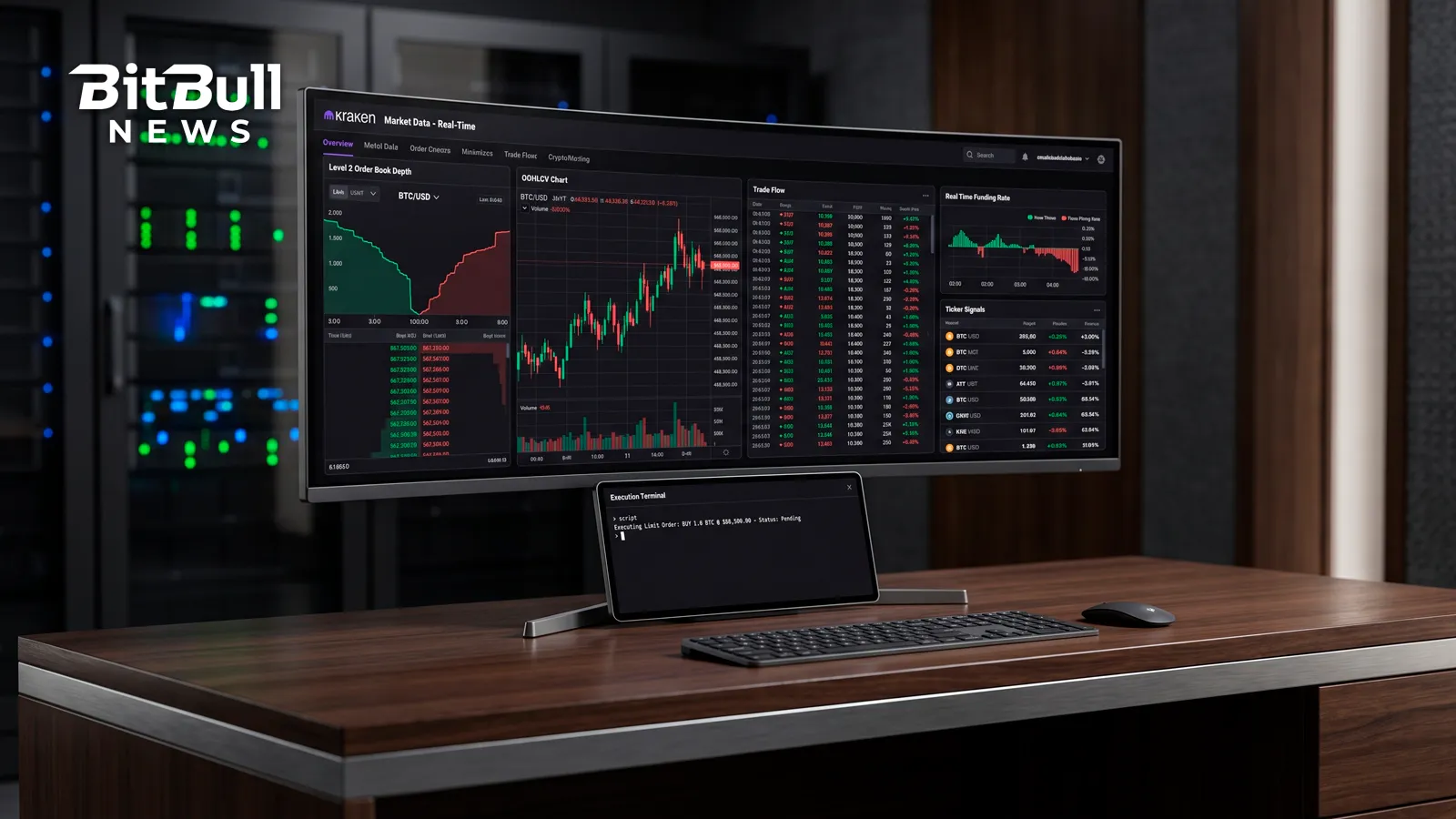
Kraken is making a more direct pitch to systematic traders, and the story is less about flashy features than about market data and execution plumbing. In its recent API Unlocked posts, the exchange has been laying out how automated traders use its stack across spot and futures, with different feeds serving different jobs from signal generation to execution and post-trade analysis.
Simply put, Kraken wants traders to think about its API less as a generic exchange interface and more as a real trading stack. The company is framing ticker feeds, OHLC data, order book depth, Level 3 data, and low-latency connectivity as pieces of one system built for systematic strategies.
Kraken Is Breaking Market Data Down By Actual Trading Use Case
Kraken’s own materials show a clear division of labor across feeds. In the momentum-focused entry of its API Unlocked series, the exchange says systematic traders can use WebSocket v2 ticker feeds for real-time signal generation, while OHLC data is better suited to strategies that work off closed intervals. Kraken also says OHLCV history for major pairs such as BTC/USD stretches back to 2013, which matters for backtesting across multiple market cycles.
That sounds basic, but it is actually the useful part of the pitch. Kraken is not just saying “we have market data.” It is spelling out which feed is meant for which style of strategy: ticker for directional models, book and Level 3 for execution-sensitive systems, and REST history for research and backtests. This interpretation is based on Kraken’s API Unlocked posts and API documentation.
Level 3 Data Is The Real Institutional Hook
Kraken keeps coming back to Level 3 market data, and that is probably the most important detail for more advanced traders. Its API docs describe Level 3 as visibility into individual orders resting in the book, not just aggregated price levels. Kraken says that level of detail lets traders analyze queue priority, resting times, fill probability, liquidity conditions, and broader market microstructure.
In other words, this is the feed for traders who care about how the book is actually built, not just where the best bid and ask sit at a given second. That gives Kraken a stronger story for more sophisticated market-making, execution, and stat-arb setups, where microstructure matters more than a simple top-of-book feed. This final sentence is an inference based on Kraken’s stated Level 3 use cases.
Kraken Is Also Cleaning Up The Pipework Around The Data
Kraken’s WebSocket documentation shows the exchange is steering developers toward WebSocket v2, which it says has a cleaner, FIX-like design, normalized JSON payloads, more readable symbols, RFC3339 timestamps, and a more consistent structure for easier integration. The docs also say the level3 channel streams individual order-level updates from the central limit order book.
On the slower side of the stack, Kraken’s REST docs position REST as the home for market data, account data, trading, funding, and other request-response workflows. That is standard on paper, but combined with WebSocket and FIX it reinforces Kraken’s main point: different protocols exist for different latency and workflow needs.
This Fits Kraken’s Bigger Push Into Low-Latency Trading Infrastructure
The market data message also lines up with Kraken’s recent infrastructure moves. Earlier this month, the exchange announced colocation access through Liquidity Connect in Equinix London, saying clients can connect with sub-millisecond latency to support latency-sensitive trading strategies.
Put together, that makes the broader event easier to read. Kraken is not just publishing API explainers for content marketing. It is trying to tighten its position with serious systematic traders by pairing more explicit market-data segmentation with lower-latency connectivity and deeper book transparency. This is an inference based on Kraken’s API series, docs, and colocation launch.
Why It Matters
This matters because crypto venue competition is shifting. Listings still matter and fees still matter, but for systematic traders the bigger question is whether an exchange can deliver clean feeds, usable protocol design, deeper book visibility, and infrastructure that holds up in production. Kraken is clearly trying to win on that layer too. This interpretation is based on Kraken’s official API and infrastructure materials.
The next thing to watch is whether more exchanges start making the same pitch in a more explicit way. If they do, market data quality and execution plumbing could become a much bigger part of how professional crypto flow gets routed, especially as more institutional and systematic strategies move deeper into 24/7 digital asset markets. This final paragraph is an inference based on Kraken’s recent positioning around APIs, Level 3 data, and low-latency access.