


Content
TL;DR
- Aurelion has committed 10,000 XAU₮, worth about $48 million, to XAUE.
- The company will still hold 33,318 XAU₮ in total, with 10,000 staked to XAUE and 23,318 left unstaked.
- XAUE is a new yield-bearing gold protocol built for verified institutional participants.
- The move turns part of Aurelion’s tokenized gold treasury from a passive reserve into a more active RWA strategy.
Aurelion is putting part of its tokenized gold treasury to work.
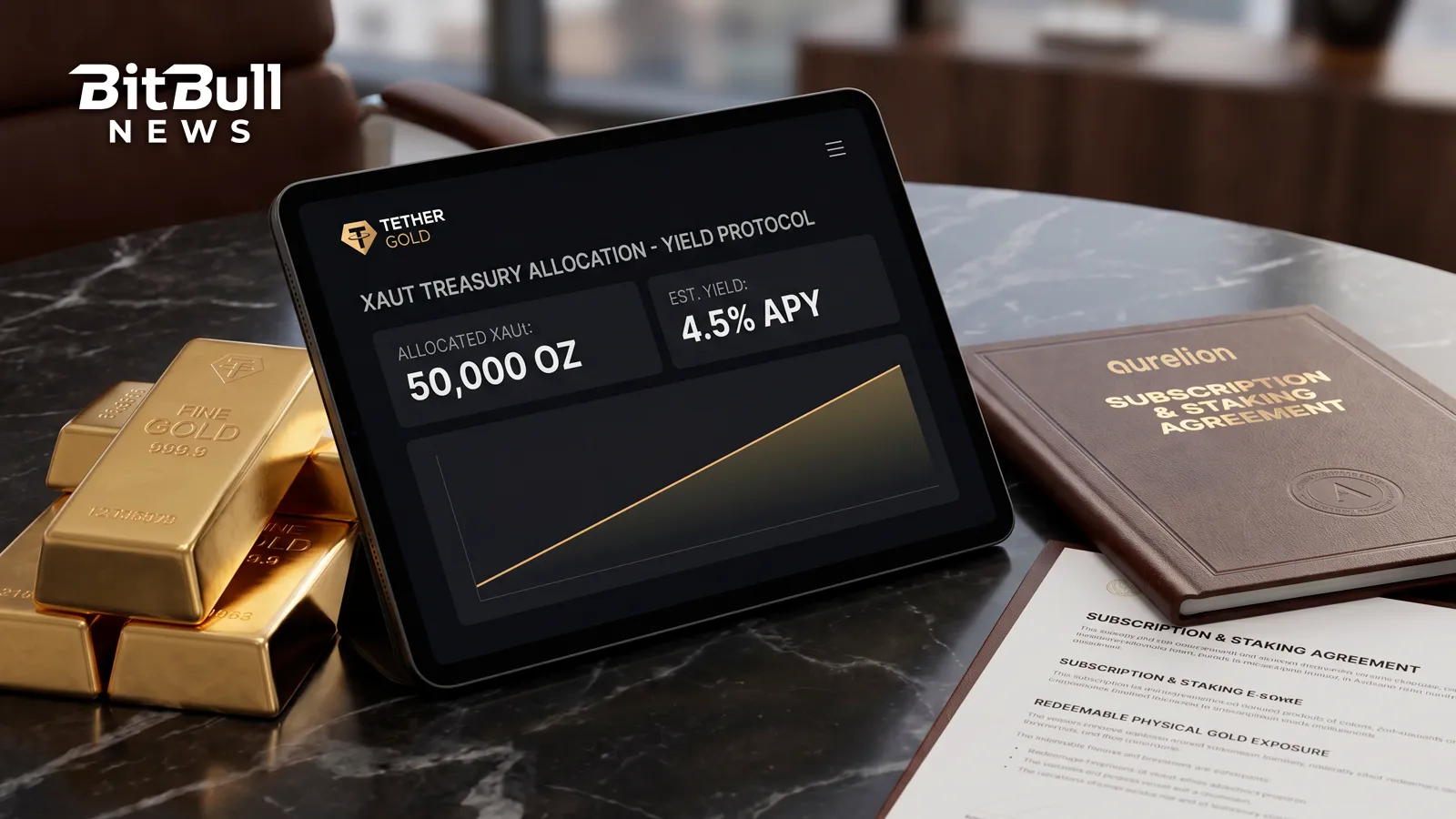
The Nasdaq-listed company said it has committed 10,000 units of Tether Gold, or XAU₮, to XAUE, a new protocol designed to generate yield on tokenized gold holdings. Aurelion valued the allocation at about $48 million, based on the April 23 XAU₮ price of $4,719.15 per troy ounce.
Simply put, Aurelion is no longer treating all of its gold exposure as a static reserve. It is moving about 30% of its XAU₮ position into a product that aims to keep gold exposure while adding yield.
Aurelion Is Turning Part Of Its Gold Treasury Into A Productive Asset
Aurelion will still hold 33,318 XAU₮ after the allocation. The difference is how that position is now split: 10,000 XAU₮ will sit in XAUE, while 23,318 XAU₮ will remain unstaked.
That is the key change. Aurelion started with tokenized gold as a balance-sheet reserve. Now it is testing whether part of that reserve can also produce returns inside an institutional RWA protocol.
The move builds on Aurelion’s wider tokenized gold strategy. The company previously bought 33,318.32 XAU₮ for about $134.15 million in October 2025 and later said XAU₮ had become its primary treasury reserve asset.
XAUE Wants To Make Tokenized Gold More Useful Onchain
XAUE launched earlier this week as a yield-bearing gold token designed as a “Treasury Layer” for XAU₮. Aurise Foundation says the product is built for qualified institutional participants and uses a gold-denominated yield model.
The idea is not to pay yield as a separate reward stream. Instead, XAUE aims to reflect returns through a growing amount of gold backing each XAUE token over time. That makes the product closer to a compounding gold wrapper than a simple tokenized gold holding.
This is where the story gets more interesting for the RWA market. Tokenized gold already improves transferability. XAUE is trying to add capital efficiency on top of that by turning gold into collateral that can potentially move through onchain financial markets.
The Trade-Off Is Yield Versus New Risk
The pitch is clear: keep gold exposure, deploy it more efficiently, and earn returns measured in gold units. But this is not the same risk profile as simply holding XAU₮.
Aurelion’s own disclosure says yield from XAUE is not guaranteed. It also points to risks tied to the XAU₮-to-XAUE exchange ratio, institutional lending activity, smart contract vulnerabilities, service providers, regulation, and possible liquidity constraints on redemption.
That is the real tension in this story. XAUE tries to make gold more productive, but the extra utility comes with more moving parts. For institutions, the question is not only whether gold can earn yield. It is whether that yield is worth the added protocol, liquidity, and counterparty risk.
Who It Affects Now
The immediate audience is narrow but important: tokenized gold treasuries, RWA funds, institutional DeFi desks, and allocators looking for collateral that can do more than sit idle.
For Aurelion, this is a treasury-management decision. For XAUE, it is an early credibility test. For the broader RWA market, it shows how the sector is moving from “put the asset onchain” to “make the asset usable inside financial workflows.”
Why It Matters
This story matters because it pushes tokenized gold into the same conversation that stablecoins and tokenized Treasuries already occupy: not just ownership, but utility.
Gold has long worked as a store of value, but it has usually been passive. XAUE is trying to change that by turning tokenized gold into an asset that can generate yield and potentially serve as collateral inside onchain finance.
The next thing to watch is performance and transparency. If XAUE can show consistent gold-denominated returns, clean redemptions, and strong risk reporting, Aurelion’s allocation could look like an early move into a new RWA category. If liquidity, risk controls, or disclosures fall short, the market will treat yield-bearing gold less like infrastructure and more like another wrapped-asset experiment.