


Content
TL;DR
- Ethereum Foundation finalized a 10,000 ETH OTC sale to BitMine at an average price of $2,387.
- The deal is worth about $23.87 million and will fund core EF operations, protocol R&D, ecosystem development and community grants.
- The onchain transfer will come from an Ethereum Foundation Safe multisig wallet.
- The sale follows EF’s treasury policy, which set a framework for funding operations through structured treasury management.
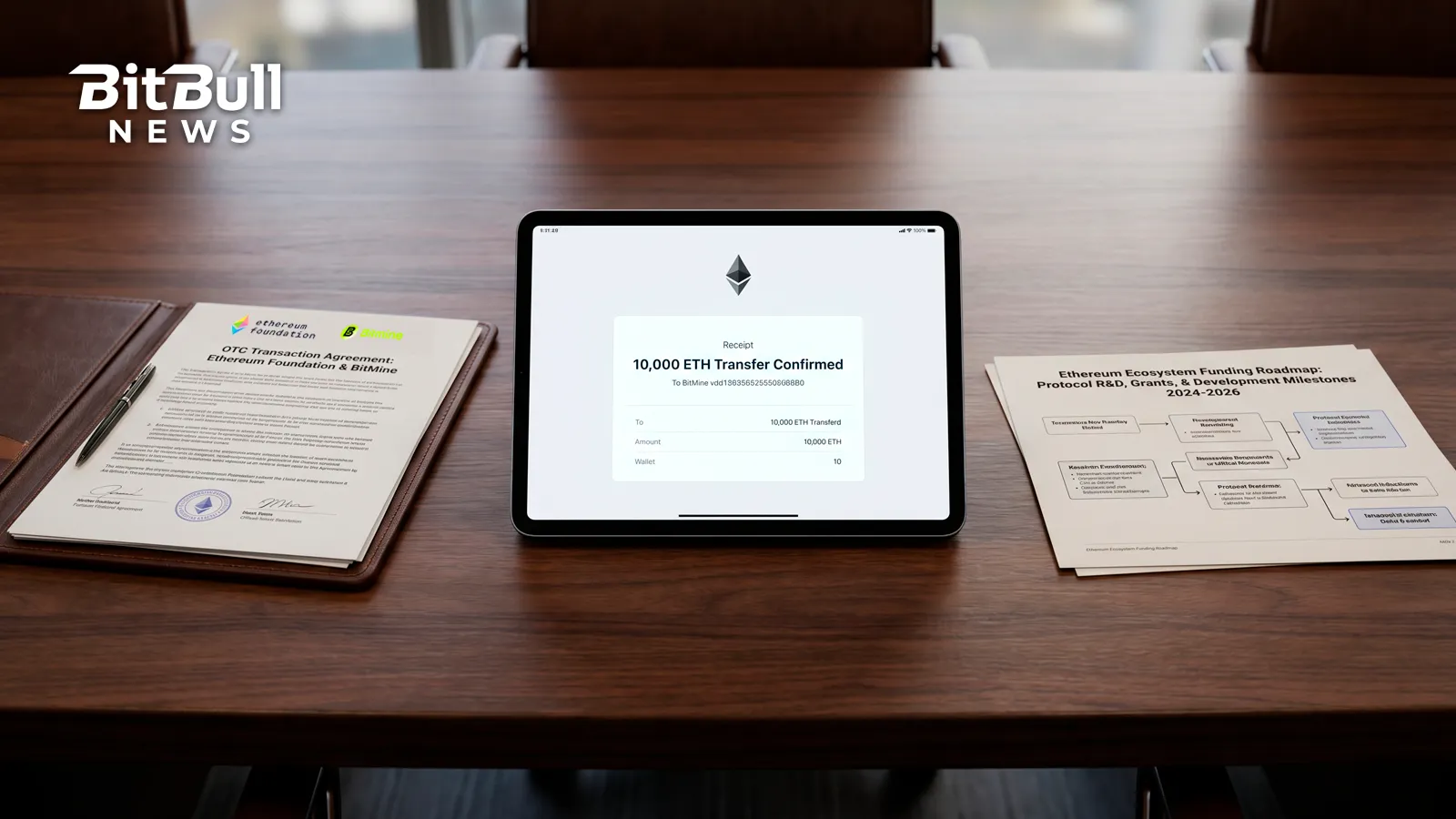
Ethereum Foundation has finalized the terms of a 10,000 ETH over-the-counter sale to BitMine at an average price of $2,387, according to an Ethereum Foundation post on X.
The deal values the sale at roughly $23.87 million. Simply put, EF is converting part of its ETH treasury into operating capital, but doing it through a direct OTC transaction instead of selling into public exchange order books.
Ethereum Foundation Is Turning Treasury Policy Into Action
EF said the sale will fund its core operations and activities, including protocol research and development, ecosystem development, community grant funding and more. The foundation also said the onchain transaction will come from its Safe multisig wallet at 0x9fC3dc011b461664c835F2527fffb1169b3C213e.
The important change is not only the size of the sale. It is the process. EF is showing that its treasury policy is now an active operating framework, not just a governance document. The policy says EF will periodically calculate how much fiat-denominated reserve it needs for operating expenses and determine how much ETH, if any, should be sold over the next three months.
That matters because EF has long faced criticism whenever it sells ETH. OTC sales give the foundation a cleaner path: it can fund development without creating the same visible sell pressure that exchange-based sales usually bring.
BitMine Is Becoming A Regular Buyer In Ethereum’s Treasury Market
BitMine is not a random OTC counterparty. The company has become one of the largest corporate ETH treasury buyers in the market and has built its strategy around accumulating and staking Ether.
In its latest company update, BitMine said it held 4.976 million ETH as of April 19, along with total crypto, cash and investment holdings of $12.9 billion. The company said that position represented more than 4% of ETH supply and 82% of its stated “Alchemy of 5%” goal.
That gives this sale a more specific market angle. EF is not just selling ETH to raise cash. It is selling directly into a corporate treasury model that treats ETH as a long-term balance-sheet asset, similar to how some public companies built bitcoin treasury strategies.
This also connects to the broader crypto treasury management trend, where foundations, protocols and public companies are trying to make large token balances more useful without losing strategic exposure.
Tom Lee’s Ethereum Thesis Adds Context To The Buyer Side
BitMine chairman Tom Lee has been one of the loudest public supporters of the corporate ETH treasury trade. In an April 20 BitMine update, he said Ethereum continues to benefit from two major tailwinds: Wall Street tokenizing assets on blockchain rails and AI systems needing public, neutral blockchains.
That view helps explain why BitMine keeps showing up as a natural buyer for EF’s OTC sales. The company is not trading around a short-term headline. It is building a large ETH position around a broader thesis that Ethereum can become core financial infrastructure.
For EF, that buyer profile matters. Selling to a long-term treasury holder is very different from dumping liquidity into the open market. It keeps the transaction more orderly and places the ETH with a buyer that publicly wants more exposure, not less.
What Changed
The key change is that EF’s treasury management is becoming more predictable and more institutional.
Instead of treating each ETH sale as an isolated event, the foundation is now tying sales to a published framework: core operations, runway, grants and ecosystem funding. That makes the action easier for the market to read, even if some holders still dislike seeing EF reduce ETH reserves.
The sale also reinforces a second trend: corporate ETH treasuries are becoming a real liquidity channel. BitMine’s scale means EF can move meaningful size without relying only on exchanges, market makers or fragmented DeFi liquidity.
Who It Affects Now
The most immediate impact is on Ethereum builders and grantees. EF says the proceeds support protocol R&D, ecosystem development and community grants, which means this sale helps fund the teams and programs that keep Ethereum’s roadmap moving.
It also affects ETH investors watching foundation wallets. Large EF transfers often trigger market anxiety, but an OTC sale with a named buyer and stated purpose gives the market more context than an unexplained exchange deposit.
For corporate treasury firms, the deal is another signal that ETH is no longer just an exchange-traded asset. It is becoming something large buyers source directly, custody, stake and hold as part of a public-market strategy. That is also why Ethereum staking remains part of the bigger institutional conversation around productive ETH exposure.
Why It Matters
This sale matters because it shows how Ethereum’s core funding model is changing. EF still needs to pay for research, grants and ecosystem work, but it is now doing that through a more transparent treasury framework and direct institutional transactions.
The next thing to watch is the onchain transfer from EF’s Safe multisig and whether BitMine discloses the purchase in its next treasury update. If these direct deals keep repeating, OTC sales could become the default way EF funds operations while reducing open-market noise.
The bigger question is whether the community accepts that trade-off. EF needs sustainable funding, but ETH holders want confidence that treasury sales are disciplined, limited and clearly connected to Ethereum’s long-term growth. This transaction gives the market more clarity than a blind sale — but it also keeps the spotlight on how EF manages one of the most important treasuries in crypto.