


Content
TL;DR
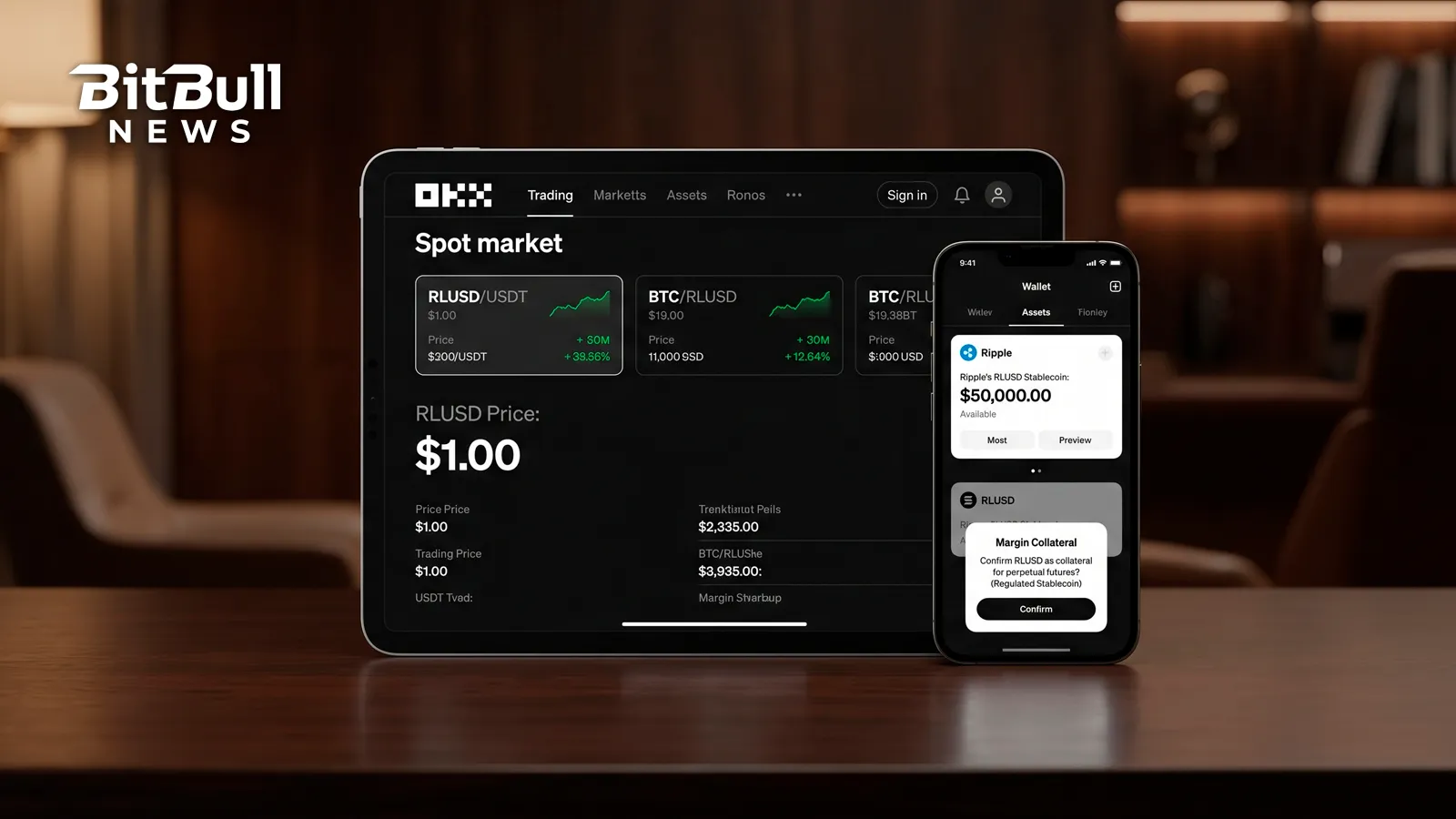
- OKX and Ripple are expanding RLUSD access across more than 280 spot trading pairs.
- The stablecoin can also be used as institutional-grade margin collateral for derivatives, including perpetual futures where available.
- Deposits and withdrawals are enabled through the XRP Ledger, with direct minting and redemption designed to support liquidity access.
- The move shifts RLUSD from a payments-focused stablecoin story into a broader trading, collateral and exchange-liquidity story.
OKX and Ripple are giving RLUSD a bigger role inside crypto trading infrastructure.
The two companies are expanding RLUSD access across more than 280 spot pairs and derivatives collateral use, giving traders another dollar-based asset for spot markets, margin management and exchange liquidity. Simply put, RLUSD is moving beyond “Ripple’s stablecoin” and deeper into the actual places where crypto liquidity gets routed.
RLUSD Is Moving From Listing To Trading Utility
The key change is not just that OKX supports RLUSD. It is how broadly the stablecoin can now be used.
RLUSD will be available across more than 280 spot pairs, while eligible users can also use it as margin collateral for derivatives, including perpetual futures where available. That matters because stablecoins become more useful when they are not trapped inside one narrow pair or one payment use case.
For traders, the practical value is capital efficiency. If RLUSD can sit inside OKX’s unified order book and support both spot and derivatives activity, users can manage positions without constantly moving funds between separate products or collateral buckets.
This is the same broader direction visible across stablecoin market structure: the most important stablecoins are no longer judged only by supply. They are judged by where they can move, what they can collateralize and how easily traders can deploy them.
XRP Ledger Support Gives The Deal A Ripple-Native Angle
The XRP Ledger piece is important. OKX and Ripple say RLUSD deposits and withdrawals are enabled through XRPL, with direct minting and redemption supporting more consistent liquidity access.
That gives the partnership a stronger Ripple-native angle than a simple centralized-exchange listing. RLUSD was designed to operate across the XRP Ledger and Ethereum, but XRPL support connects the stablecoin more directly to Ripple’s core ecosystem and to users who already rely on XRP-based settlement flows.
The product logic is clear: XRP remains the volatile bridge asset, while RLUSD brings a dollar-denominated unit for payments, settlement and collateral. Together, they give Ripple a two-asset stack: one asset for liquidity movement and another for price-stable value transfer.
Ripple Wants RLUSD To Compete On Trust And Use Case
Ripple has positioned RLUSD as an enterprise-grade stablecoin backed by cash, U.S. Treasuries and cash equivalents, with reserve reporting and regulatory oversight through Standard Custody.
That matters because RLUSD is not trying to win only on retail trading volume. Ripple’s pitch is more institutional: payments, settlement, liquidity management, treasury flows and regulated stablecoin use.
Ripple SVP of Stablecoins Jack McDonald said demand is coming from both crypto-native and institutional markets, especially for high-quality collateral. That comment fits the OKX rollout neatly. The new integration is less about speculation and more about making RLUSD useful inside trading and collateral workflows.
It also lands at a time when stablecoin rules and compliance expectations are getting sharper. Regulators are paying closer attention to reserve quality, issuer controls and secondary-market risks, a theme also visible in stablecoin oversight debates.
What Changed
Before this expansion, RLUSD was mostly discussed as Ripple’s payments-focused stablecoin and a regulated alternative in a market dominated by USDT and USDC.
Now OKX is giving it much broader exchange utility. That changes the competitive picture. A stablecoin can have strong reserves and clean positioning, but it still needs liquidity, pairs, collateral use and exchange integrations to become part of daily market activity.
The move also makes RLUSD more relevant for institutional traders. If a stablecoin can support spot trading and derivatives margin on a major exchange, it becomes part of the trading stack rather than just a settlement asset.
Who It Affects Now
The first group affected is OKX traders. More RLUSD pairs and collateral support give them another dollar-based asset for trading and margin management.
The second group is Ripple’s institutional audience. Payment firms, exchanges, OTC desks and treasury teams now get another proof point that RLUSD is gaining practical market infrastructure, not only brand recognition.
The third group is competing stablecoin issuers. USDT and USDC still dominate liquidity, but integrations like this show how smaller regulated stablecoins can grow by targeting specific use cases: exchange collateral, enterprise payments and institutional settlement.
Why It Matters
This story matters because RLUSD is moving into the part of the stablecoin market that actually creates staying power: liquidity and collateral.
Payments are important, but traders and institutions care about whether a stablecoin can be used across venues, pairs and risk systems. OKX gives RLUSD a larger surface area, and the XRP Ledger connection gives Ripple a way to tie that activity back to its own ecosystem.
The next thing to watch is volume. If RLUSD sees real trading activity across OKX pairs and meaningful use as derivatives collateral, the partnership could push it closer to the second tier of serious stablecoin competitors. If activity stays thin, the launch will look more like distribution than adoption.
The bigger signal is still clear: Ripple is trying to make RLUSD more than a compliant dollar token. It wants RLUSD to become usable financial infrastructure — for payments, trading, collateral and liquidity.