


Content
TL;DR
- Amber Premium FZE has secured a Virtual Asset Service Provider license from Dubai’s VARA.
- The license covers broker-dealer services, management and investment services, and lending and borrowing services.
- VARA’s register says Amber Premium is permitted to serve institutional investors and qualified investors.
- The key change is that Amber Premium has moved from in-principle approval to a full issued VASP license in Dubai.
Amber Premium has cleared a major regulatory step in Dubai.
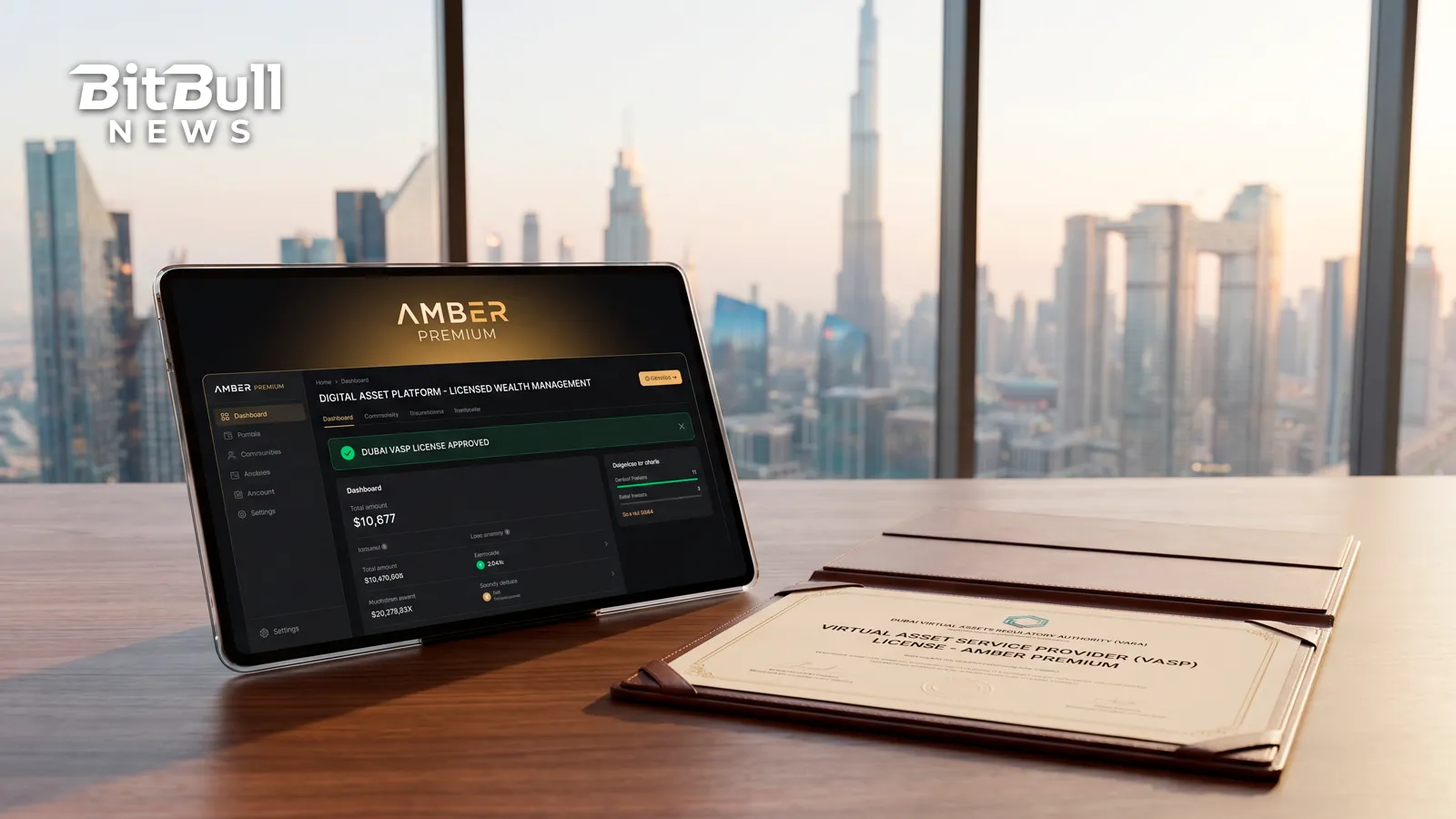
The company’s local entity, Amber Premium FZE, is now listed in VARA’s public register with a Virtual Asset Service Provider license covering broker-dealer services, management and investment services, and lending and borrowing services. Simply put, Amber has moved from waiting for full approval to holding an issued license in one of crypto’s most active regulatory hubs.
Amber Moves From Approval Pipeline To Licensed Status
The biggest change is the licensing status itself. Amber Premium received in-principle approval from VARA in December 2025, but an IPA is not the same as a full operating license. VARA says firms with in-principle approval still need to complete final requirements before they can conduct virtual asset activities or serve clients.
That step is now complete. VARA’s register lists Amber Premium FZE with a VASP license issued on April 2, 2026, under reference VL/26/03/003. The license condition is also important: the firm is permitted to serve institutional investors and qualified investors, not the broad retail market.
For Amber, that turns Dubai from a planned regulatory foothold into a live licensed jurisdiction. For clients, it gives a clearer view of what services the entity can offer and which investor categories it can serve.
The License Targets Institutional Crypto, Not Retail Hype
Amber Premium’s approved activities show where the company is focusing. Broker-dealer services, investment management and lending or borrowing sit closer to institutional crypto finance than mass-market trading apps.
That matters because Dubai’s regulated crypto market is becoming more crowded and more specialized. Firms are not only trying to win licenses; they are trying to define which part of the market they want to own. Amber’s license points toward private wealth, professional investors and institutional digital asset services.
This fits a broader pattern across the industry. Crypto firms are treating regulatory approvals as infrastructure, not just badges. A similar compliance-first push is visible in regulated digital asset payments, where companies are building market access country by country instead of relying on one global operating model.
Dubai Keeps Building Its Licensed VASP Market
VARA’s register shows Amber Premium joining a growing list of licensed virtual asset firms in Dubai. The regulator covers virtual assets across Dubai’s mainland and free zones, excluding the Dubai International Financial Centre, which has its own framework.
The practical effect is straightforward: Dubai is turning crypto access into a supervised market with named entities, defined activities and investor-category limits. That does not remove risk from crypto services, but it gives institutions a clearer regulatory perimeter than informal offshore access.
For wealth platforms and crypto finance firms, this is becoming a competitive issue. A Dubai license can help with regional credibility, banking relationships and institutional client onboarding, but it also brings ongoing supervision and activity limits.
Who It Affects Now
The immediate audience is institutional and qualified investors looking for regulated digital asset access in the UAE.
It also matters for other crypto wealth platforms, prime brokers and lending businesses that want to serve the Middle East. Amber’s approval raises the bar for firms still operating through offshore structures or preliminary approvals.
For Amber, the license gives its Dubai entity a clearer role in the company’s global footprint. It can now position the UAE as more than a regional marketing base and use it as a regulated operating hub for specific virtual asset services.
The move also sits inside a wider licensing race, where firms across markets are stacking approvals for payments, brokerage, custody and wealth services. That same theme appears in U.S. licensing moves such as Alchemy Pay’s Delaware money transmitter license, where market access depends on local regulatory permissions rather than broad crypto branding.
Why It Matters
This story matters because crypto’s institutional market is becoming more jurisdiction-specific. Large clients increasingly care not only about products, liquidity and yield, but also about where a service is licensed, what activities it can legally provide and which investor types it can serve.
Amber Premium’s Dubai license gives the company a stronger base for institutional and qualified-investor services in the UAE. The next thing to watch is execution: whether Amber turns the license into real client migration, regional deal flow and deeper wealth-management activity.
The bigger signal is that Dubai’s crypto market is moving into a more mature phase. The early question was which firms could get approval. The next question is which licensed firms can actually build durable, compliant businesses under VARA’s rules.