


Content
TL;DR
- Anchorage Digital is expanding its institutional Solana stack, and Marinade now sits inside that push. Marinade says institutions can connect to its staking infrastructure through Anchorage, while Anchorage already offers institutional staking and custody support for Solana.
- Marinade’s pitch to institutions centers on native staking, full custody retention, no smart contract risk for Marinade Native, and access to verified validators through Marinade Select.
- The bigger story is that Solana staking is being packaged in a format institutions can actually use: regulated custody on one side, yield and validator routing on the other. This is an inference based on the product materials from Anchorage and Marinade.
Anchorage Digital is making another move deeper into Solana’s institutional infrastructure, this time through staking.
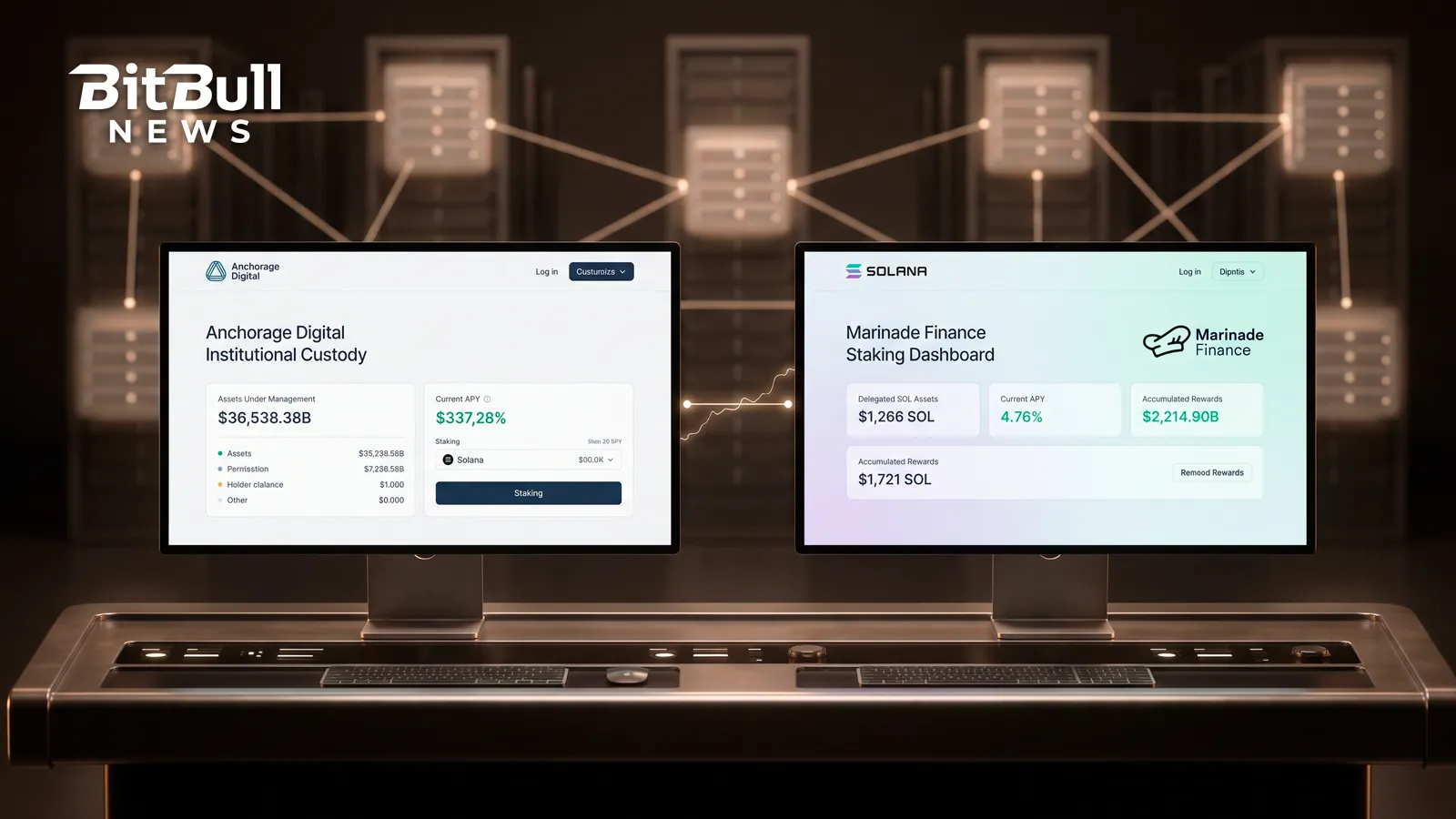
Marinade’s institutional materials now say institutions like Anchorage can connect directly to Marinade, making it easier for clients to access Solana staking through a custody-friendly setup. At the same time, Anchorage already markets institutional staking across Solana and other networks from regulated custody, and it has been steadily expanding its Solana footprint through staking, SPL token custody, and other infrastructure products.
Simply put, this is about making Solana yield look less like a crypto-native workflow and more like something institutions can plug into without rewriting their custody and compliance stack.
Marinade Gives Anchorage Clients A More Institutional Staking Route
Marinade’s institutional pages say its native staking product is built for institutions that want to keep full control of their SOL while earning staking rewards. The protocol says Marinade Native keeps withdrawal authority with the client at all times, avoids smart contract risk, and routes stake across high-performing validators.
For institutions with stricter compliance needs, Marinade also offers Marinade Select, which it describes as a version of native staking built around verified validators with stronger transparency and zero tolerance for malicious MEV. That gives the Anchorage angle more weight, because the product is not just chasing yield. It is also trying to fit institutional demands around control, validator standards, and cleaner operational risk.
Anchorage Keeps Building Solana Around Regulated Custody
Anchorage’s own platform pages say institutions can stake assets, including Solana, while tokens remain inside Anchorage custody. The company pitches that as a safer path for institutions that want yield without moving assets into a less controlled setup.
That fits a broader pattern. Anchorage has supported native SOL custody since 2022 and staking since 2023, then expanded into SPL token custody, Solana DeFi access through Jupiter, and more recently institutional collateral management tied to natively staked SOL on Kamino.
Seen together, the Marinade connection is not an isolated feature drop. It is part of a wider build-out that keeps pushing Solana deeper into regulated institutional workflows. This is an inference based on Anchorage’s recent Solana product rollout.
The Real Shift Is In How Staking Gets Packaged
Marinade’s own site now openly pitches institutions on custody-ready staking, SOC 2 compliance, verified validators, and integration with named custodians and infrastructure providers. Its materials also say institutions like Anchorage can connect directly to Marinade, which shows how staking providers are increasingly selling into institutional infrastructure rather than just retail wallets and DeFi users.
That is the bigger market angle here. The story is no longer just “can institutions stake SOL?” It is whether staking can be delivered in a format that works inside bank-grade custody, audit, reporting, and risk frameworks. Anchorage and Marinade are clearly trying to answer yes. This is an inference based on both firms’ product descriptions.
Why It Matters
This matters because staking is becoming one of the main ways institutions get productive exposure to proof-of-stake networks, and Solana is increasingly part of that conversation. The easier firms like Anchorage make it to access staking through regulated custody, the more realistic SOL yield becomes for funds, corporates, ETF-linked products, and other larger allocators. This is an inference supported by Anchorage’s staking platform, Solana expansion, and recent institutional product launches.
The next thing to watch is whether this turns into broader institutional staking standardization on Solana. If more custodians, ETFs, treasury firms, and asset managers start using the same kind of custody-plus-validator setup, Solana staking could move further out of the crypto-native niche and into mainstream digital asset infrastructure. That is an inference based on Marinade’s institutional push and Anchorage’s broader Solana strategy.