


Content
TL;DR
- Bridgetower said it has adopted Chainlink to tokenize securities tied to the DOM X Arizona copper-gold project, which it values at about $11 billion.
- The company says Chainlink tools will handle cross-chain connectivity, reserve verification, valuation data, and workflow orchestration across the tokenization lifecycle.
- Bridgetower is framing DOM X as a live production deployment, not just a pilot, and says its broader pipeline of natural resources, energy, and metals projects exceeds $25 billion.
- The bigger story is that tokenized securities are moving into harder-to-package sectors like natural resources, where liquidity, pricing, and investor access have usually been slow and highly gated. This last point is an inference based on the cited materials.
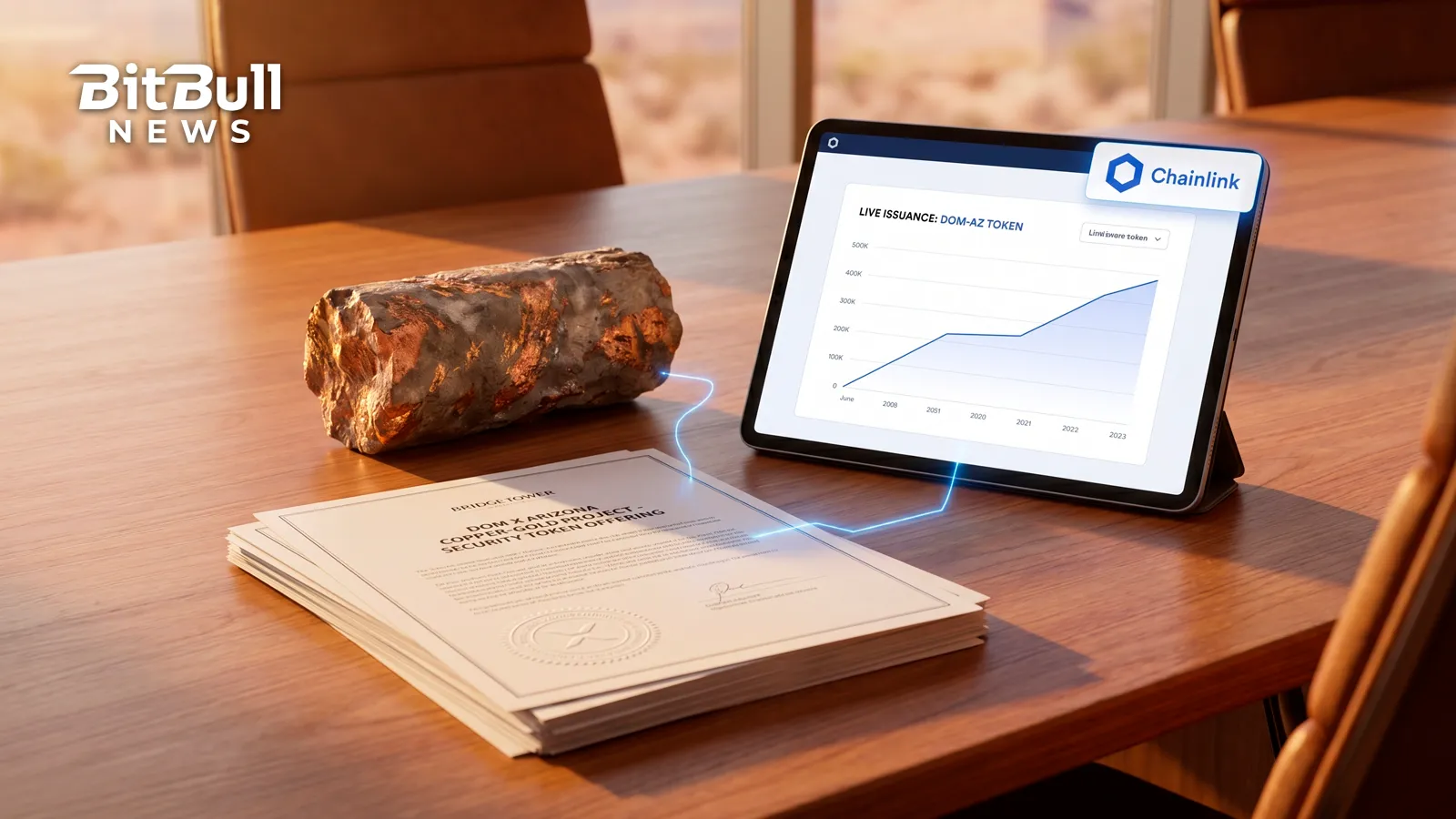
Bridgetower is taking tokenization into a corner of the market that usually stays far away from crypto headlines: mining and natural resources. On April 23, the company said it had adopted Chainlink to tokenize securities tied to the DOM X Arizona copper-gold project, which Bridgetower values at roughly $11 billion.
Simply put, Bridgetower is trying to turn a large Arizona mining project into a live tokenized securities case study. Instead of pitching tokenization as a vague future use case, the company is presenting DOM X as a real issuance with compliance controls, valuation inputs, and future secondary-market ambitions baked into the setup.
Bridgetower Is Selling This As A Live RWA Deployment, Not A Demo
According to the announcement, Bridgetower is integrating Chainlink’s Cross-Chain Interoperability Protocol, Proof of Reserve, NAVLink, and Chainlink Runtime Environment into its tokenization platform. Bridgetower says that stack will support reserve verification, valuation updates, compliance logic, settlement, and connectivity to regulated DeFi venues and licensed secondary markets.
That is the main event here. Plenty of tokenization projects talk about putting assets onchain, but the harder part is everything around the asset: pricing, identity checks, payments, compliance, and post-issuance operations. Bridgetower is trying to show it has that fuller stack in place rather than just a token wrapper around an offchain asset. This interpretation is based on the company’s description of how the platform works.
The DOM X Offering Pushes Tokenization Into A Tougher Asset Class
On Bridgetower’s own offering site, the DOM X Arizona project is presented as a $11.06 billion tokenization offering tied to a copper-gold asset in Arizona. The site says the structure targets accredited investors, uses daily transparent NAV, and is built around a three-year lockup followed by regulated secondary trading.
That makes this more interesting than another tokenized Treasury or fund story. Natural resource deals have traditionally come with long lockups, slow valuation cycles, high minimums, and limited exit options. Bridgetower is pitching tokenization as a way to tighten those pain points, even if the real test will be whether that structure holds up in live issuance and actual investor demand. The final sentence is an inference based on the cited offering materials.
Chainlink Is Becoming The Infrastructure Layer, Not Just The Oracle Layer
Chainlink’s role here also matters. Its Runtime Environment, or CRE, went live in late 2025 as an orchestration layer for institutional-grade smart contract workflows, with Chainlink positioning it for more complex tokenized asset, compliance, and cross-chain use cases.
In practice, that means Chainlink is trying to move beyond price feeds and become more of an operating system for onchain finance. Bridgetower’s deal fits that pitch: it uses Chainlink not just for data, but for the broader logic around issuance, compliance, verification, and settlement. This is an inference based on Chainlink’s published description of CRE and Bridgetower’s stated integration plan.
Bridgetower Is Framing This As The First Deal In A Larger Pipeline
The release says Bridgetower is using Chainlink to tokenize an established pipeline of more than $25 billion in natural resources, energy, and metals assets, with DOM X as the first live deployment. Bridgetower also said investor subscriptions on its platform can be funded through fiat and stablecoin rails powered by Iron, a MoonPay company.
That wider pipeline claim matters because it shifts the story from one mining deal to a repeatable model. If Bridgetower can actually move more projects onchain with the same structure, this could look less like a one-off and more like a new RWA template for harder, less liquid private-market sectors. This last point is an inference based on the company’s stated pipeline and platform design.
Why It Matters
This story matters because it shows where tokenization is trying to go next. The easy narrative phase is over. The next stage is whether firms can package messy real-world assets — not just bonds or funds, but things like resource projects — into structures institutions and eligible investors can actually use.
The next thing to watch is whether DOM X turns into real issuance, real subscriptions, and eventually real secondary trading activity. If that happens, Bridgetower’s move will look bigger than one company adopting Chainlink. It will look like another step in turning tokenization from a concept deck into market infrastructure. This forward-looking view is an inference based on Bridgetower’s stated deployment plan and Chainlink’s institutional tokenization push.