


Content
TL;DR
- OKX is integrating into BitGo’s Go Network off-exchange settlement setup for U.S. institutions.
- BitGo’s OES model lets institutions trade on partner venues without moving assets out of BitGo’s regulated qualified custody.
- The setup is built to reduce counterparty and commingling risk while improving capital efficiency and post-trade operations.
- The move adds another piece to the broader push toward custody-first institutional crypto market structure.
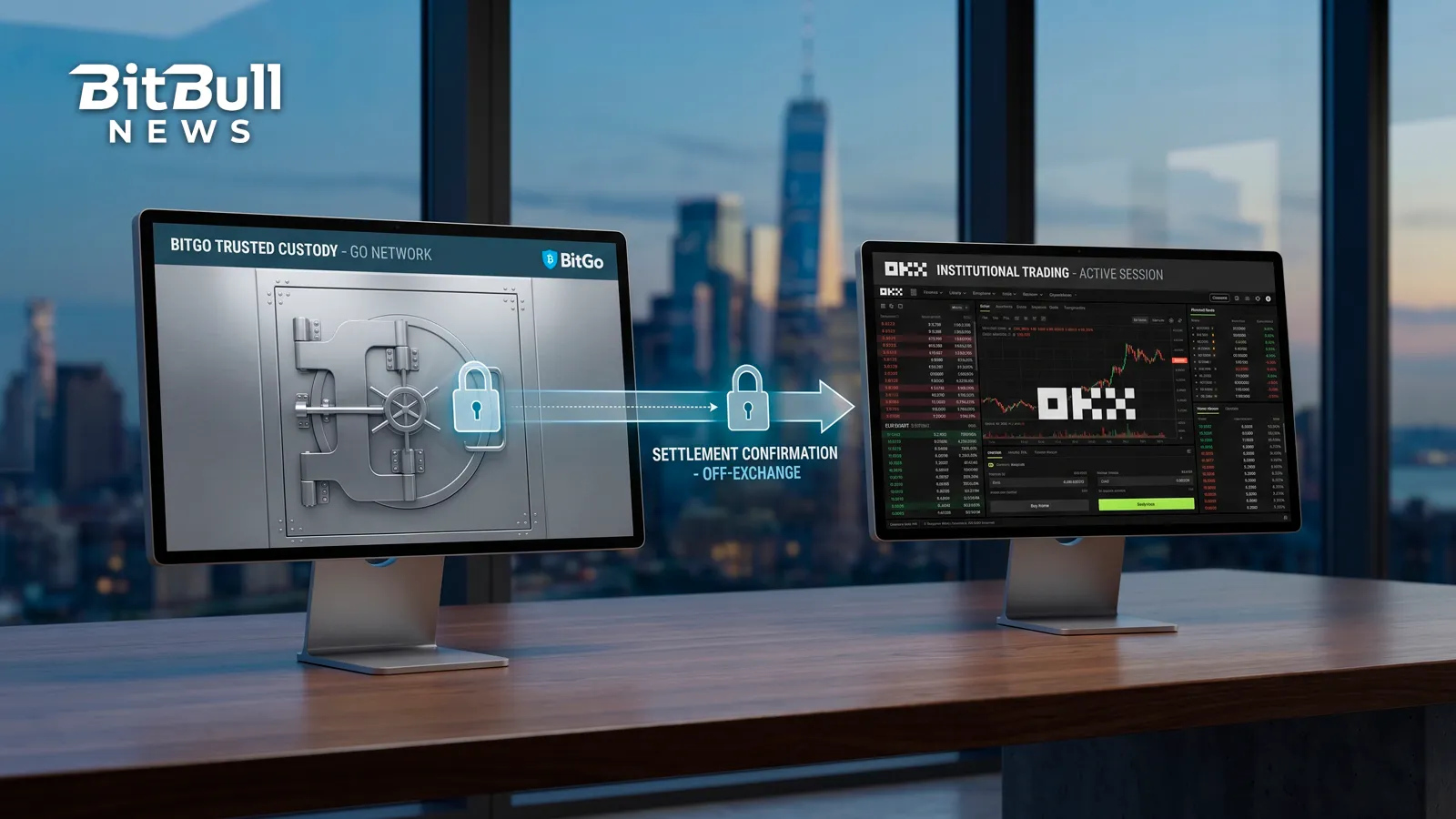
OKX is plugging into BitGo’s Go Network off-exchange settlement model for U.S. institutions, adding another sign that large crypto venues are leaning harder into custody-first trading.
Simply put, the pitch is straightforward: institutions want exchange liquidity, but they do not want to park assets on a venue if they can avoid it. BitGo’s Go Network is built around that problem, letting clients access partner venues while assets stay inside BitGo’s regulated custody framework.
The Deal Pushes Custody And Execution Further Apart
That separation is the real story here. BitGo says its Off-Exchange Settlement, or OES, model lets institutions allocate balances to partner platforms for trading while keeping those assets in qualified custody until settlement. In BitGo’s own documentation, clients can trade using allocated balances on partner platforms, with settlement typically happening on a set cycle, often at least once every 24 hours.
BitGo pitches that structure around three things institutions actually care about: lower counterparty risk, better capital efficiency, and cleaner operations. Assets stay bankruptcy-remote and under the client’s control, while trading and settlement happen through the network rather than by sending funds directly onto an exchange.
OKX Is Slotting Into An Institutional Trading Stack, Not Just Adding A Badge
OKX already markets a full institutional product suite, including order book trading, RFQ, APIs, market-maker programs, and managed sub-accounts. Its institutional pages also emphasize scale, liquidity, and the ability to work with external custodians. That makes the BitGo link-up look less like a cosmetic partnership and more like an attempt to make OKX easier to use inside an institutional risk framework.
That matters because venue risk is still one of crypto’s biggest pain points for professional capital. Off-exchange settlement tries to solve that by breaking the old model where institutions had to choose between holding assets safely and accessing deep liquidity. BitGo has been expanding this setup across other venues and trading partners, including Gate, Deribit via Copper ClearLoop, and STS Digital.
BitGo Is Clearly Building Toward A Bigger Settlement Network
This OKX move also fits a wider pattern at BitGo. The company has been widening Go Network beyond simple custody into a broader settlement layer that covers exchange access, delivery-versus-payment workflows, and real-time bilateral settlement inside regulated custody. BitGo says Go Network supports USD and digital asset settlement, while OES specifically targets trading venues and ECNs.
Seen that way, OKX joining the network is not just one more integration. It adds another liquidity venue to a model BitGo is trying to turn into core institutional market plumbing. That is an inference based on BitGo’s product design and recent expansion of Go Network partners.
Why It Matters
This is a useful market-structure story, not just a partnership headline. Crypto institutions have spent years trying to reduce exchange exposure without losing access to liquidity. The more big venues plug into custody-first settlement networks, the more realistic that setup becomes.
The next thing to watch is whether this becomes standard infrastructure instead of a premium add-on. If more venues follow the same path, off-exchange settlement could move from being a specialist institutional feature to a baseline expectation for serious crypto trading. That would be a bigger shift than this one headline on its own.