


Content
If you’re a US person holding crypto on an overseas exchange, two acronyms should be on your radar: FBAR and FATCA. They’re separate US reporting regimes for foreign financial assets, they carry steep penalties, and crypto sits in an awkward, still-unsettled spot within both.

Here’s the honest state of play. The rules weren’t written with crypto in mind, official guidance is incomplete, and the safest path often means reporting even when a strict reading might not require it. This guide explains what each regime is, where crypto currently lands, and how careful filers handle the gray zone.
This is a US-focused overview for education, not tax or legal advice. The rules are genuinely evolving here, and penalties for getting it wrong are severe, so confirm your situation with a qualified cross-border tax professional.
First: Who This Applies To
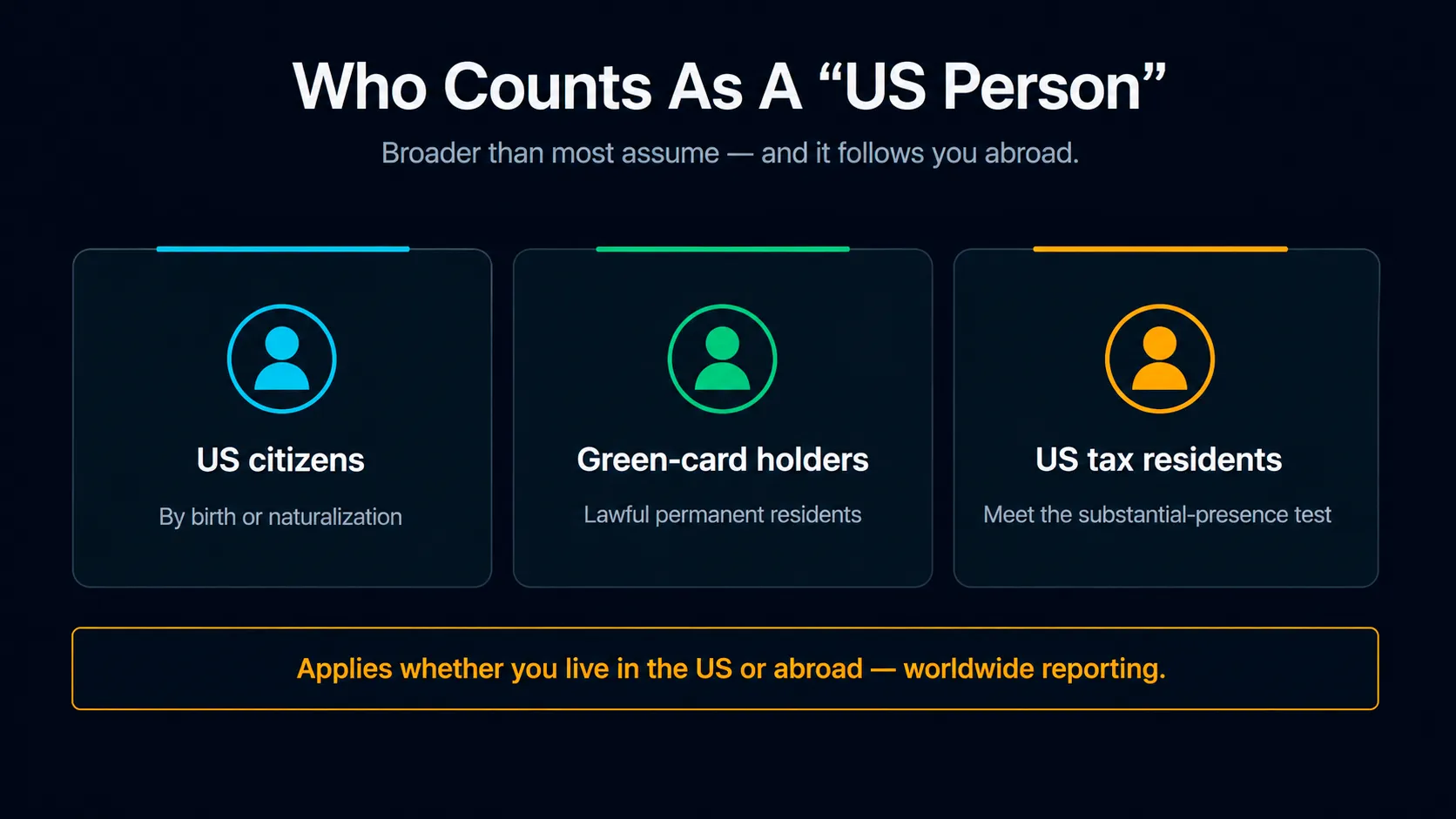
Both regimes apply to US persons, which is broader than many assume. It includes US citizens, green-card holders, and US tax residents — whether they live in the US or abroad.
If you’re a US person with crypto or cash on a foreign exchange or financial account, these rules can reach you no matter where you live. And US citizens are taxed and subject to reporting on worldwide assets, so moving overseas doesn’t switch the obligation off.
One clarification up front: these are information reports, not extra taxes. You file them to disclose foreign holdings. They’re separate from your income tax on crypto gains, which you owe regardless.
FBAR: The Foreign Account Report
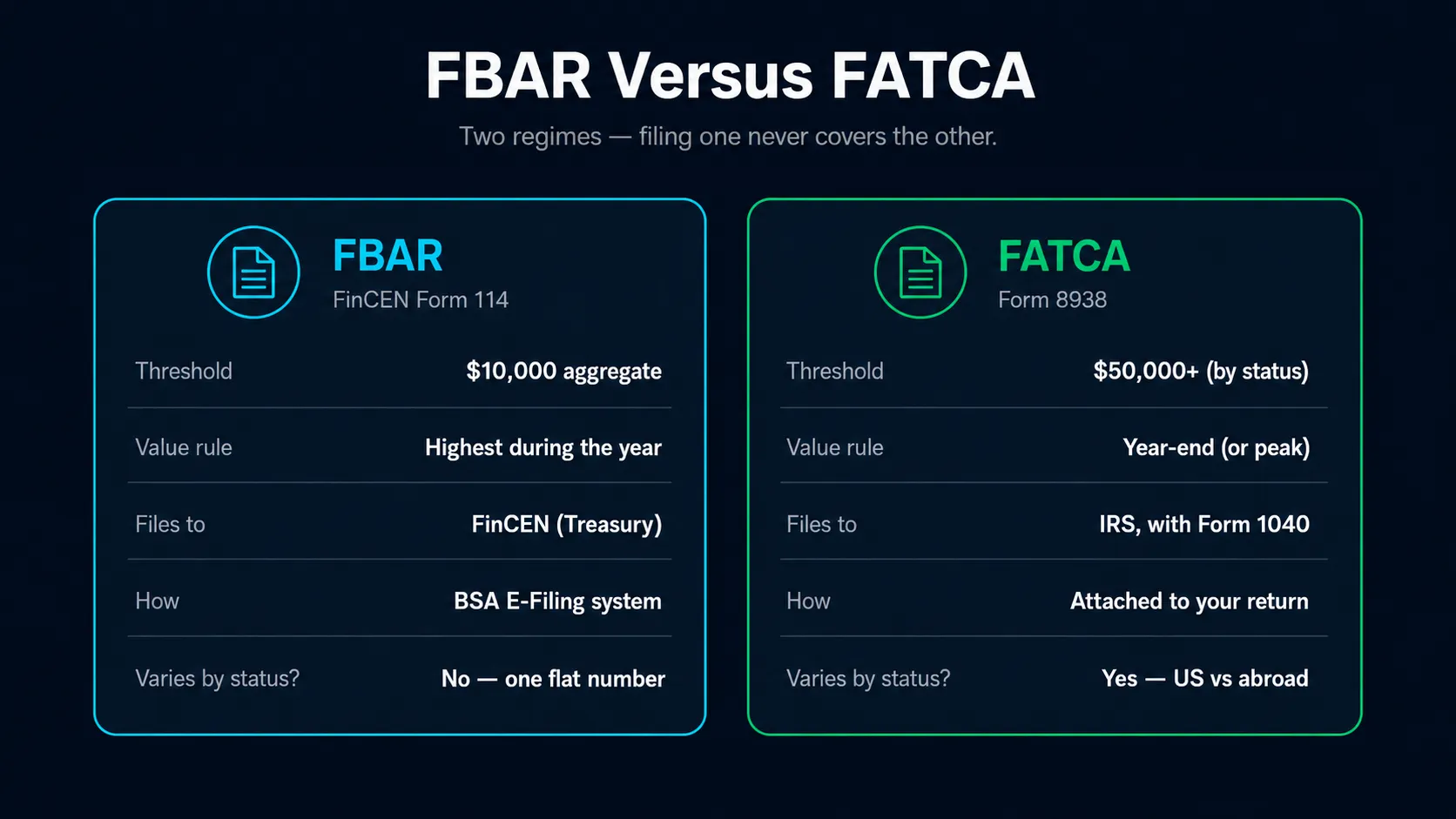
The FBAR — Report of Foreign Bank and Financial Accounts, filed on FinCEN Form 114 — is the older of the two. It goes to FinCEN, a Treasury bureau, through the BSA E-Filing System, not to the IRS with your tax return. Its legal basis is the Bank Secrecy Act, an anti-financial-crime law.
The trigger is simple and low:
- You must file if the aggregate value of your foreign financial accounts exceeds $10,000 at any point during the calendar year.
- That’s a combined total across all foreign accounts, not per account.
- It uses the highest value during the year, not the year-end balance.
- The threshold is fixed — it doesn’t change with your filing status or whether you live abroad.
FBAR covers foreign financial accounts like bank and securities accounts. The filing deadline tracks the tax deadline, with an automatic extension to October.
FATCA: Form 8938 With Your Tax Return
FATCA — the Foreign Account Tax Compliance Act — is reported on Form 8938, which you attach to your Form 1040 and file with the IRS. Its authority is the tax code, added in 2010.
Form 8938 covers a broader set of “specified foreign financial assets,” and its thresholds are higher and vary by situation. Per the IRS’s own summary:
- Single filer in the US: more than $50,000 on the last day of the year (or more than $75,000 at any time).
- Single filer living abroad: more than $200,000 on the last day (or more than $300,000 at any time).
- Married filing jointly: these thresholds double.
Two things trip people up. Filing Form 8938 does not satisfy your FBAR obligation, and vice versa — they go to different agencies through different systems. And many people cross both thresholds in the same year and must file both.
Where Crypto Actually Lands (The Gray Zone)
This is the part everyone gets wrong, in both directions. The rules on crypto are genuinely unsettled, so precision matters.
FBAR And Crypto-Only Accounts
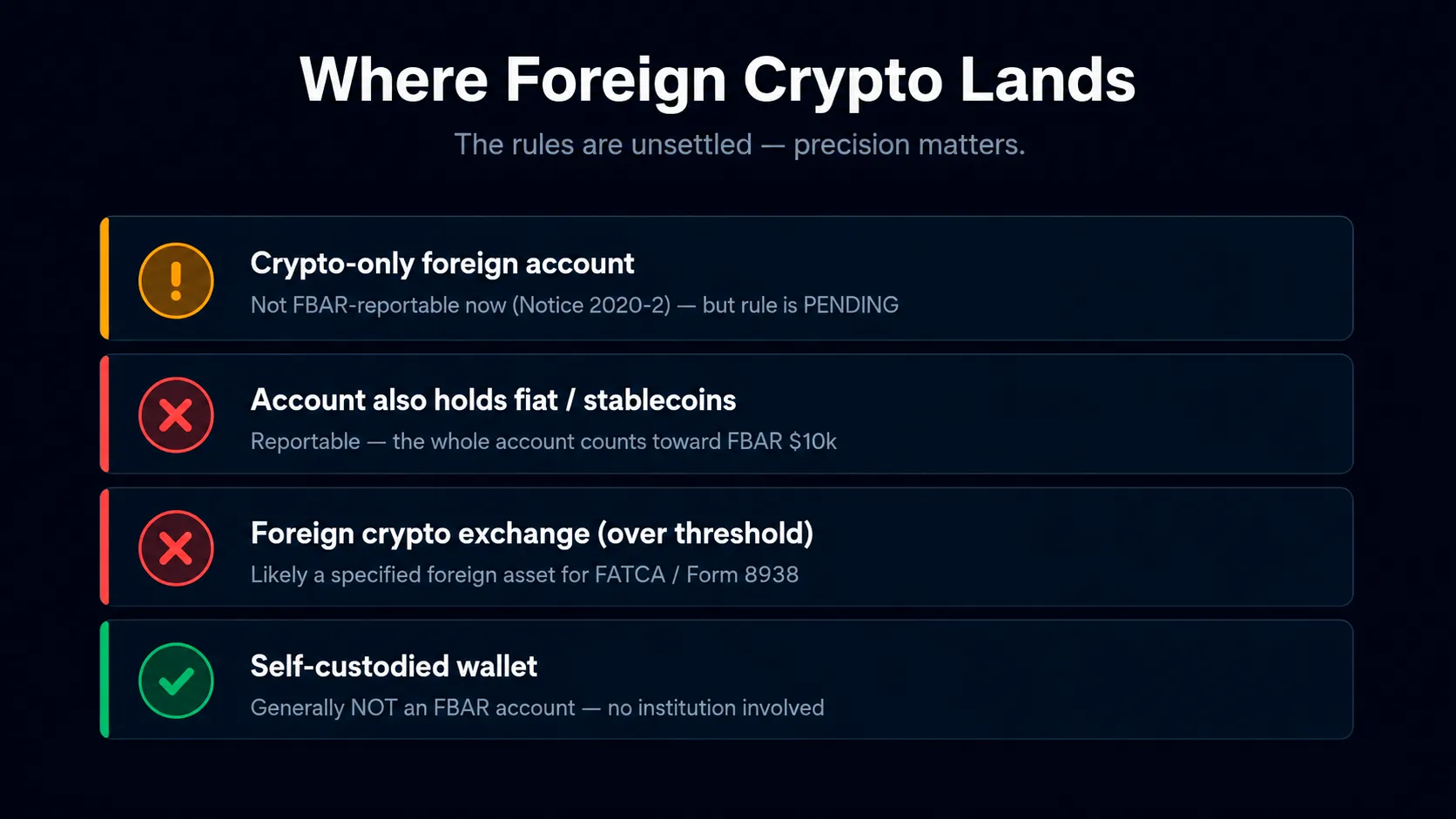
The current official position comes from FinCEN Notice 2020-2. It states that a foreign account holding only virtual currency is not currently reportable on the FBAR, because the regulations don’t yet define such an account as reportable. That’s the letter of the rule today.
But read the rest of that notice. FinCEN also stated it intends to propose amending the regulations to include virtual currency as a reportable account type. That proposed change has been anticipated for years and hasn’t been finalized — which means the answer could change, and you should treat this as a live, moving question.
The Hybrid Account Trap
Here’s the catch that pulls many crypto holders into FBAR anyway. Notice 2020-2 exempts accounts holding only virtual currency. But most foreign exchange accounts don’t hold only crypto.
If your foreign account also holds fiat currency — dollars, euros, or the like — or other reportable assets, then it’s a reportable account, and its full value counts toward the $10,000 FBAR threshold. A cash balance sitting on the exchange can make the whole account reportable.
Many professionals also take the conservative view that stablecoins pegged to a fiat currency should be treated like fiat for this purpose, especially as stablecoin issuers get pulled under Bank Secrecy Act obligations. That’s a judgment call, not settled law, but it leans toward reporting.
FATCA And Foreign Crypto Accounts
FATCA is broader and less forgiving of the “crypto isn’t mentioned” argument. Its definition of specified foreign financial assets is wide, and there’s no clear guidance excluding crypto. The common professional position is that a foreign crypto exchange account can be a specified foreign financial asset for Form 8938 once you’re over the threshold. When guidance is silent, the cautious reading is to include it.
Self-Custody Versus Foreign Exchanges
Where your crypto sits changes the analysis, so separate the two clearly.
- Foreign exchange accounts are the main concern. A US person’s account on an exchange based outside the US looks like a foreign financial account, and it’s where both FBAR (via the hybrid rule) and FATCA most plausibly apply.
- Self-custodied wallets are different. Your own hardware or software wallet isn’t an account at a foreign financial institution — there’s no institution at all — so it generally isn’t an FBAR account. It could still factor into FATCA as a directly held foreign asset in some readings, which is another reason large holdings warrant professional review.
- DeFi and staking aren’t addressed by current guidance and may or may not be swept in when rules are finalized. Keep thorough records and watch for updates.
The practical line: an account someone else controls for you, located abroad, is the classic reportable case. A wallet only you control is murkier and less likely to be an “account,” but not automatically ignorable under FATCA.
The Penalties Are Why This Matters
Foreign-reporting penalties are harsh, which is exactly why the conservative approach exists.
- FBAR non-willful violations can draw penalties even without intent to hide anything. A 2023 US Supreme Court decision confirmed that non-willful FBAR penalties apply per report, not per account, which limited one aggressive theory — but penalties remain significant.
- Willful FBAR violations carry far steeper penalties and potential criminal exposure.
- FATCA (Form 8938) failures carry their own penalties, with more added for continued non-filing after notice.
Underreporting foreign crypto isn’t a low-risk gamble. The downside is large, and enforcement of crypto-related foreign assets is rising.
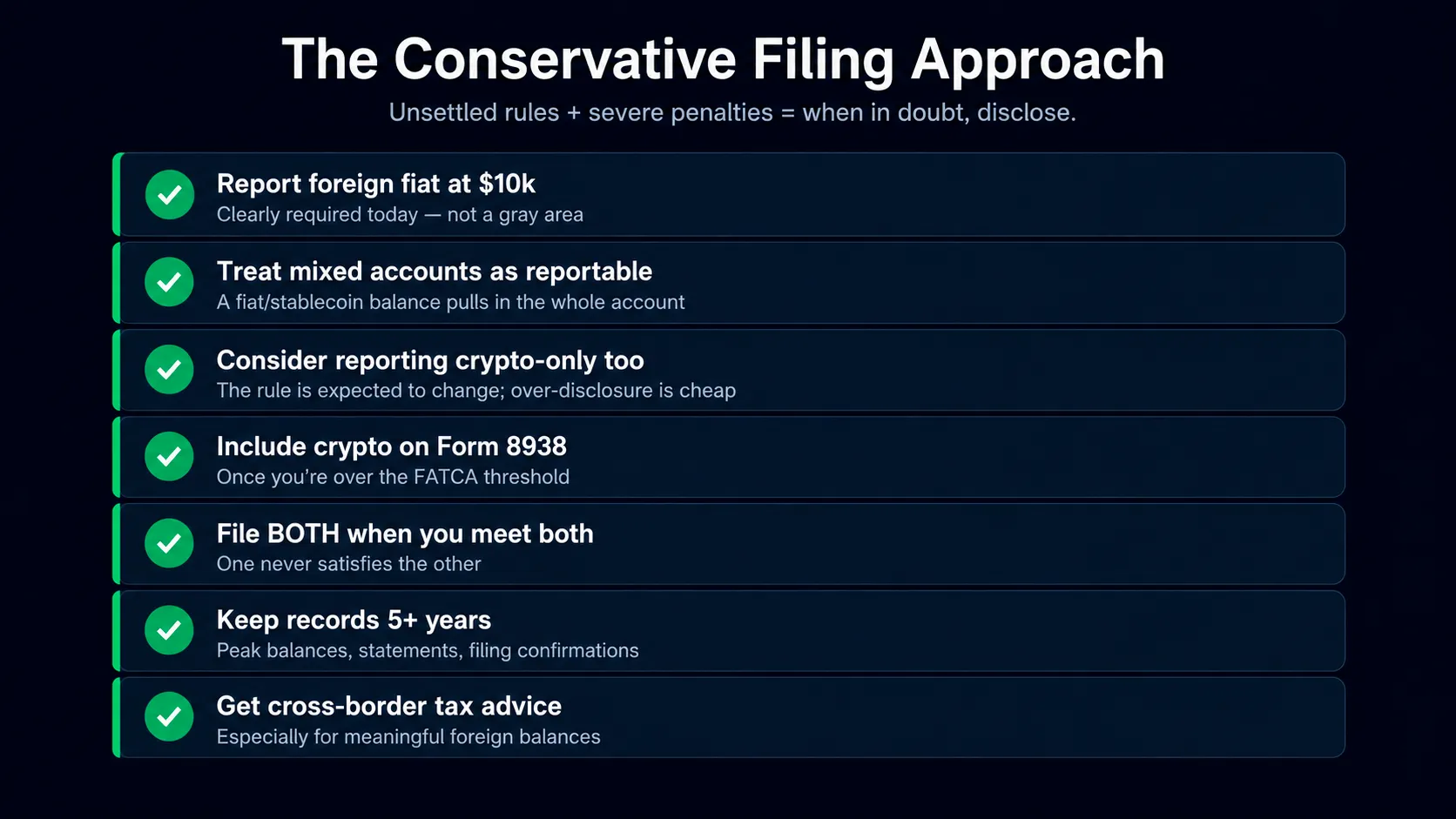
The Conservative Approach Most Filers Take
Given unsettled rules and severe penalties, here’s the pattern careful US taxpayers and their advisors tend to follow.
- Report foreign fiat balances on the FBAR when you cross $10,000 — this is clearly required today, not a gray area.
- Treat mixed accounts as reportable, since a fiat or stablecoin balance can pull the whole account into FBAR.
- Consider reporting foreign crypto exchange accounts anyway, even crypto-only ones, because the rule is expected to change and over-disclosure carries little downside compared to the penalties for under-disclosure.
- Include foreign crypto accounts on Form 8938 once you exceed the FATCA thresholds.
- File both forms when you meet both thresholds, remembering one never covers the other.
- Keep meticulous records — peak balances, screenshots, statements, and filing confirmations — for at least five years.
- Get professional advice if your foreign balances are meaningful or your situation is cross-border.
Getting Compliant If You’re Behind
If you’ve missed foreign-account filings in past years, you have options, and acting before the IRS contacts you is far better than waiting.
The IRS runs voluntary disclosure and streamlined compliance procedures designed for taxpayers who need to catch up, some aimed specifically at non-willful cases. These can substantially reduce penalties compared to being caught. Because the choice among them depends heavily on your facts and whether your past non-compliance was willful, this is a place to bring in a tax attorney or cross-border specialist rather than self-diagnose.
Foreign crypto reporting is a rare corner of crypto where the safe move and the simple move point the same way: when in doubt, disclose, keep records, and get advice. The rules will keep tightening toward more reporting, not less, so building the habit now protects you as the gray zone closes.
FAQ
- Do I Have To Report Foreign Crypto On The FBAR?
It depends on the account. Under FinCEN Notice 2020-2, a foreign account holding only virtual currency isn’t currently FBAR-reportable, but that rule is expected to change. If the account also holds fiat or other reportable assets, its full value counts toward the $10,000 threshold, so mixed accounts are commonly reportable. - What’s The Difference Between FBAR And FATCA?
FBAR (FinCEN Form 114) reports foreign financial accounts to FinCEN through a separate system once they exceed $10,000 in aggregate. FATCA (Form 8938) reports a broader set of foreign assets to the IRS with your tax return at higher thresholds, starting at $50,000. They’re independent, and filing one doesn’t satisfy the other. - What Are The FATCA Reporting Thresholds?
For a single filer living in the US, it’s more than $50,000 in specified foreign financial assets on the last day of the year (or over $75,000 at any time). For a single filer living abroad, it’s more than $200,000 year-end (or over $300,000 anytime), and married-filing-jointly thresholds double. - Does A Self-Custodied Wallet Count As A Foreign Account?
Generally not for FBAR, because a wallet you control isn’t an account at a foreign financial institution — there’s no institution involved. It could still factor into FATCA as a directly held foreign asset under some readings, so large holdings are worth reviewing with a professional. - Are Stablecoins Treated As Crypto Or Fiat For FBAR?
There’s no definitive rule, but the conservative and common professional view treats fiat-pegged stablecoins like fiat currency for FBAR, especially as stablecoin issuers come under Bank Secrecy Act obligations. Under that view, a stablecoin balance can make a foreign account reportable. - What Are The Penalties For Not Filing?
They’re severe. FBAR penalties apply even to non-willful violations, and willful violations carry much larger penalties and possible criminal charges. FATCA non-filing carries its own escalating penalties, which is why over-disclosure is usually safer than under-disclosure. - I Missed Filing In Past Years — What Now?
Act before the IRS reaches you. The IRS offers voluntary disclosure and streamlined procedures, some designed for non-willful cases, that can significantly reduce penalties. The right path depends on your facts, so consult a cross-border tax attorney rather than deciding alone.