


Content
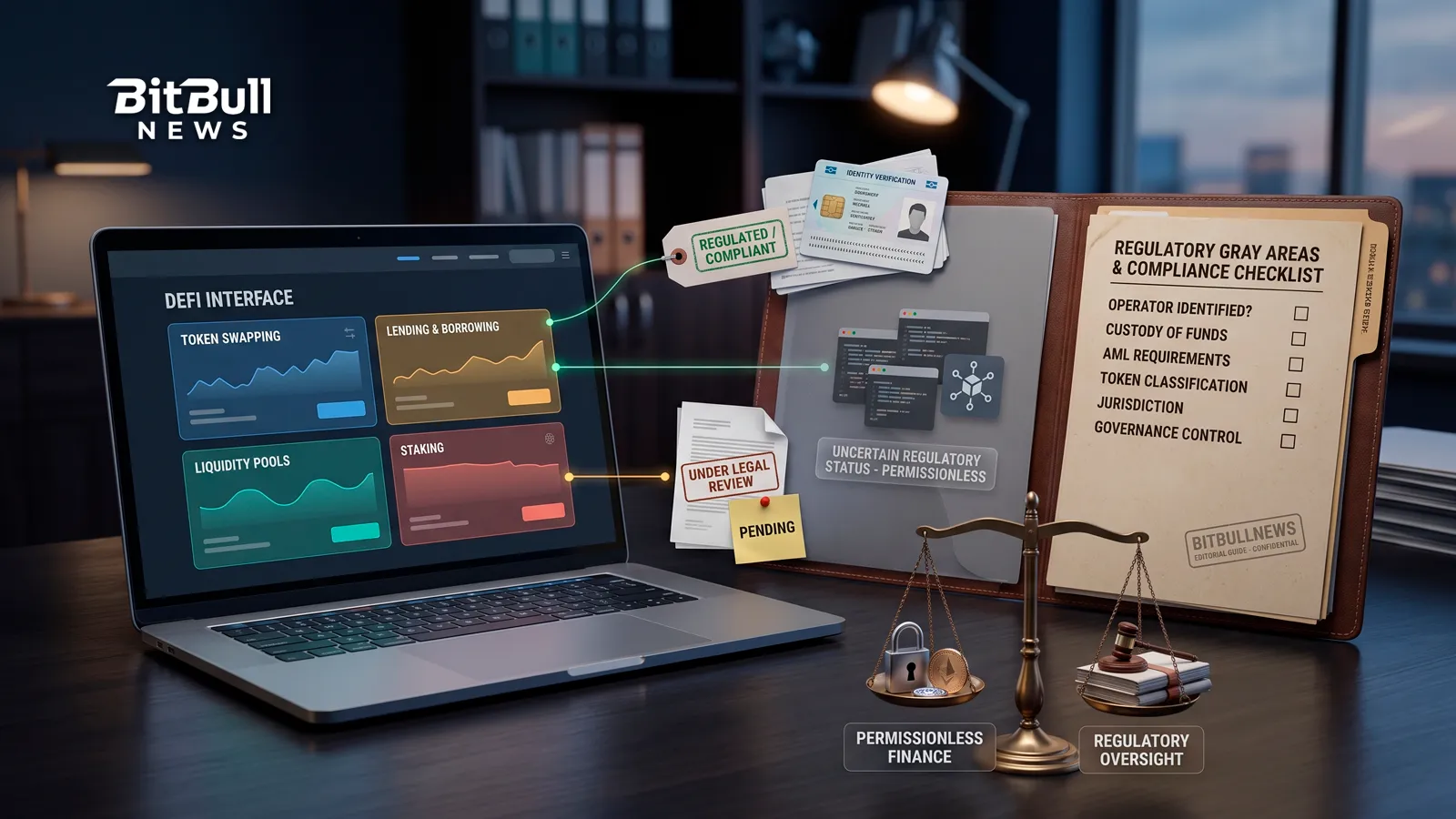
Decentralized finance was built on a bold promise: financial services with no company in the middle, run by code that anyone can use and no one can shut down. That promise runs straight into a legal system designed around identifiable, accountable intermediaries.
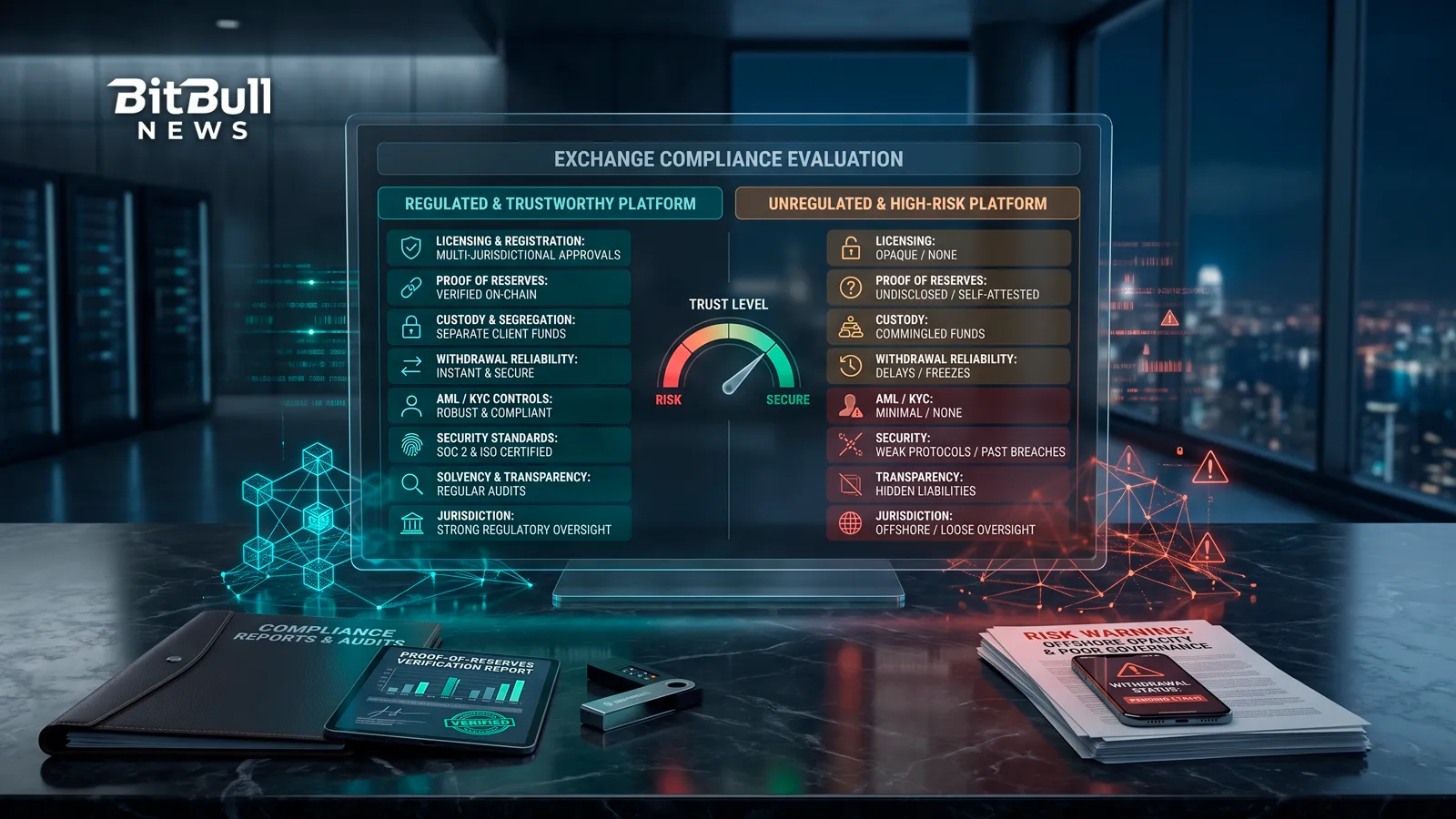
The result is a genuine gray zone. Regulators know DeFi matters, most haven’t figured out exactly how to handle it, and the rules are being written case by case — often in courtrooms. This guide explains where the uncertainty actually lives, who regulators go after when there’s “no one in charge,” and what the gray areas mean for you as a user.
This is an overview for education, not legal advice. DeFi law is unsettled and moving fast, so confirm the current position for your situation with a qualified professional.
Why DeFi Breaks The Old Rulebook
Financial regulation is built on a simple assumption: for every service, there’s a someone — a licensed company that verifies customers, keeps records, and can be held responsible. DeFi was designed to remove exactly that someone.
- No central operator. A protocol like a decentralized exchange is smart-contract code on a public blockchain, running without a company processing trades.
- No gatekeeper. Anyone with a wallet can use it directly, with no account, no sign-up, and often no identity check.
- No off-switch, in theory. Truly decentralized code keeps running even if its creators walk away.
Every core regulatory tool assumes a party to license, audit, or fine. When a protocol claims there’s no such party, regulators face a hard question with no settled answer: who is responsible? That single question is the source of nearly every DeFi gray area.
The Core Tension: Code Versus Accountability
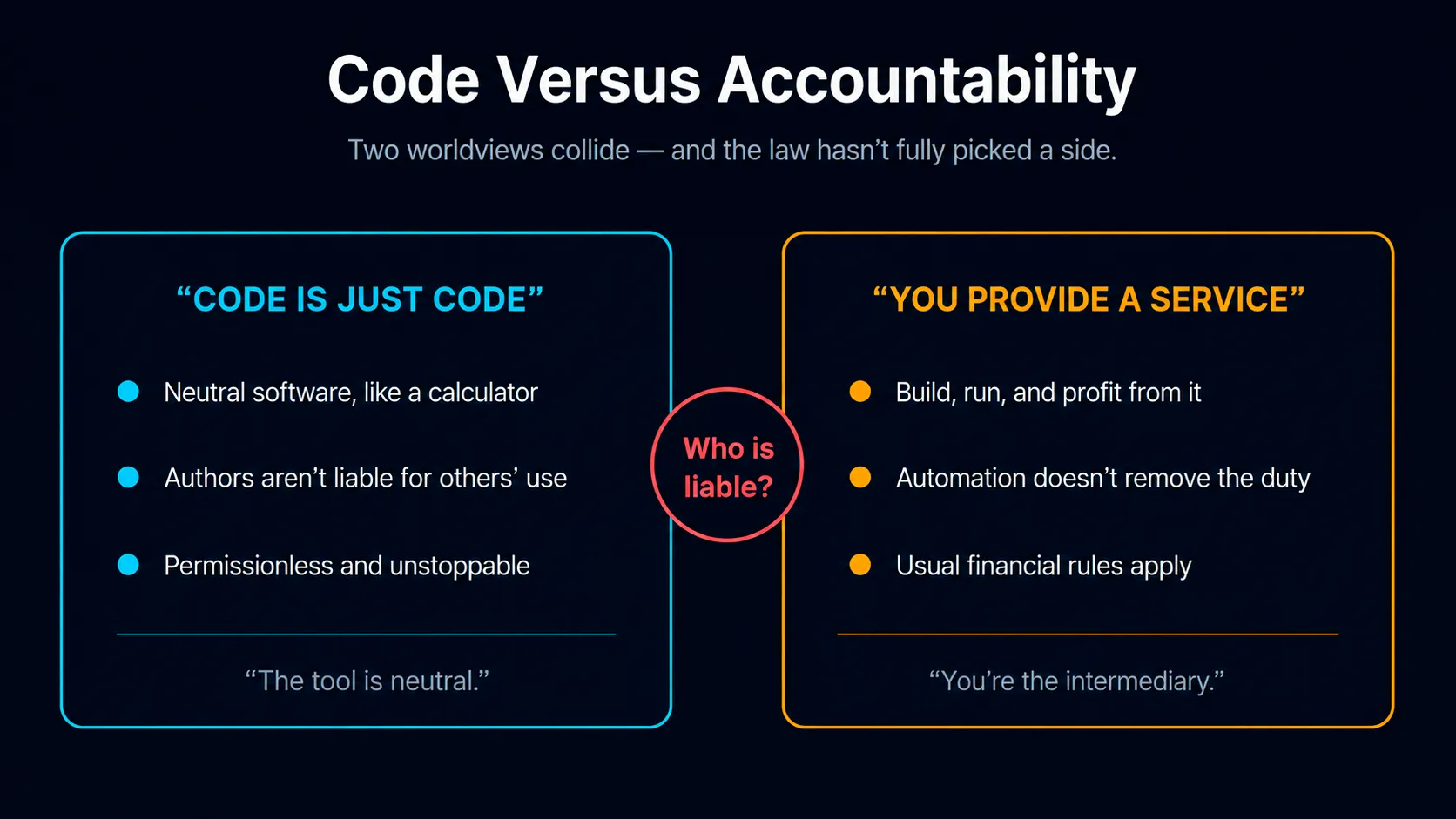
Two worldviews collide here, and the law hasn’t fully picked a side.
One view says code is just code — neutral software, like a calculator, and its authors aren’t liable for how people use it. The other says that if you build, run, and profit from a financial service, you’re providing that service no matter how automated it is, and the usual rules apply.
Courts and regulators have landed in different places on different facts, which is precisely why this is a gray area rather than a settled rulebook. The outcome often turns on one thing: how decentralized the protocol really is.
“Decentralization Theater”: Where Regulators Look
Here’s the point most user-facing marketing skips. Regulators increasingly don’t accept “it’s decentralized” at face value. They look for whether centralized control persists in practice — and it usually does.
The Financial Action Task Force (FATF), the global anti-money-laundering standard-setter, put this plainly. Its long-standing position is that a DeFi arrangement falls in scope where a person exercises control or sufficient influence over it, whatever the marketing says. In a 2026 targeted report on DeFi, FATF found that centralized elements “frequently persist in practice.”
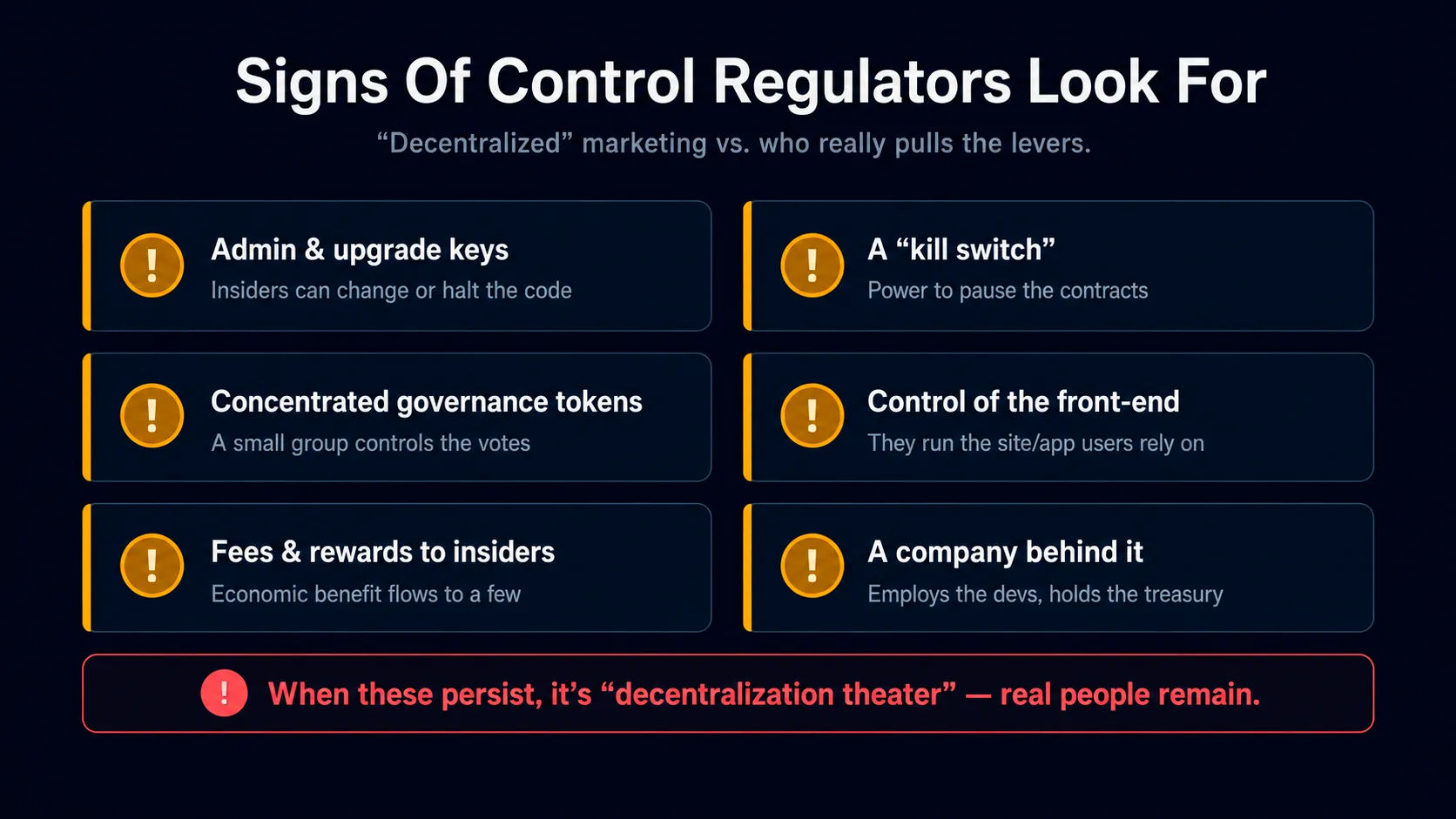
The signs of control regulators look for include:
- Admin keys and upgrade rights that let insiders change or halt the protocol.
- A “kill switch” or the power to pause contracts.
- Concentrated governance tokens, so a small group effectively controls votes.
- Control of the website or front-end app most users actually rely on.
- Fees and rewards flowing to insiders, and a company that employs the core developers or holds the treasury.
When those exist, a protocol calling itself decentralized may still have very real, identifiable people behind it — and those people can be treated as a regulated business. That gap between the “decentralized” label and centralized reality has a nickname: decentralization theater.
Who Actually Gets Held Responsible
When something goes wrong, the “no one is in charge” claim gets tested hard. In practice, regulators and prosecutors have reached for whoever they can identify.
- Developers and founders. People who wrote and maintained the code, especially if they kept control or collected fees, have faced enforcement — including criminal cases against developers of privacy and mixing tools.
- Front-end and interface operators. The website or app most people use is often run by an identifiable company, which is far easier to regulate than the underlying contracts.
- Governance token holders and DAOs. Authorities have pursued the idea that a DAO’s active participants can bear responsibility for what it does.
- Companies behind “protocols.” Where a real business builds and profits from a protocol, that business is the obvious target.
The through-line is blunt: “decentralized” is a spectrum, not a shield. The more genuinely distributed a protocol is, the harder it is to pin down a responsible party. The more centralized control it retains, the more its operators look like a regulated financial business that simply hasn’t registered.
This area is also genuinely unsettled. Courts have split, some rulings have narrowed how far existing law reaches over pure code, and international standards and national decisions don’t always agree. Treat confident claims in either direction — “DeFi is totally legal” or “DeFi is illegal” — with skepticism.
The Main Gray Areas, One By One
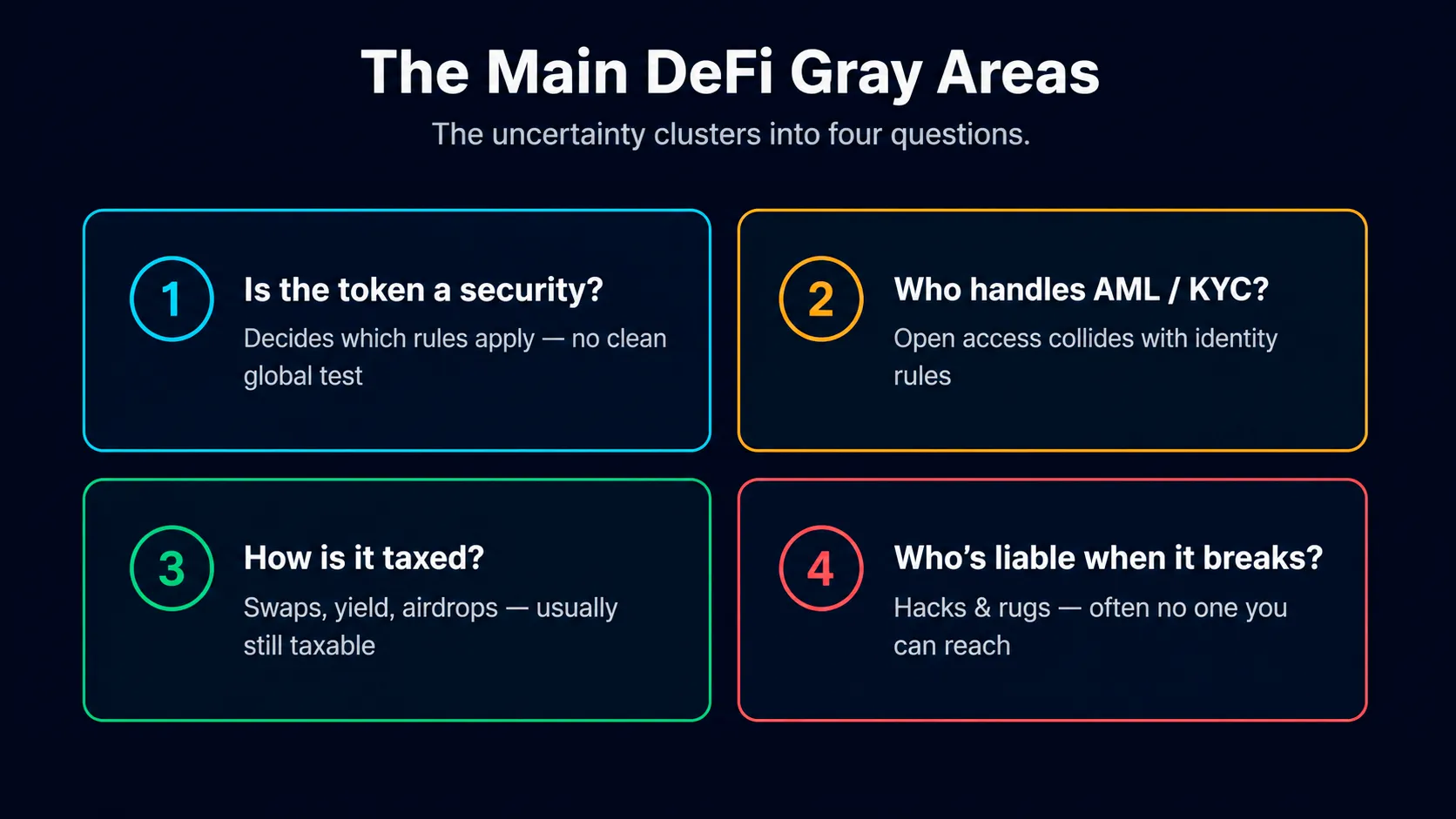
The uncertainty isn’t one big blur. It clusters into a few specific questions.
Is A DeFi Token A Security?
Whether a given token is a security decides which rules apply, and there’s no clean global test. Governance tokens, liquidity-pool positions, and yield products can all raise the question, and the answer varies by jurisdiction and by how the token is sold and used.
Who Handles AML And KYC?
DeFi’s open-access design collides directly with anti-money-laundering law, which assumes someone verifies customers. Regulators increasingly argue that where a controlling party exists, that party carries the AML obligations — but most jurisdictions haven’t operationalized how, and enforcement is uneven.
How Is DeFi Activity Taxed?
The tax rules usually exist even when DeFi-specific guidance doesn’t. Swaps, liquidity provision, yield, lending rewards, and token airdrops can all be taxable events, and the lack of tidy tax forms doesn’t remove the obligation to report. (This one is less “gray” than people hope — you’re generally still on the hook.)
Where Does Liability Land When Things Break?
Hacks, exploits, and failed protocols raise the question of who, if anyone, owes users. With no company and no insurance backstop, the answer is often “no one you can reach” — which is a risk, not a loophole.
How Different Regions Approach It
No one has a finished answer, but the direction is consistent: regulate the accountable parts rather than ban the technology.
- The United States has largely proceeded through enforcement and the courts, applying existing securities, commodities, and money-transmission law to DeFi actors — with results that have sometimes conflicted between agencies and judges.
- The European Union regulates the surrounding infrastructure. Its MiCA framework focuses on crypto-asset service providers, and truly decentralized services can fall outside parts of it, so the practical reach depends on how decentralized a given service actually is.
- Global standards come from FATF, whose guidance pushes every member country to bring controlling parties in DeFi into the anti-money-laundering net. Adoption remains patchy, with many jurisdictions yet to identify or supervise qualifying DeFi entities.
The shared thread: regulators aim to find the human or corporate control points and apply existing rules there, rather than writing DeFi off or leaving it untouched. The gaps come from how hard those control points can be to locate, and how differently each country moves.
What The Gray Areas Mean For You
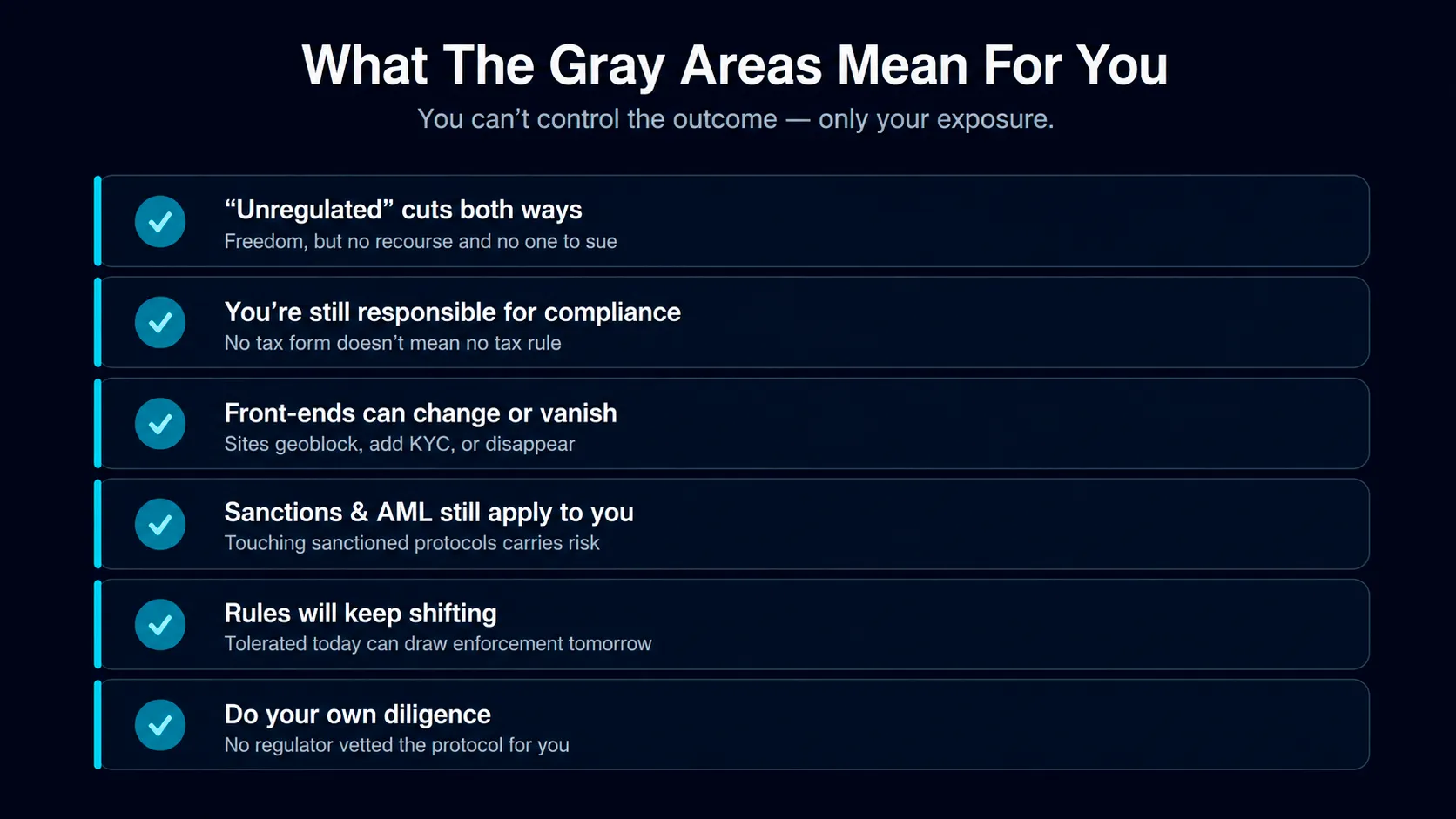
You don’t control how this gets resolved, but you do control your exposure. A few realistic takeaways.
- “Unregulated” cuts both ways. No gatekeeper can mean more freedom — and no consumer protection, no recourse, and no one to sue if a protocol drains or rugs.
- You’re still responsible for compliance. Using DeFi doesn’t suspend your tax obligations or your local laws. The absence of a form is not the absence of a rule.
- Front-ends can change or vanish. Interfaces get taken down, geoblock users, or add identity checks as rules tighten. The contracts may persist, but your easy access might not.
- Sanctions and AML rules still apply to you. Interacting with sanctioned protocols or addresses can carry legal risk regardless of DeFi’s “permissionless” design.
- Rules will keep shifting. This is one of the least settled areas in finance. What’s tolerated today can draw enforcement tomorrow, so don’t assume today’s gray area stays gray.
- Do your own diligence. Since no regulator vetted the protocol for you, the checking — code audits, team, track record, governance — falls on you.
Where This Is Heading
The trend lines are readable even if the destination isn’t. Regulators are converging on a workable principle: look through the “decentralized” label to whoever actually holds control, and regulate them. Front-ends, developers who retain keys or take fees, and concentrated governance are the pressure points.
Genuinely decentralized, autonomous protocols with no control points remain the hardest case, and that’s where the real gray zone will persist longest. But the space between marketing decentralization and actual decentralization is shrinking under scrutiny.
For now, treat DeFi as powerful, promising, and legally unsettled all at once. Understand that “no intermediary” also means “no safety net,” keep your own compliance house in order, and don’t mistake a gap in the rules for permanent permission. The rules are still being written, and they’re being written toward more accountability, not less.
FAQ
- Is DeFi Legal?
Using DeFi is legal in most places, but it operates in a gray zone where the rules are unsettled and applied case by case. The activity around it — taxes, anti-money-laundering law, sanctions — still applies to you, and specific protocols or actors can face enforcement. - Is DeFi Really Unregulated?
Not exactly. There’s often no dedicated DeFi rulebook, but existing securities, tax, and anti-money-laundering laws still reach the people and companies that control or profit from a protocol. Regulators increasingly look past the “decentralized” label to find those control points. - Who Is Responsible If A DeFi Protocol Has No Company?
Regulators reach for whoever they can identify — developers who kept control or took fees, front-end operators, active governance participants, or the business behind a “protocol.” Truly decentralized code with no control points is the hardest case, and it’s where the law is least settled. - Do I Have To Pay Taxes On DeFi?
Generally yes. Swaps, yield, lending rewards, and airdrops can all be taxable events in most countries, and the lack of a tax form doesn’t remove the obligation. This is less of a gray area than many users assume. - What Is “Decentralization Theater”?
It’s when a protocol markets itself as decentralized while centralized control quietly persists — through admin keys, a kill switch, concentrated governance tokens, or control of the front-end. Regulators specifically look for these signs to decide whether a real, accountable party exists. - Can Using DeFi Get Me In Legal Trouble?
It can, in specific cases — for example, interacting with sanctioned protocols or addresses, or failing to report taxable activity. DeFi’s permissionless design doesn’t exempt you from sanctions, tax, or other laws that apply to you. - Will DeFi Eventually Be Fully Regulated?
The trend points toward regulating the identifiable control points — front-ends, developers, and concentrated governance — rather than banning the technology. Genuinely autonomous protocols with no one in control are the hardest to regulate, so some gray area is likely to persist there.