


Content
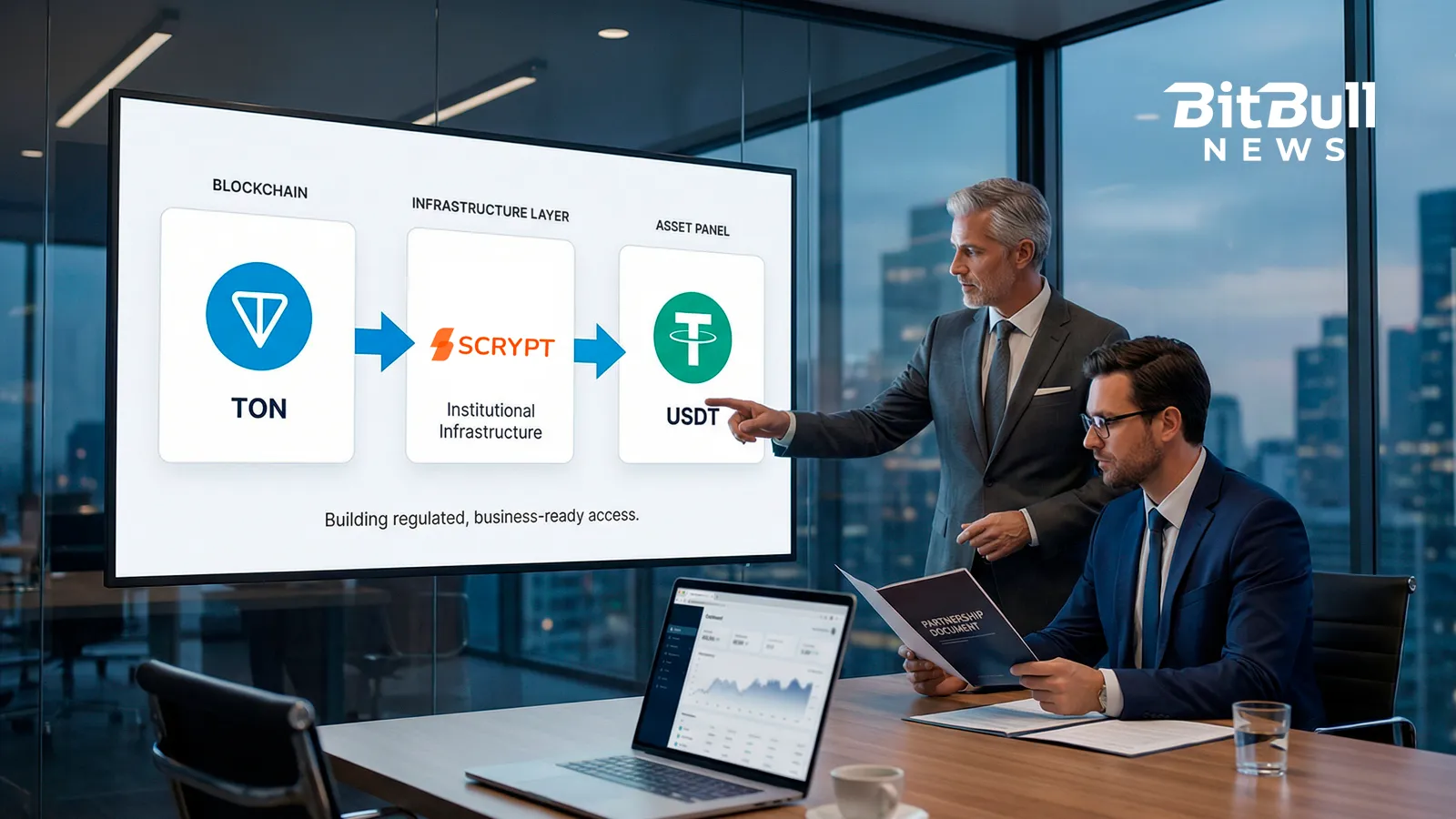
TON Foundation has partnered with SCRYPT to give businesses institutional-grade access to USDT on TON Blockchain, in a move aimed at pushing TON deeper into real-world payments and treasury infrastructure. The announcement frames the partnership around execution, settlement and fiat access rather than around a new token launch or retail wallet feature.
That is the strongest angle here. TON is not announcing another consumer app or Telegram growth story. It is trying to make TON more usable for banks, fintechs, payment providers and corporate treasuries that want regulated access to stablecoin rails.
TON is opening a regulated path into USDT on TON
According to TON Foundation, SCRYPT has been selected as its institutional infrastructure partner to meet growing demand for stablecoins as a settlement layer for global payments, ecosystem distribution and treasury operations. TON says SCRYPT will provide execution, settlement and fiat access for institutions using USDT on TON.
The practical significance is clear: this is about making USDT on TON easier to use inside regulated financial workflows. TON is presenting the chain as a scalable alternative to existing settlement networks, while SCRYPT is being used as the institutional bridge that handles the harder parts of market access and compliance. This second point is an analytical reading of the roles described in the release.
Why SCRYPT matters more than a normal integration partner
TON describes SCRYPT as Switzerland’s largest stablecoin infrastructure partner and says the company gives banks, fintechs, payment providers and corporate treasuries access to USDT on TON through a single Swiss-licensed regulated platform. The release says that includes near-instant cross-border settlement, fiat conversions and 24/7 compliant on- and off-ramps.
That matters because the partnership is not mainly about wallet support or token visibility. It is about giving institutions a full access stack around USDT on TON: liquidity, execution, settlement, custody-adjacent infrastructure and fiat conversion. That is what turns the announcement into a market-structure story rather than a simple ecosystem partnership. This is an inference from the services TON says SCRYPT will provide.
TON is selling payments scale, not just chain growth
TON uses the release to underline the size of its distribution network. It says TON reaches more than 1 billion users through its integration with Telegram, supports over 50 million wallets and is seeing growing activity across payments, trading and digital commerce.
Those numbers are doing strategic work in the announcement. TON is effectively telling institutions that this is not a stablecoin partnership built on a niche chain with no audience. It is a pitch that combines a large consumer distribution surface with a new institutional access layer. That is the broader commercial message behind the release.
Stablecoins are the real product story here
Both sides frame stablecoins as the center of the deal. TON says stablecoins are becoming the settlement layer of choice for global payments and treasury operations, while SCRYPT says the partnership will let institutions access stablecoins on TON with infrastructure that handles execution, settlement, custody and fiat conversion at scale.
In other words, TON is leaning into the stablecoin-payments narrative much more directly here than into the broader crypto market narrative. The partnership is meant to make USDT on TON legible to institutions as payment and treasury infrastructure, not only as a blockchain asset. This is an analytical conclusion based on the emphasis in the release.
What we don’t know yet
The announcement does not name launch clients, disclose transaction targets, or explain how much volume SCRYPT already expects to route through USDT on TON. It also does not say which institutional use cases will come first in practice — bank payments, fintech rails, treasury operations or broader ecosystem distribution.
Why it matters for crypto
- It shows TON is trying to move beyond consumer distribution and into institution-facing stablecoin infrastructure.
- It gives USDT on TON a more formal regulated access route for banks, fintechs and treasury users.
- It suggests the next stage of stablecoin competition may depend as much on regulated access and fiat connectivity as on chain speed or user count. This is an inference based on the structure of the partnership.
- It also reinforces TON’s attempt to turn Telegram-linked scale into a payments and settlement advantage. This is an inference grounded in the network metrics and payment focus in the release.
What to watch next
- Whether TON and SCRYPT disclose real institutional customers using USDT on TON after the partnership goes live in practice.
- Which use case scales first: cross-border payments, treasury settlement or broader ecosystem distribution.
- Whether other stablecoin infrastructure providers respond by building similar institutional access layers on competing chains. This is an inference based on the strategic importance of the move.
- Whether TON can convert its Telegram-linked reach into actual payment and treasury volume rather than just distribution potential. This is also an inference from the release.