


Content
TL;DR
- Tether is developing modular, high-density Bitcoin mining systems with Canaan and ACME Swisstech.
- The new design uses application-specific hash board modules instead of fully assembled off-the-shelf mining rigs.
- Tether says the architecture separates compute, power and enclosure so operators can tune performance, cooling and upgrades more precisely.
- The launch builds on Tether’s open-source Mining OS and Mining Development Kit, showing the company wants deeper control over the mining stack, not just exposure to Bitcoin.
Tether is moving further into Bitcoin mining infrastructure.
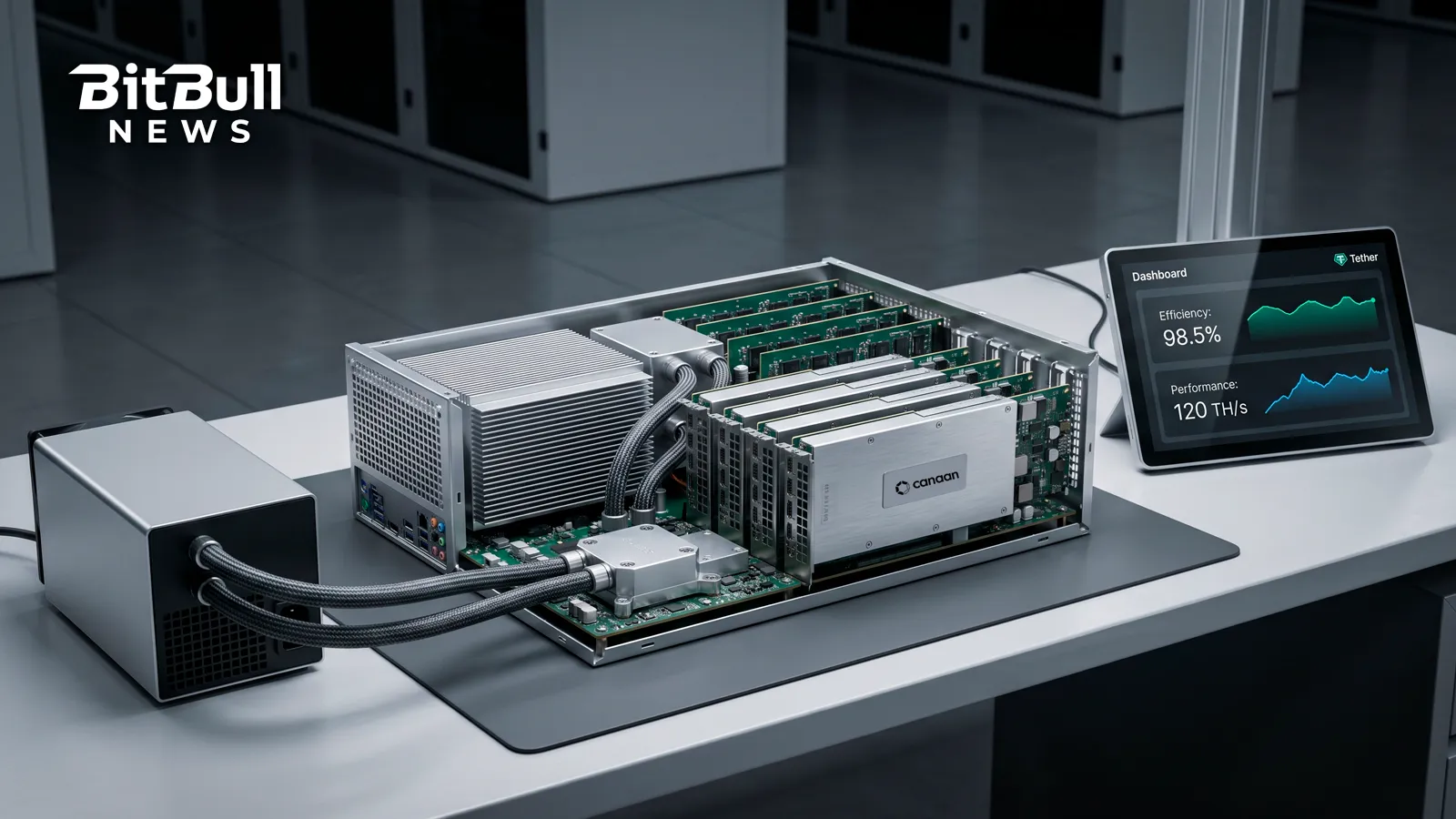
The company said it is developing modular Bitcoin mining systems with Canaan and ACME Swisstech, using custom hash board modules instead of relying on fixed, preassembled mining rigs. The goal is to give operators more control over energy use, heat, hardware upgrades and site-level performance.
Simply put, Tether is trying to make mining infrastructure more like industrial compute infrastructure: modular, tunable and easier to upgrade without replacing entire machines.
Tether Is Moving From Mining Software Into Mining Hardware Design
The key change is where Tether is pushing its control layer.
In February, Tether open-sourced Mining OS, or MOS, to help operators manage hardware, energy and site data through one system. On April 27, it launched Mining Development Kit, an open-source framework for mining dashboards, automation tools and infrastructure applications. Now, one day later, Tether is extending the same logic into hardware design.
That makes this more than a hardware partnership. Tether is trying to own more of the mining stack: software, orchestration, thermal control and now modular compute systems.
The broader direction is similar to what is happening across Bitcoin infrastructure and treasury strategy: large crypto-native firms are no longer just holding BTC or using existing infrastructure. They are building the operating layers around it.
Modular Mining Could Change How Large Sites Scale
Traditional mining rigs are usually sealed, fixed units. If operators want better cooling, different performance behavior or hardware upgrades, they often have to work around the design of the full machine.
Tether’s new setup breaks that model apart. According to the company, compute, power and enclosure can be optimized independently. That gives operators more room to replace individual components, scale incrementally and adjust performance based on real operating conditions.
This matters most for industrial-scale miners. At large sites, small efficiency gains can become meaningful when multiplied across thousands of units. Better heat control and component-level upgrades can also reduce downtime, which directly affects mining economics.
Immersion Cooling Is Central To The Design
Tether says the systems are optimized for immersion cooling, though it is also developing other cooling configurations.
That detail matters because cooling is now one of the biggest operating questions in mining. Hashrate is only part of the equation. Miners also need to manage electricity costs, heat, maintenance and uptime. A modular setup built around immersion cooling gives operators more direct control over the relationship between performance and energy overhead.
Paolo Ardoino, Tether’s CEO, said most mining infrastructure still uses sealed, fixed units that make it expensive to scale and inefficient to run. He framed Tether’s modular compute approach as a way to tune, upgrade and cool systems independently.
That comment captures the real pitch: Tether is not only trying to mine Bitcoin. It wants to make mining infrastructure less dependent on standard retail-style machines.
Canaan And ACME Bring The Hardware Layer
Canaan’s role is important because the company already designs ASIC mining hardware through its Avalon line. In the announcement, Canaan CEO Nangeng Zhang said demand is rising for modular, high-performance hardware that can be integrated into customer-designed systems.
ACME Swisstech is also part of the buildout. Its president, Giv Zanganeh, said the collaboration is aimed at a more industrial co-design approach rather than plug-and-play retail mining products.
That gives the project a clearer market position. This is not a miner for casual users. It is infrastructure for operators that want to design mining sites around their own energy, cooling and performance requirements.
Who It Affects Now
The first group affected is large-scale Bitcoin miners. If modular systems perform as Tether claims, industrial operators could get more flexibility in how they scale, cool and maintain mining fleets.
The second group is mining hardware makers. Tether’s approach points toward more customized hardware relationships, where miners and infrastructure operators ask for modules and integration flexibility instead of buying only complete rigs.
The third group is energy-focused infrastructure builders. Mining sites increasingly compete on power strategy, not just machine count. Modular systems could make it easier to match compute loads to specific energy conditions, especially in markets where power costs shift quickly.
This also matters for Bitcoin investors watching network security and mining economics. More efficient infrastructure can support stronger mining operations, but it can also raise the bar for smaller operators if industrial players keep improving their cost base. For broader market context, that connects with the same question behind Bitcoin’s path back to stronger price momentum: whether network fundamentals, institutional demand and liquidity conditions keep improving together.
Why It Matters
This story matters because Tether is becoming more than a stablecoin issuer with Bitcoin exposure.
The company is now building deeper infrastructure around Bitcoin itself: mining software, mining development tools and custom modular compute systems. That gives Tether more influence over the technical and operational side of the network, especially if its systems prove useful beyond its own sites.
The next thing to watch is deployment. Tether’s announcement explains the architecture, but the real test will be live performance at scale: energy efficiency, uptime, cooling gains, maintenance costs and whether other miners adopt the design.
If the systems work, this could push mining further away from simple rig procurement and toward custom industrial infrastructure. If not, it will remain a strong technical statement but a harder business case. Either way, Tether is making clear that its Bitcoin strategy is not only about buying or holding BTC. It wants to help shape how Bitcoin is produced.