


Content
TL;DR
- Bitso has launched xStocks in Argentina, starting with 10 tokenized U.S. stocks and ETFs.
- Users can buy xStocks with USDC or USDT already held in their Bitso accounts.
- The first rollout includes AAPLx, AMZNx, GOOGLx, METAx, MSFTx, NFLXx, NVDAx, QQQx, SPYx and TSLAx.
- The launch gives Argentine users easier price exposure to Wall Street assets, but xStocks do not provide direct shareholder rights.
Bitso is bringing tokenized U.S. equities to Argentina through Kraken’s xStocks framework.
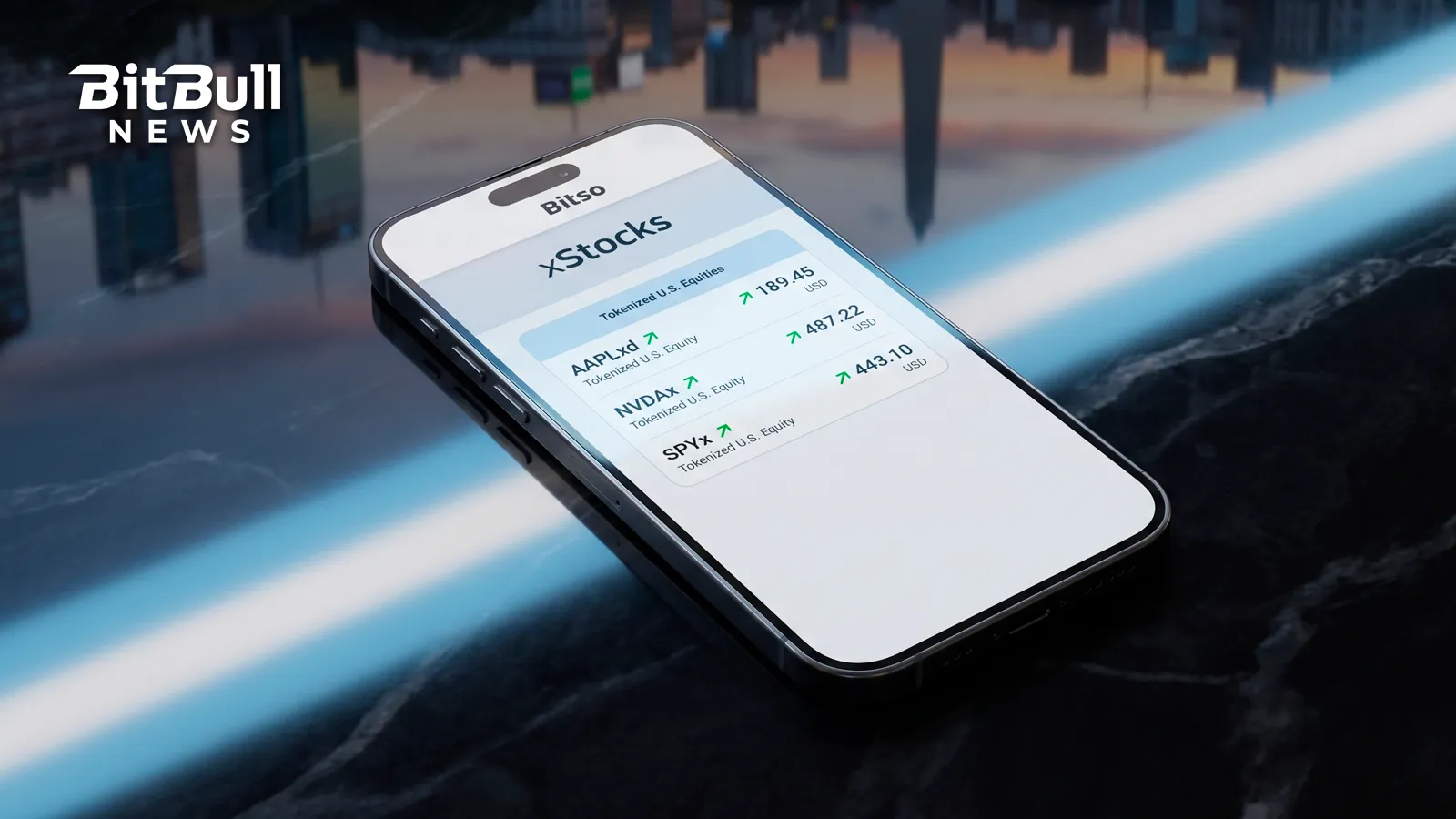
The Latin American crypto platform has launched xStocks tokenized equities for Argentine users, starting with 10 tokenized assets tied to major U.S. stocks and ETFs. Users can trade them with digital dollars already held in their Bitso accounts, without opening a brokerage account or going through a new verification process.
Simply put, Bitso is giving users in Argentina a crypto-native route to Wall Street price exposure.
Bitso Is Turning Digital Dollars Into A Stock Market Access Tool
The key change is access.
Argentine users can now buy tokenized exposure to Apple, Amazon, Alphabet, Meta, Microsoft, Netflix, Nvidia, Tesla, the Nasdaq 100 ETF and the S&P 500 ETF directly inside Bitso. The assets are settled in USDC or USDT, and positions start from as little as $5.
That matters because Argentina has long had strong demand for dollar-based savings and global market exposure. Traditional access to U.S. stocks can involve brokerage onboarding, currency friction and market-hour limits. Bitso is trying to collapse that workflow into a familiar crypto app.
Julián Colombo, Bitso’s general manager for South America, framed the launch around that gap, saying Argentina has “one of the most financially sophisticated populations in Latin America,” but that access to leading global companies has historically been reserved for a few. His point is the real story here: this is not only a product launch, but a distribution play for users who already hold digital dollars.
xStocks Give Price Exposure, Not Direct Share Ownership
The most important investor detail is what xStocks are — and what they are not.
Each xStock is designed to track the price of its underlying asset on a 1:1 basis and is backed accordingly. But holders get contractual economic exposure, not direct ownership of the actual stock. That means they do not receive the same shareholder rights that come with directly holding a traditional equity.
That distinction matters. Tokenized equities can make access faster and more flexible, but they also create a different legal and product structure from ordinary shares.
This is the same line the market is now trying to define across tokenized securities infrastructure: faster access is useful, but serious adoption also depends on rights, disclosures, governance, custody and market structure.
What Changed
Before this launch, xStocks already had traction across Kraken, onchain venues and institutional integrations. Now Bitso adds a major Latin American distribution channel and makes the product available directly inside one of the region’s most recognized crypto apps.
The user experience also changes. In this first Bitso rollout, the tokens operate inside the Bitso environment using the platform’s existing buy-and-sell flow. Users do not need a separate stock account, and the most traded tokens — AAPLx, NVDAx, TSLAx, SPYx, GOOGLx and QQQx — are available 24/7. The remaining four launch with 24/5 trading and are expected to move toward 24/7 availability over time.
That is the practical difference from traditional market access. The product is built around crypto-style availability and stablecoin settlement, not old brokerage hours.
Tokenized Equities Are Moving Into Distribution Mode
This launch also says something bigger about xStocks.
The product is no longer only about proving that tokenized U.S. equities can exist. It is now about where they can be distributed and how easily users can access them. Kraken says xStocks have already surpassed $25 billion in total transaction volume and more than 100,000 unique holders worldwide.
That pushes the category into a new phase. Tokenized stocks are moving through exchanges, wallets, onchain apps and execution platforms, including recent integrations focused on institutional trading workflows.
Val Gui, xStocks general manager, said Wall Street “shouldn’t be limited by geography.” That line captures the broader pitch: tokenized equities are trying to turn public-market exposure into a global, programmable product instead of a jurisdiction-bound brokerage experience.
Who It Affects Now
The first group affected is Argentine users who already hold USDC or USDT on Bitso and want easier exposure to global stocks and ETFs.
The second group is local fintech and crypto platforms. If Bitso sees strong demand, more platforms in Latin America may try to offer tokenized equities as part of their digital-dollar product stack.
The third group is tokenized asset issuers. Distribution through major regional apps can matter just as much as listings on global exchanges, because it puts the product in front of users with a clear local need: access to dollar-denominated global markets.
Why It Matters
This story matters because tokenized equities are starting to solve a real access problem, especially in markets where users already rely on stablecoins and digital dollars.
For Argentina, the pitch is easy to understand: users can get exposure to major U.S. companies without opening a traditional brokerage account or waiting for New York market hours. But the product also comes with limits. xStocks are not direct shares, do not carry full shareholder rights and remain subject to eligibility and jurisdictional restrictions.
The next thing to watch is whether Bitso users treat xStocks as a real investing tool or just another tradable crypto product. If adoption grows, Latin America could become one of the more important test markets for tokenized equities. If activity stays thin, the launch will still show distribution progress, but not yet prove mass demand.
The bigger signal is clear: tokenized stocks are moving from “available somewhere onchain” to “embedded inside apps people already use.” That is where the category starts to become more practical.