


Content
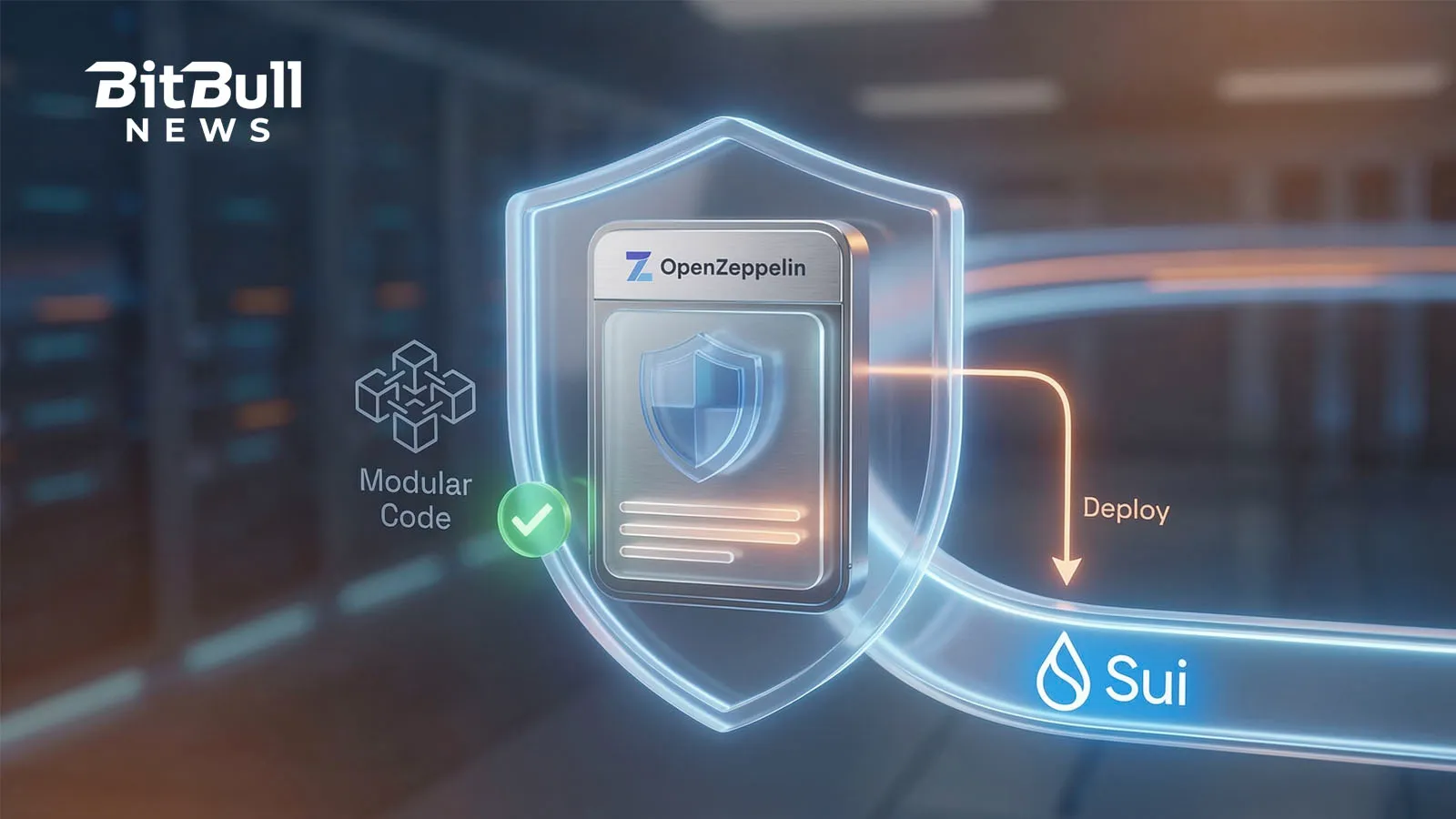
OpenZeppelin has officially launched OpenZeppelin Contracts for Sui, bringing its contract-library model into the Sui ecosystem for the first time. The initial release includes a DeFi Math Library and an Ownable access-control module, which OpenZeppelin says are designed to give Sui developers more secure and reusable building blocks for DeFi and protocol development.
The launch is part of a broader partnership with the Sui Foundation, and OpenZeppelin is clearly positioning this as the first step in a longer roadmap rather than a one-off library drop.
Why OpenZeppelin is starting with math
OpenZeppelin says it chose DeFi math first for a very specific reason: math libraries are not just utility code, they are critical infrastructure. The company points directly to the May 2025 Cetus Protocol exploit, arguing that the incident showed how a flaw in a shared math library can spread risk across multiple Sui protocols at once.
According to OpenZeppelin, the underlying issue in that case was an incorrect overflow check in a checked-shift-style function. Its broader point is simple: when every team writes or imports its own math primitives, a single bug can become an ecosystem-wide problem.
In plain terms, OpenZeppelin is saying Sui needs standardized math libraries the same way Ethereum eventually needed them.
What is included in the first release
The first version of OpenZeppelin Contracts for Sui includes two main pieces. The first is a DeFi Math Library with 12 core functions. The second is Access Management v1, which starts with an Ownable module adapted for Sui’s object model.
The math library includes functions such as:
averagemul_divmul_shrchecked_shl and checked_shrsqrtlog2, log10, and log256clz and msbsafe cast utilities between u256 and u64
OpenZeppelin says these functions are intended to support the core primitives DeFi protocols depend on, especially where precision, overflow protection, and predictable arithmetic matter most.
Why the Ownable module matters
The inclusion of Ownable may look basic, but OpenZeppelin treats it as foundational. The company says ownership-based access control is a core permission pattern in Move, and that developers need a trusted reference implementation for admin controls, upgrades, and governance functions.
That matters because many protocol failures do not come only from math bugs. They also come from weak role management and poorly implemented admin permissions.
What OpenZeppelin says developers can build with it
OpenZeppelin says the first release is designed to support a broad set of DeFi use cases on Sui. The company specifically points to:
- AMMs and DEXs, using functions like mul_div, sqrt, and log2
- Lending protocols, for collateral, liquidation, and interest-rate calculations
- Vaults and yield aggregators, using share-based accounting
- Token pricing oracles, for pricing normalization and TWAP-style calculations
- Any protocol needing access control, using the Ownable module
The overall message is that this is not just a library for niche developers. It is meant to serve as a standard foundation layer for financial applications building on Sui.
OpenZeppelin is leaning hard on its security brand
A big part of the announcement is not only what the code does, but how it was built. OpenZeppelin says every function in this release follows the same quality standards that made its Solidity libraries widely adopted on Ethereum. It highlights 90%+ code coverage, mandatory two-reviewer approval, direct ports from battle-tested Solidity logic, and full open-source availability under the MIT license.
That is important because OpenZeppelin is effectively selling trust here. The pitch is not “here is some Move code.” The pitch is “here is a security standard Sui developers can build on instead of rolling their own.” This is an inference based on how strongly the announcement emphasizes testing, review process, and ported logic.
Why this matters for Sui
This release is meaningful because Sui’s developer ecosystem has been growing, but it still lacks some of the shared infrastructure layers that Ethereum developers take for granted. OpenZeppelin’s move helps fill that gap by bringing more standardization to a chain where security-critical primitives are still less mature and less uniform. This is an inference supported by OpenZeppelin’s argument that shared audited libraries are needed after the Cetus exploit.
It also strengthens the broader case that Move ecosystems now need the same library discipline that EVM ecosystems learned over time.
Why it matters for crypto
- OpenZeppelin is bringing its “standard library” model to Sui, which could raise the baseline for secure smart contract development on the network.
- The release directly targets two high-risk areas in DeFi: math correctness and access control.
- By tying the launch to the Cetus exploit, OpenZeppelin is framing standard libraries as a practical answer to shared ecosystem risk.
- If widely adopted, these libraries could reduce the number of teams writing custom financial primitives from scratch, which is often where dangerous bugs begin. This is an inference supported by OpenZeppelin’s reasoning in the post.
What to watch next
- Whether OpenZeppelin adds more Sui modules beyond math and Ownable, especially broader permissioning and token-related primitives. This is an inference based on the company calling this the first milestone in a long-term partnership.
- How quickly Sui DeFi teams start integrating the new math library into live products.
- Whether OpenZeppelin’s entry pushes other Move ecosystems to adopt similar standardized contract libraries. This is an inference supported by the broader significance of the launch.
- If future releases expand from core DeFi math into governance, upgradeability, and more advanced Move-native primitives. This is an inference based on OpenZeppelin’s stated long-term roadmap.