


Content
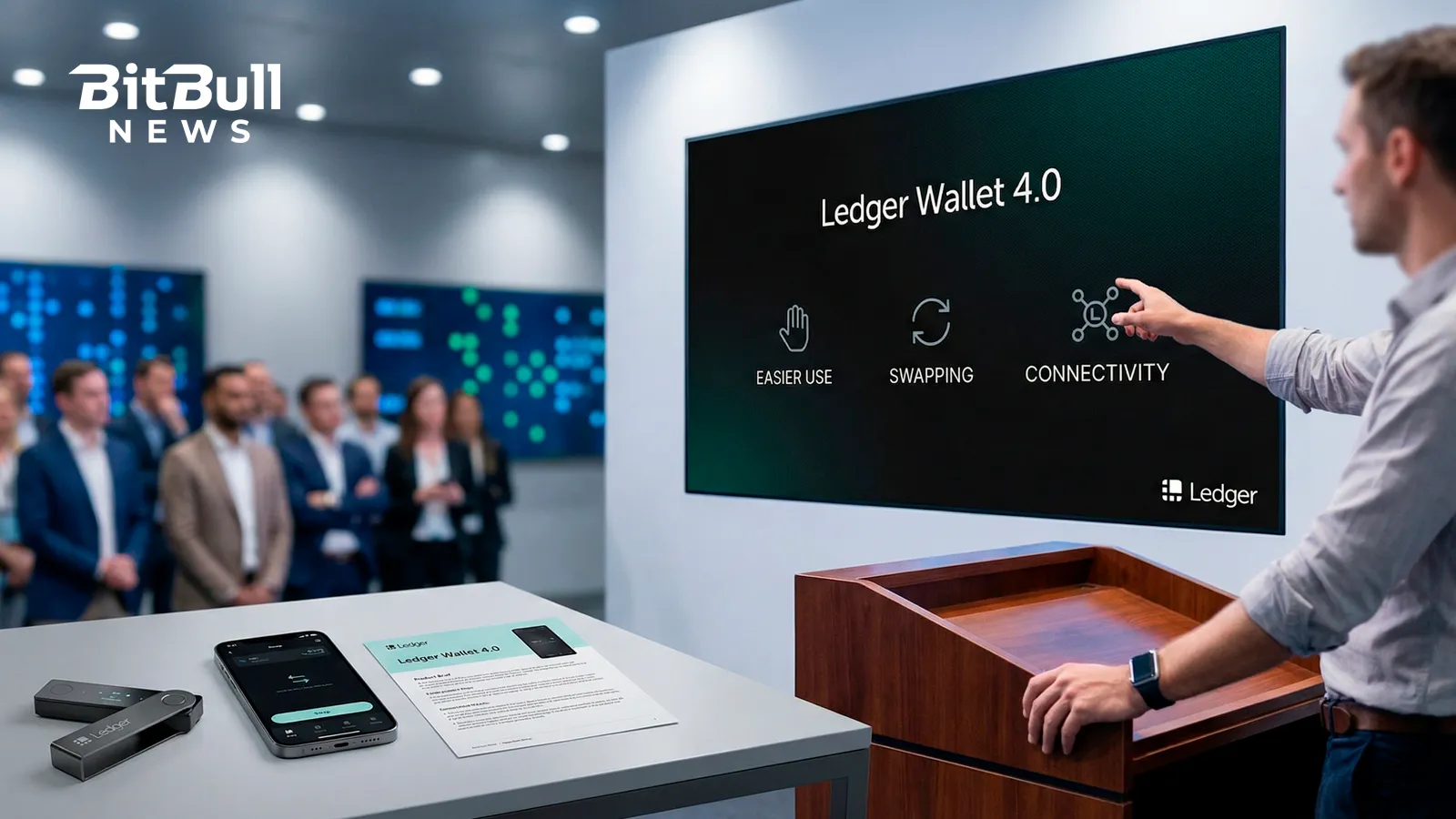
Ledger has launched Wallet 4.0 as a major upgrade to its all-in-one crypto app, framing the release around three ideas: more clarity, more choice and more control. The company says the update is designed to make it easier for users to buy, swap, stake, spend and manage assets from a single interface when paired with a Ledger signer.
The stronger news angle is that Ledger is trying to move beyond the image of a hardware wallet company with a companion app. With Wallet 4.0, it is positioning Ledger Wallet as a more complete onchain operating layer for portfolio management and trading, while still keeping hardware-based signing at the center of the experience. This is an analytical reading of how Ledger frames the release.
A wallet refresh built for action, not just storage
Ledger says Wallet 4.0 is meant to give users a faster and more usable interface for managing digital assets, with a redesigned dashboard that puts trading and portfolio actions front and center. The company explicitly contrasts this with a static “museum-style” view of assets, saying users now need real-time clarity and the ability to act when market conditions change.
That matters because Ledger is not describing this as a cosmetic redesign. It is describing it as a shift toward a more active product, one built for people who want to track markets, compare routes and move capital rather than simply hold coins in cold storage.
The main upgrade is deeper access to cross-chain liquidity
Ledger says Wallet 4.0 expands connectivity across DeFi and cross-chain trading, with native integrations including Jupiter and OKX DEX. It says those integrations provide access to unified liquidity across more than 20 chains, while other providers such as Uniswap, 1inch and NEAR Intents compete to deliver better rates.
The commercial meaning is straightforward: Ledger wants users to stop leaving the wallet to find better execution elsewhere. Instead of treating Ledger Wallet as a storage layer with limited transaction utility, the company is trying to make it a more credible execution layer for swaps and onchain portfolio moves. This is an inference based on the way the new integrations are presented.
Gas sponsorship is meant to remove one of DeFi’s most annoying frictions
One of the clearest practical features in the release is gas sponsoring through BlinkLabs. Ledger says this allows users to pay network fees with the token they are actually swapping, rather than being blocked by a lack of native gas tokens on a chain.
That is a meaningful usability change because “insufficient funds” for gas remains one of the most common reasons ordinary users abandon onchain activity. Ledger is clearly trying to reduce that friction and make multichain trading feel less fragmented and less technical. This second sentence is an analytical conclusion from the product description.
Watch Mode widens the funnel beyond current hardware users
Ledger also introduced a new Watch Mode that lets users track markets and simulate trades even when they do not have their Ledger signer with them. The company says this is meant to let people explore the ecosystem first and commit later.
That feature matters because it lowers the barrier to entry into the Ledger environment. Wallet 4.0 is still built around Ledger signers for actual ownership and security, but Watch Mode makes the software more useful even before a user is ready to sign transactions.
Ledger is also pushing harder into everyday yield and portfolio management
Beyond trading, Ledger says Wallet 4.0 includes a “smart portfolio scan” designed to identify possible reward opportunities on otherwise idle assets. The release also says the update gives users clearer visibility into gas fees and more market data to compare providers and track prices across more than 15,000 coins and tokens.
This is important because Ledger is trying to make the wallet more useful between major transactions. The product is being positioned not only as a place to secure assets, but also as a place to monitor yield opportunities, evaluate trades and manage day-to-day portfolio decisions with less guesswork. This is an inference based on the combination of features Ledger chose to highlight.
Security is still the core part of the pitch
Even as the app becomes more active and trading-focused, Ledger keeps the security message central. The company says Wallet 4.0 works with Ledger signers to preserve user control and verification, and it explicitly contrasts that model with software wallets and exchanges. It also repeats that crypto services are provided by third parties and that Ledger itself provides no financial advice.
That framing matters because Ledger is trying to grow utility without diluting its core identity. The company wants Wallet 4.0 to feel like a stronger onchain app, but still one anchored in hardware-backed verification and self-custody rather than in a pure software-wallet model.
What we still don’t know yet
Ledger’s post gives a strong feature overview, but it does not disclose user numbers for Wallet 4.0, trading volume expectations, or how much of the new liquidity stack comes from each provider. It also does not say whether more chains or integrations are imminent beyond the partners named in the launch post.
Why it matters for crypto
- It shows hardware wallet companies are pushing deeper into execution, swaps and yield discovery, not just storage.
- It suggests wallet competition is increasingly about who can combine security with smoother access to DeFi liquidity and portfolio actions. This is an inference based on Ledger’s product positioning.
- Gas sponsorship and Watch Mode both point to the same goal: reducing the friction that still keeps many users from using onchain apps regularly.
- The upgrade reinforces that the next phase of wallet competition may be about becoming the default onchain interface, not just the safest signing device. This is an analytical conclusion from the launch.
What to watch next
- Whether Ledger Wallet 4.0 drives heavier in-app trading and swap activity rather than remaining mainly a portfolio dashboard. This is an inference based on the release.
- Whether Ledger adds more native integrations and chains after naming Jupiter, OKX DEX, Uniswap, 1inch and NEAR Intents in the launch.
- Whether Watch Mode becomes a real acquisition tool for users who are curious about Ledger software before buying hardware. This is an inference based on Ledger’s description of the feature.
- Whether gas sponsorship meaningfully improves multichain conversion rates for ordinary users, especially outside the most active DeFi crowd. This is also an inference from the problem Ledger says it is solving.