


Content
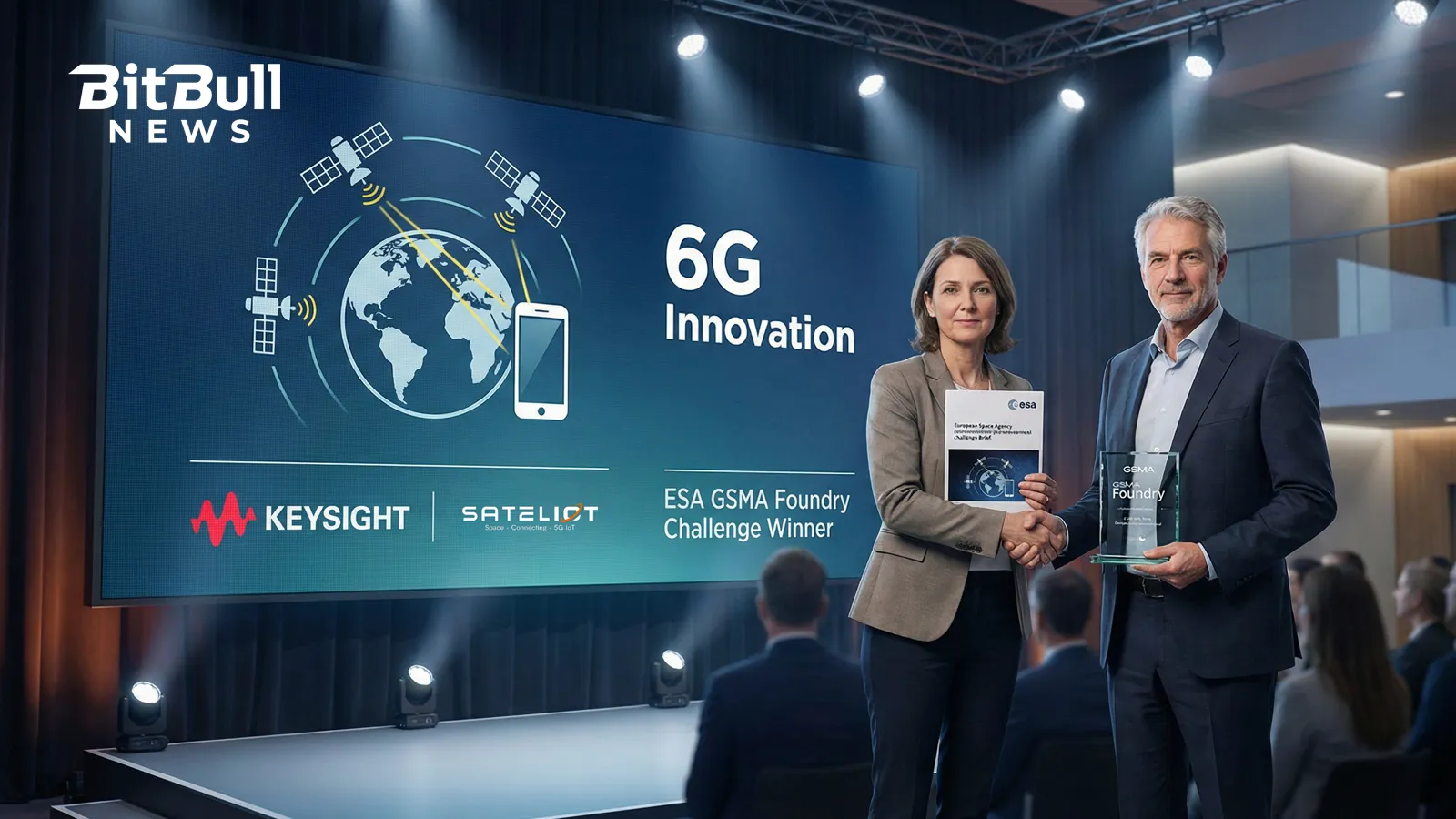
Keysight and Sateliot have won the fifth annual European Space Agency and GSMA Foundry Innovation Challenge for a joint project aimed at making future satellite-terrestrial mobile networks more secure and reliable. The award was presented at Mobile World Congress 2026 in Barcelona and recognized early-stage 6G innovation tied to non-terrestrial network, or NTN, development.
The project’s title is technical, but the core idea is straightforward: use blockchain, artificial intelligence, machine learning and digital calibration certificates to make it easier to trust how satellites and hybrid networks are built, tested and operated. In practice, Keysight and Sateliot are pitching a system that could help operators detect anomalies faster, improve uptime and prepare for commercial satellite-to-terrestrial mobile services built around future 3GPP standards.
The award is really about making satellite-mobile networks trustworthy
The winning project is called “Blockchain-enabled anomaly detection end-to-end solution for 5G Non-Terrestrial Networks.” According to the release, the system is designed to create traceable calibration from satellite manufacturing through network operations, giving operators a more verifiable chain of trust across the full lifecycle of an NTN deployment.
That matters because satellite-terrestrial convergence is no longer just a research theme. ESA and GSMA framed the challenge around technical solutions that can help integrate satellite systems with terrestrial networks for ubiquitous, high-performance connectivity, in line with the latest 3GPP recommendations. The real problem being tackled here is not only coverage. It is whether these hybrid networks can be trusted to perform consistently enough for commercial use.
Blockchain and AI are being used as operational infrastructure, not buzzwords
Keysight and Sateliot say their proposal combines blockchain, AI, machine learning and digital calibration certificates to support traceable calibration and greater satellite autonomy. The stated goal is to maximize network reliability, improve resilience and enable faster detection and response when performance issues appear.
This is the strongest angle in the announcement. The companies are not talking about blockchain as a payment rail or token layer. They are using it as part of a trust architecture for satellite manufacturing, testing and network assurance. AI and machine learning then sit on top of that to help identify anomalies across hybrid space-terrestrial systems in real time. That is a much more infrastructure-focused use case than the usual “AI plus blockchain” marketing story.
ESA is using the challenge to push Europe’s 6G position
ESA said the funding opportunity behind the challenge was provided by ESA Member States through its Space for 5G/6G and Sustainable Connectivity line within the ARTES programme. Antonio Franchi, who leads that programme area at ESA, said the goal is to accelerate technologies that can give Europe an edge in future 5G and 6G networks.
That gives the award a bigger strategic context. This is not just a vendor prize. It is part of a broader European push to validate technical building blocks for future NTN infrastructure, especially as 6G discussions increasingly include direct satellite-terrestrial integration rather than treating satellite as a separate layer.
Why Sateliot and Keysight fit this story
Sateliot is already positioned around satellite-based connectivity using standards-based telecom architecture, while Keysight’s role is rooted in test, measurement and assurance. In the release, Keysight said the collaboration shows how advanced test capabilities and AI-driven analytics can improve visibility into hybrid space-terrestrial networks, while Sateliot said the work supports the resilience and operational autonomy needed to turn space into secure infrastructure.
That pairing makes sense. If future NTN services are going to move from demos to commercial networks, operators will need both a standards-based satellite layer and credible ways to verify performance, integrity and fault response. The release suggests this joint project is meant to sit exactly in that gap.
What we still do not know
The announcement is strong on technical intent, but lighter on deployment detail. It does not say when the solution could move beyond the challenge stage, whether telecom operators are already trialing it, or how much of the stack is ready for commercial NTN rollout today. It also does not quantify performance gains or specify which parts of the architecture will be productized first.
Why it matters for crypto
- It is another example of blockchain being positioned as trust infrastructure rather than as a payments or speculative asset layer.
- The project suggests future enterprise blockchain use cases may grow most where traceability, device trust and system integrity matter more than token economics.
- It shows blockchain is still finding a place inside industrial and telecom systems, especially where multiple parties need verifiable records across long operating chains.
What to watch next
- Whether Keysight and Sateliot move this from challenge recognition into operator pilots or commercial NTN deployments.
- Whether ESA’s 5G/6G and ARTES-backed work produces more projects focused on satellite-terrestrial trust, resilience and automation.
- Whether blockchain-based assurance becomes a broader design pattern in 6G infrastructure, rather than a one-off experimental feature.