


Content
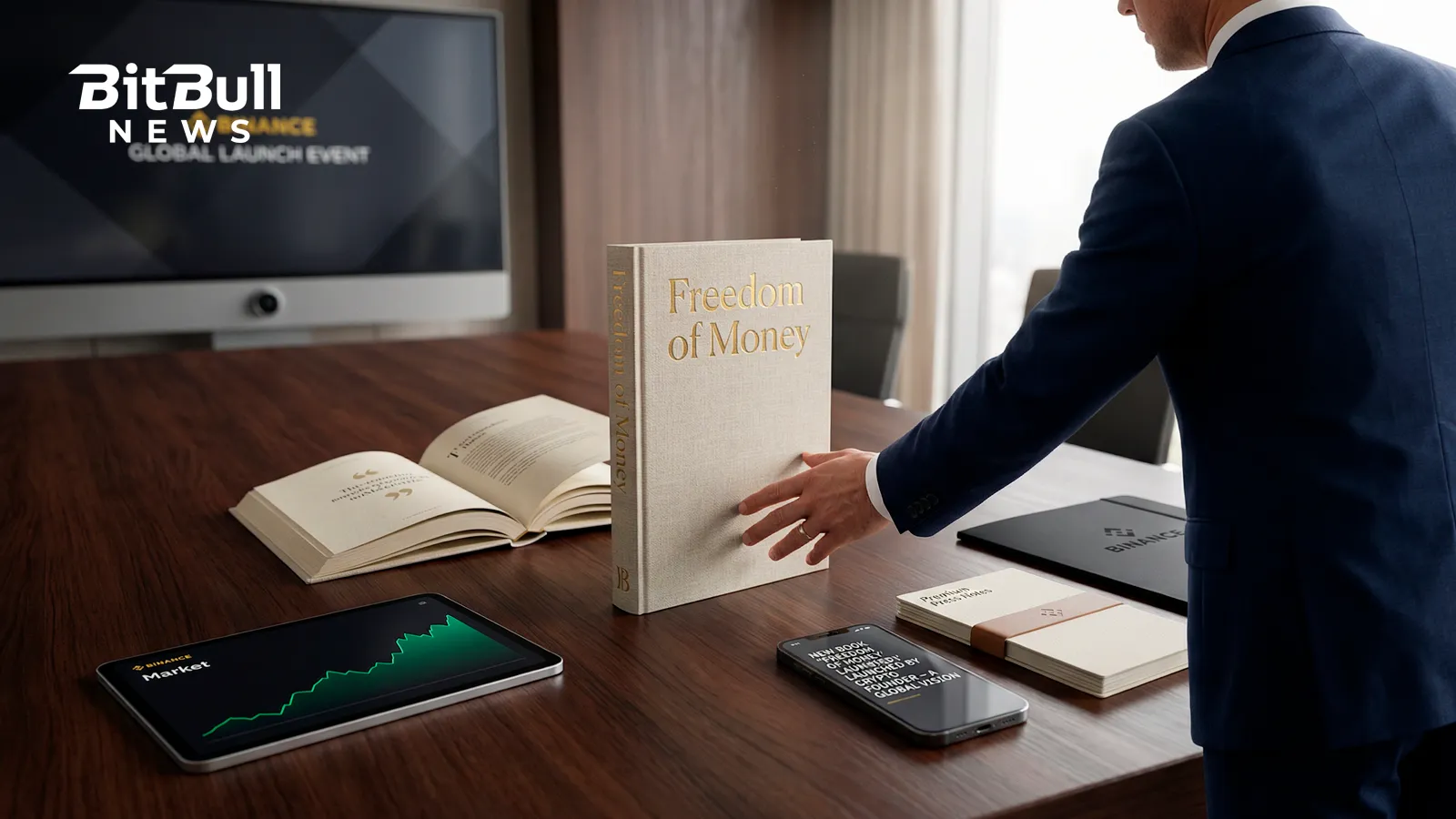
Changpeng Zhao, the founder of Binance, has published a new book called Freedom of Money, presenting it as both a memoir and a manifesto after one of the most turbulent periods in crypto’s history. The release says the book traces his path from rural China to building Binance, then turns to the legal fallout that followed and the ideas about financial freedom he says still matter most.
The strongest news angle is not simply that CZ has written a book. It is that he is using it to reclaim the narrative around Binance, crypto regulation and his own legacy after stepping down from executive leadership. In the release, CZ says crypto’s story, and his role in it, was told by many other people, and that this book is his chance to tell it in his own words.
CZ is trying to retell the Binance story on his own terms
The release frames Freedom of Money as a first-person account of Binance’s rise from a 2017 startup into what it describes as a platform serving more than 300 million users. It says the book revisits the decisions and principles that helped Binance outpace rivals, including hiring, execution, innovation and customer focus during the industry’s fastest growth phase.
That matters because this is not being marketed as a neutral industry history. It is being sold as CZ’s version of events at a time when Binance’s story has largely been told through regulators, prosecutors, critics and media coverage. The book is therefore as much about reputation and interpretation as it is about biography. This is an analytical conclusion based on how CZ describes the project in the release.
The book leans heavily into the idea of financial freedom
According to the announcement, the memoir is built around a larger argument about money itself. CZ says he still believes financial freedom is one of the most powerful ideas of the modern era, and the release says the book makes the case that cryptocurrency can expand access to finance and give individuals greater control over their economic futures.
That gives the book a broader purpose than simply recounting a founder journey. CZ is clearly trying to reconnect his personal story to the original ideological promise of crypto — openness, self-direction and access — rather than letting the Binance narrative remain defined mainly by enforcement and scandal. This is an inference grounded in the way the release pairs the memoir with the language of manifesto and financial freedom.
The legal battle is no side chapter
The release makes clear that the book does not avoid the hardest parts of CZ’s recent history. It says Freedom of Money addresses the fallout from the collapse of FTX, what CZ describes as the politicization of crypto regulation, and his own legal battle with U.S. authorities tied to a single compliance charge related to Binance’s early years. It also says the book covers the settlement that followed and his four-month prison sentence, during which he wrote much of the manuscript.
That section is likely to be the book’s main draw for many readers. Binance’s rise has already been documented extensively, but this is one of the first times CZ is presenting the legal and political pressure around the company as part of a single founder narrative. In newsroom terms, that turns the book into something closer to a post-crisis self-defense and legacy statement than a standard business memoir. This is an analytical reading of the release.
A founder story designed to stretch beyond crypto
The announcement also spends time on CZ’s biography before Binance. It says the book recounts his early life growing up without running water, his family’s move to Canada and his later career building ultra-high-speed trading systems before entering digital assets in 2013. The release is clearly trying to position him not only as a crypto executive, but as a broader technology and finance builder shaped by immigration, scarcity and ambition.
That framing matters because it widens the audience. The release is not only targeting Binance users or crypto traders. It is also aiming at general business readers, founders and people interested in entrepreneurial rise-and-fall stories. Ray Dalio’s endorsement in the release reinforces that positioning, describing CZ as someone who helped make alternative monies accessible and built Binance into part of a “new monetary order.”
This looks like a legacy move as much as a publishing event
The book arrives at a moment when CZ’s role in the industry has changed. The release says he relinquished executive leadership in late 2023, later served four months in federal prison, and now focuses on Giggle Academy, YZi Labs and BNB Chain. Read together, those details make Freedom of Money look less like a side project and more like an attempt to define the next chapter of his public identity.
In that sense, the publication is strategically timed. It gives CZ a way to move from being the subject of legal and regulatory narratives back into the role of narrator, while also reminding the market that he still wants to be seen as one of crypto’s foundational architects rather than only as a defendant from Binance’s regulatory era. This is an analytical conclusion based on the release’s framing of his past and present roles.
What we don’t know yet
The release tells readers what themes the book covers, but not how deeply it documents the most controversial episodes. It does not say how much new detail Freedom of Money contains about Binance’s internal decision-making, regulatory negotiations or the specific tensions around compliance during the exchange’s fastest growth years. That means the publishing announcement is meaningful, but the actual weight of the book will depend on whether it offers real disclosure or mostly a polished first-person defense. This is an inference based on the limits of the release.
Why it matters for crypto
- It gives CZ a direct platform to reframe Binance’s rise, the crypto industry’s growth and the legal backlash that followed.
- The book is being positioned not just as memoir, but as a statement about why crypto and financial freedom still matter after the industry’s regulatory reckoning.
- It suggests the next phase of crypto’s public narrative will be fought not only in courts and regulation, but also through founder-authored histories and legacy-setting books. This is an analytical inference from the release.
- If the book contains meaningful new detail, it could become one of the most closely watched first-person accounts of crypto’s exchange era. This remains a forward-looking inference.
What to watch next
- Whether the book reveals genuinely new details about Binance’s internal growth, compliance choices and legal negotiations, or mostly restates CZ’s existing public position. This is an inference based on the announcement.
- Whether Freedom of Money gains traction beyond crypto readers, especially given the effort to market it as a broader founder and financial-freedom story.
- Whether CZ uses the book rollout to re-enter public crypto debate more aggressively on regulation, alternative money and the future of Binance’s legacy. This is also an inference from the framing of the release.
- Whether the memoir becomes part of a wider rewrite of the post-2022 crypto narrative by founders who want to reclaim their version of events. This is a broader analytical conclusion.