


Content
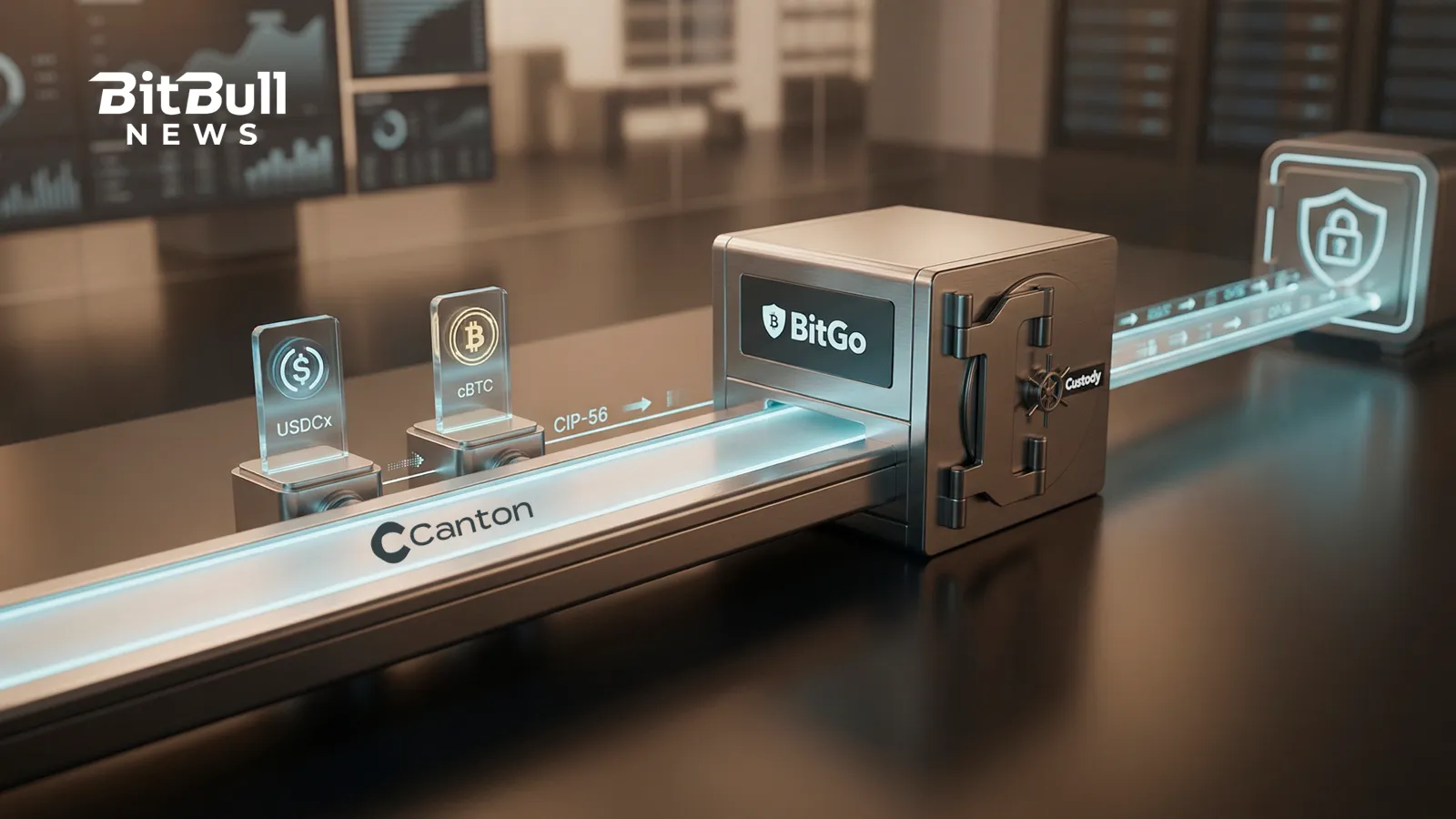
BitGo has expanded its Canton offering by adding support for assets built under the network’s CIP-56 token standard, a move aimed squarely at institutional users building with tokenized dollars, Bitcoin liquidity and other regulated onchain financial instruments. The company says the launch extends its Canton infrastructure beyond native token custody and into the broader asset layer developing on the network.
The announcement matters because Canton is being positioned as a serious financial-market network rather than a general retail chain. BitGo says Canton is now processing more than $350 billion in onchain assets daily, and argues that CIP-56 support gives institutions a way to custody and manage assets such as USDCx and cBTC through BitGo’s platform.
Canton’s token standard is becoming the real infrastructure layer
BitGo describes CIP-56 as the token standard that enables interoperability across the Canton Network. The company compares it to ERC-20 on Ethereum in the sense that it defines a common interface for wallets, custodians and applications to interact with tokenized assets, but says CIP-56 adds features tailored more directly to regulated institutional finance.
Those features are the real substance of the launch. BitGo says CIP-56 includes privacy-preserving transfers, atomic delivery-versus-payment settlement, multi-step transfers with administrative controls, deterministic finality within seconds and predictable transaction costs. In practical terms, the company is arguing that the standard is designed not just for token issuance, but for compliant movement of real-world financial assets across a shared institutional network.
That is the bigger shift here. BitGo is not announcing support for one isolated token. It is saying it can now support a wider class of Canton-based assets through one standard integration, which matters more if the network continues to attract financial institutions, tokenization platforms and trading venues.
USDCx and cBTC are the first visible use cases
The post gives two concrete launch examples. The first is USDCx, which BitGo describes as a USDC-backed stablecoin issued through Circle’s xReserve protocol. According to the company, USDCx combines USDC liquidity with Canton’s privacy architecture and is already being used in live capital-markets workflows, including onchain repo settlement.
The second is cBTC, which BitGo says brings Bitcoin liquidity into Canton’s composable financial infrastructure. The company says cBTC is fully backed 1:1 by Bitcoin and is intended for institutional uses such as collateral, settlement and trading across Canton applications. BitGo also highlights its own position as a major Bitcoin custodian to argue that it is a natural custody provider for institutional cBTC users.
One notable detail in the post is that BitGo says the initial CIP-56 launch supports “three assets representing key categories of institutional demand,” but in the visible body of the article it only names and explains USDCx and cBTC. The company does not identify a third launch asset in the text shown on the page, which leaves part of the rollout scope unclear.
BitGo is moving quickly from base-layer support to asset-layer support
This is not BitGo’s first Canton move. The company says it first launched qualified custody for Canton Coin in October 2025 and became the first U.S. qualified custodian supporting the network. With the new CIP-56 addition, BitGo is now expanding from support for the network’s native coin into support for token-standard assets built on top of it.
That sequencing matters. It suggests BitGo sees Canton’s growth path as similar to other blockchain ecosystems that start with base-network support and then shift toward the actual financial instruments institutions want to hold and move. The difference, in BitGo’s framing, is that Canton is being built around privacy, settlement logic and compliance features closer to traditional finance needs.
The company’s own language reinforces that strategic angle. BitGo’s chief revenue officer says Canton is rapidly becoming one of the most important networks for institutional digital finance, while the Canton Foundation says BitGo’s CIP-56 support should make it easier for participants to build applications and financial products on the network.
What this says about the next stage of tokenized finance
The announcement points to a broader market pattern: institutions are increasingly less interested in generic blockchain exposure and more interested in standards that support settlement, privacy, collateral, and composability within a regulated environment. CIP-56 is being sold exactly on those terms.
It also shows that custody providers are becoming part of token-standard adoption, not just passive safekeepers after issuance. If a network wants real institutional activity, it needs custodians, wallets and applications to support the same token format in a consistent way. BitGo is effectively saying CIP-56 is mature enough to deserve that infrastructure commitment. That final point is an inference from the company’s stated integration strategy and product framing.
What we don’t know yet
BitGo says it will continue expanding support for additional Canton assets and applications, but it does not name the next assets, give a launch timeline for broader coverage, or explain which institutions are already live on the new CIP-56 support. It also does not clarify the identity of the third launch asset referenced in the article.
Why it matters for crypto
- It shows Canton is moving beyond base-network infrastructure and into a fuller institutional asset ecosystem built around a shared token standard.
- It gives BitGo a wider role in tokenized finance on Canton by extending custody support to assets like USDCx and cBTC, not just the network’s native coin.
- It reinforces that token standards for institutional finance are increasingly competing on privacy, DvP settlement, finality and administrative controls, not just transferability.
- It suggests the next phase of onchain adoption may depend as much on custodial and interoperability support as on asset issuance itself. This last point is an inference from the structure of the rollout.
What to watch next
- Whether BitGo identifies the third launch asset it says is part of the initial CIP-56 rollout.
- Whether more Canton-issued institutional assets adopt CIP-56 and seek custody support through BitGo.
- Whether USDCx and cBTC usage expands beyond the early examples BitGo cites, especially in repo, collateral and settlement workflows.
- Whether other custodians and market-infrastructure providers begin treating CIP-56 as a core institutional token format rather than a network-specific niche standard. This last point is an inference based on BitGo’s positioning.