


Content
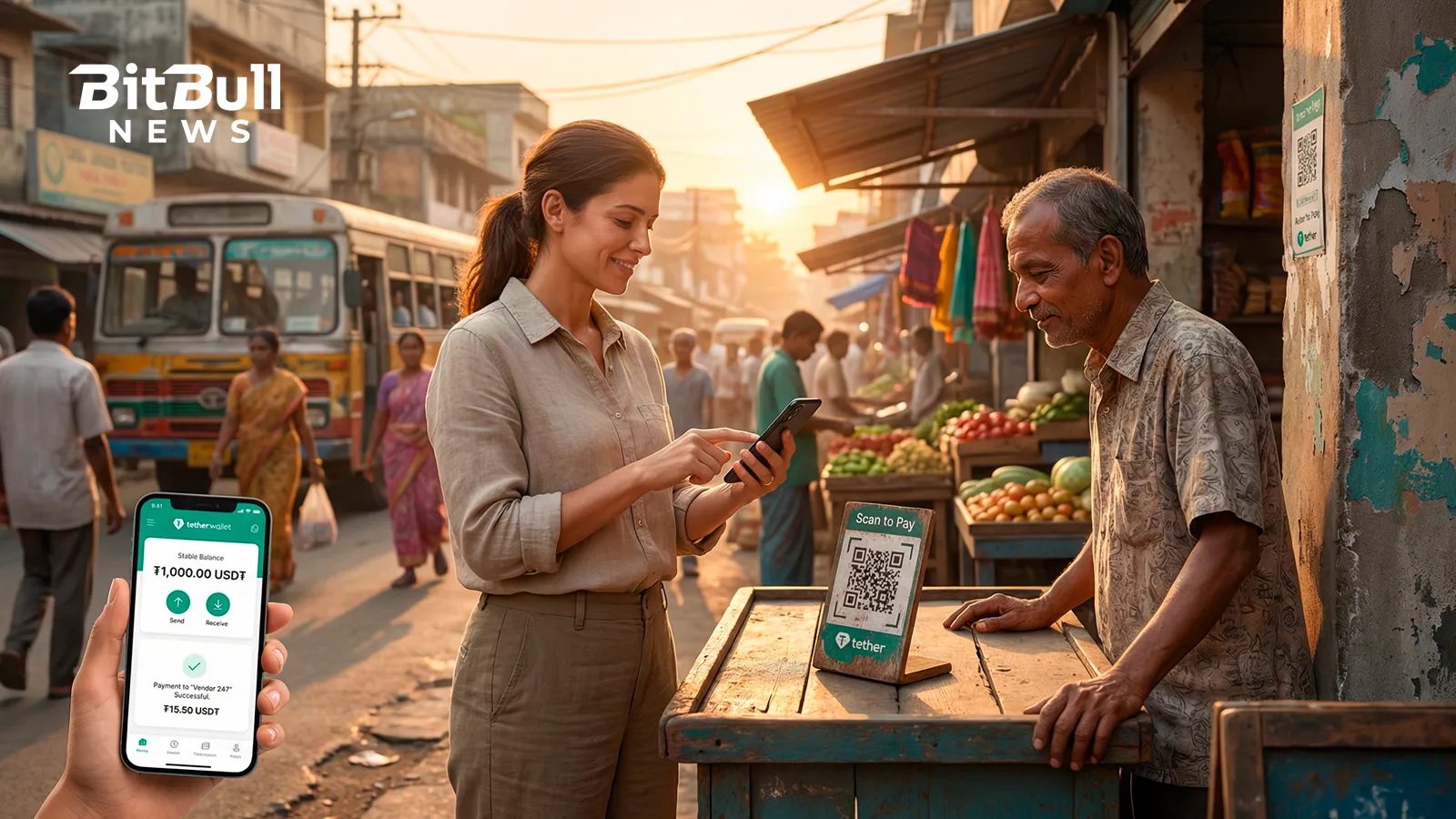
Tether has launched tether.wallet, a new self-custodial digital wallet that brings the company directly into the consumer wallet layer for the first time. Until now, Tether has mostly operated as the underlying infrastructure behind stablecoin liquidity, settlement and payments. With this launch, it is moving that infrastructure into an end-user product built for everyday use.
That is the strongest angle here. This is not just another wallet release. It is Tether stepping beyond issuance and back-end rails to put its own distribution layer in front of users, with a product aimed especially at people outside the traditional banking system and in high-inflation markets.
Tether is trying to turn its network into a consumer product
Tether says more than 570 million people globally already use its technology, with tens of millions of new wallets added each quarter as of March 2026. The company frames tether.wallet as the next step in that growth, arguing that while its infrastructure already powers the digital asset economy in more than 160 countries, end users have not had a direct Tether-owned interface to access it until now.
In practical terms, Tether is trying to convert a back-end advantage into a front-end one. The pitch is that the company already has the liquidity, payment reach and brand recognition; now it wants a wallet that makes those rails directly usable by ordinary people rather than only by exchanges, platforms and fintechs. This is an analytical reading of how the launch is framed.
The wallet is built around a very narrow asset set
Tether says the app supports what it calls “the only assets that truly matter for most people”: digital dollars through USD₮ and USA₮, gold through XAU₮, and Bitcoin. At launch, USD₮ is supported on Ethereum, Polygon, Plasma and Arbitrum; XAU₮ on Ethereum, Polygon, Plasma and Arbitrum; USA₮ on Ethereum; and Bitcoin both on-chain and through the Lightning Network.
That matters because the product is not trying to look like a general-purpose multichain wallet stuffed with hundreds of tokens. Tether is making a much more opinionated bet: that the strongest mass-market wallet story is built around dollars, gold and Bitcoin, not around broad token speculation. This is an inference based on the asset list Tether chose to emphasize.
The user experience pitch is all about removing crypto friction
Tether highlights two usability features that matter more than the usual launch language. First, users can send funds using a human-readable identifier like an email-style name instead of long wallet addresses. Second, users do not need to hold separate gas tokens, because fees can be paid in the asset being transferred.
Those details are important because they target two of the biggest reasons mainstream users still abandon self-custody products: address risk and gas-token complexity. Tether is clearly trying to make blockchain payments feel closer to messaging or simple money transfer, which is also why Paolo Ardoino says the goal is for users to send value as easily as sending a message.
Self-custody remains central to the product identity
Tether says the application is fully self-custodial by design. Transactions are signed locally on the user’s device, and private keys and recovery phrases remain under the user’s sole control. The company says this reflects its long-standing principle that financial systems should remain open, neutral and under user control.
That is a notable positioning choice. Tether is not launching this as a custodial super-app where it controls user balances directly. It is trying to combine a mass-market onboarding pitch with a self-custody model, which is much harder to execute but also more aligned with crypto’s original control-your-own-assets narrative. This is an analytical conclusion based on the source.
The deeper strategy is bigger than one wallet app
Tether says tether.wallet is built on top of its open-source Wallet Development Kit, or WDK, which it describes as a foundational technology layer for humans, machines and AI agents to build and control self-custodial wallets. That makes the launch more than a standalone consumer app announcement. It is also a showcase for Tether’s wider wallet infrastructure stack.
This fits a broader pattern in Tether’s recent product direction. The company is increasingly presenting itself not only as the issuer of USDT, but as a provider of financial, wallet and AI infrastructure. In that context, tether.wallet looks like both a product launch and a strategic distribution move. This is an inference based on the launch language and Tether’s description of WDK.
What is live now, and what still sounds like roadmap
The live part is clear: the wallet is launched, the initial asset and network support is defined, and Tether says more blockchains will be added after the first release. The more expansive claims about tens of billions of humans, machines and trillions of AI agents transacting through this kind of infrastructure are still vision language rather than measurable product rollout.
That distinction matters because the launch is real, but the company is also wrapping it in a much larger narrative about global financial inclusion and machine-scale payments. The wallet exists today; the planetary-scale AI economy around it does not yet.
Why it matters for crypto
- It marks Tether’s first direct move into the consumer wallet layer after years of operating mainly as stablecoin infrastructure.
- It shows Tether believes mass-market crypto adoption will come through simple access to dollars, gold and Bitcoin rather than broad token menus.
- The wallet’s email-style identifiers and gas abstraction suggest the next usability battleground is still reducing blockchain friction, not adding more assets.
- It also reinforces that major stablecoin issuers increasingly want distribution and interface ownership, not just token issuance economics. This is an analytical conclusion based on the launch.
What to watch next
- Which additional blockchains Tether adds after the initial launch.
- Whether tether.wallet gains traction in emerging markets, which are clearly central to Tether’s financial inclusion pitch. This is an inference based on the company’s framing.
- Whether the wallet becomes a meaningful distribution channel for XAU₮ and USA₮, not just for USD₮ and Bitcoin. This is also an inference from the asset mix.
- Whether Tether keeps expanding from stablecoin issuer into a broader consumer and infrastructure platform spanning wallets, payments and AI tooling. This is an analytical inference based on recent launches.