


Content
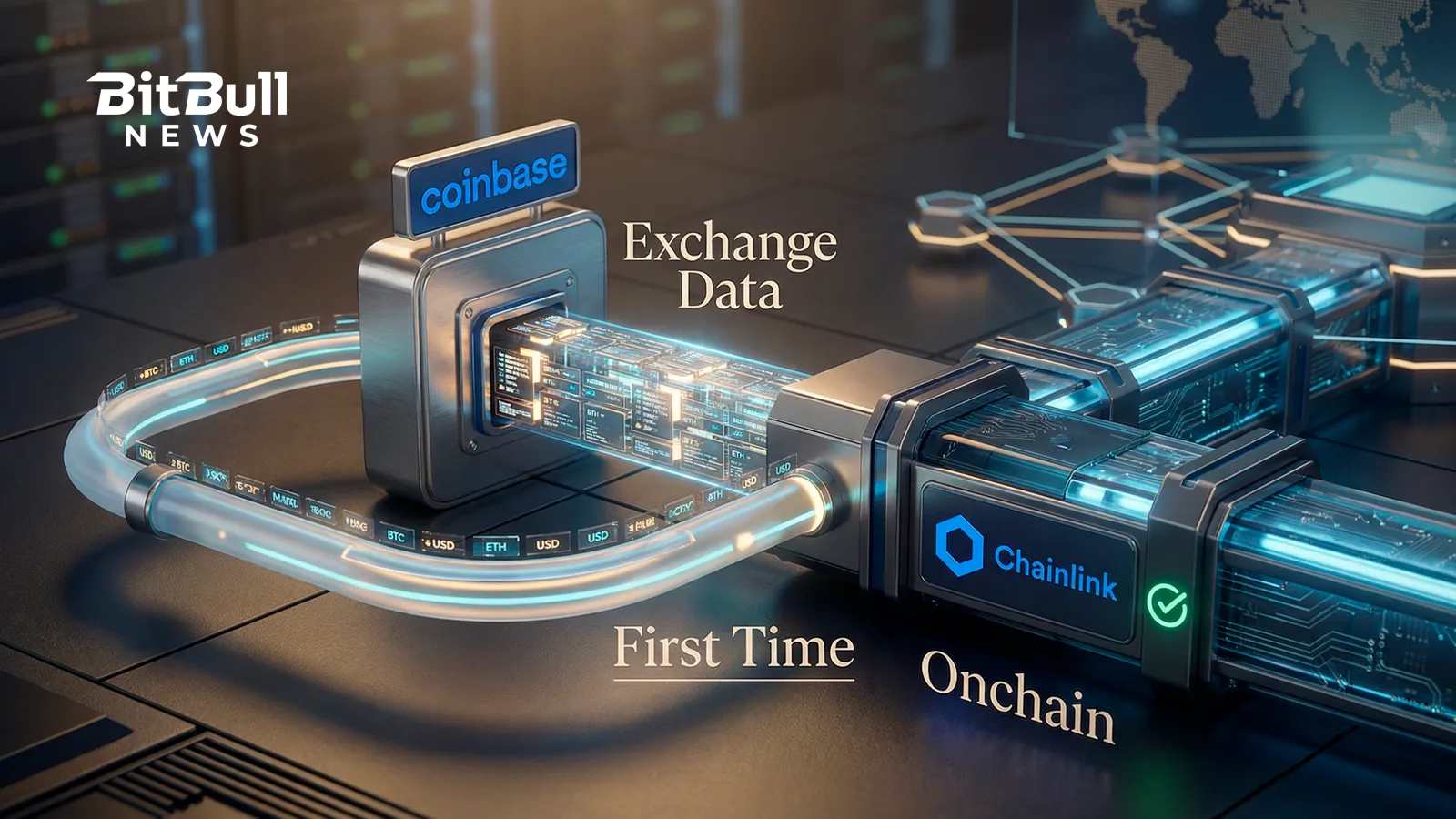
Coinbase has integrated Chainlink to bring its premium exchange data onchain for the first time through DataLink, a data publishing service built on the Chainlink data standard. The companies are pitching the move as a step toward more institutional-grade market infrastructure for DeFi rather than a simple oracle update.
The core idea is straightforward: data that Coinbase says underpins billions in trading activity can now be accessed directly onchain, giving protocols a new source of market information for derivatives, tokenized assets, perpetuals, lending and other capital-markets-style products.
Coinbase is moving exchange-native benchmarks directly onto blockchain rails
The most important detail in the release is not just that Coinbase and Chainlink are working together. It is that Coinbase says its exchange market data is now being published onchain through DataLink for the first time. That gives developers direct access to exchange-sourced data inside onchain applications instead of relying only on traditional offchain market-data workflows.
Coinbase Markets Vice President Liz Martin said the company is building on earlier Chainlink integrations, but framed this step as the first time Coinbase’s exchange market data is being published onchain. In the companies’ telling, that opens the door for more robust DeFi and TradFi-linked onchain applications.
This is bigger than a spot-price feed
The dataset described in the release goes well beyond simple crypto pricing. Coinbase says protocols using DataLink can access order book data, spot prices, perpetual futures data including from Coinbase International Exchange, e-mini futures data, and additional datasets spanning crypto, metals, energy and equity futures through Coinbase Derivatives Exchange.
That matters because it broadens the type of products that can be built onchain. The release explicitly points to derivatives, tokenized RWAs, structured products, perpetuals, synthetic assets and new lending risk engines as potential beneficiaries of higher-quality exchange data becoming available through Chainlink’s infrastructure.
Why Chainlink’s role matters here
Chainlink is not being presented here as a generic integration partner. The release frames Chainlink as the infrastructure layer that handles the hard parts of delivering enterprise-grade data onchain, including security, decentralization, reliability and data delivery. Coinbase explicitly says that battle-tested, institutional-grade infrastructure is why it chose the Chainlink data standard for this rollout.
Chainlink also uses the announcement to place this move inside a wider Coinbase relationship. The release says the DataLink integration follows other recent Chainlink-related Coinbase projects, including the Base-Solana Bridge going live with Chainlink CCIP and Coinbase selecting CCIP as the exclusive interoperability provider for Coinbase Wrapped Assets.
The real target is onchain market structure
The release’s broader message is that onchain markets need better raw materials if they want to look more like serious financial infrastructure. Coinbase and Chainlink are effectively arguing that deeper, more granular, institutionally relevant market data can improve pricing, strengthen risk management and make more complex onchain financial products viable.
This is why the announcement matters more than a routine data integration. It suggests the next phase of DeFi competition may depend less on adding new tokens and more on bringing better market structure onchain: better benchmarks, richer derivatives inputs and more credible data for tokenized financial products. That last point is an inference from how the companies frame the launch and the use cases they highlight.
What the release still doesn’t answer
The announcement does not disclose which protocols are already live with Coinbase data through DataLink, what the pricing model for access looks like, or how quickly developers are expected to adopt the broader dataset beyond headline use cases. It also does not provide launch-day usage or volume metrics for the onchain data service itself.
Why it matters for crypto
- It brings exchange-native market data onchain in a form aimed at more serious DeFi and tokenized-market use cases, not just basic price visibility.
- It expands the type of information available onchain to include order books, futures data and broader market datasets across crypto, metals, energy and equity futures.
- It strengthens the case that the next stage of onchain finance will depend on institutional-grade data infrastructure as much as on smart contracts themselves. This is an inference grounded in the companies’ own positioning.
- It also deepens the Coinbase-Chainlink relationship at a time when interoperability, benchmarks and market data are becoming more central to crypto-financial infrastructure.
What to watch next
- Which DeFi or tokenized-asset protocols are first to integrate Coinbase datasets through DataLink in live production environments.
- Whether the availability of order book and futures data leads to more sophisticated onchain derivatives, structured products and synthetic markets.
- Whether other large exchanges respond by putting their own premium market data onchain in a similar way. This is an inference from the competitive significance of the move.
- How quickly institutional and TradFi-linked builders use this data layer to support tokenized RWAs and other onchain financial products.