


Content
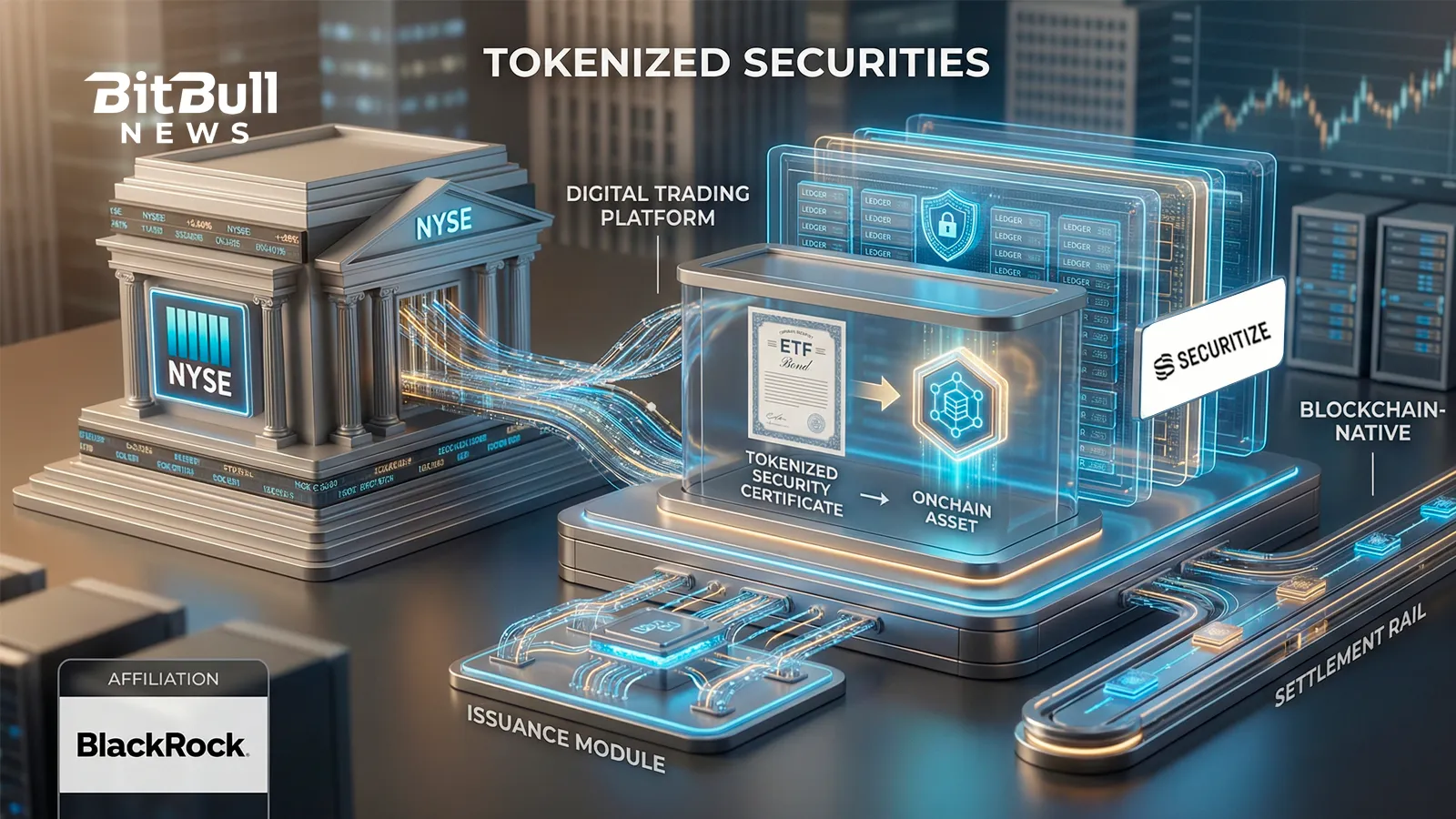
The New York Stock Exchange and Securitize have signed a memorandum of understanding to support the development of tokenized securities markets, marking one of the clearest signals yet that NYSE wants to help shape the infrastructure layer behind regulated onchain securities. The collaboration centers on NYSE’s upcoming Digital Trading Platform, where Securitize is set to become the first digital transfer agent eligible to mint blockchain-native securities for corporate or ETF issuers.
That is the headline. The more important detail is what this is not. NYSE is not saying tokenized public stocks are broadly live today. It is saying it wants to build the transfer-agent, broker-dealer, and market-structure framework needed for issuer-sponsored tokenized securities on an NYSE-affiliated platform that is still upcoming.
NYSE is moving from tokenization talk to market plumbing
The release shows NYSE focusing less on tokenization as a concept and more on the operational plumbing that would make it usable in regulated markets. Under the MOU, NYSE plans to work with Securitize as a premier design partner in the development of a digital transfer agent program intended to support onchain settlement of tokenized security transactions.
The companies also plan to collaborate on standards for digital transfer agents and tokenization agents participating in the ecosystem. NYSE said that work will focus on regulatory, operational, and technology requirements for institutional-grade tokenized securities infrastructure. In other words, this is a design-and-standards effort first, not just a branding announcement.
Why Securitize sits at the center of the plan
Securitize’s role in the announcement is unusually specific. NYSE said Securitize has been named as the first digital transfer agent eligible to mint blockchain-native securities for corporate or ETF issuers on the Digital Trading Platform, and that the collaboration is expected to support Securitize’s role as an approved digital transfer agent for that platform, subject to applicable requirements.
That matters because transfer-agent infrastructure is one of the least flashy but most essential parts of tokenized securities. NYSE said Securitize’s experience as an SEC-registered transfer agent will help define how ownership records are maintained, how corporate actions are supported, and how tokenized securities can meet the standards of traditional markets.
Securitize also brings broader regulated-market credentials to the table, at least as NYSE frames them. The release says Securitize has more than $4 billion in assets under management, operates in the U.S. as an SEC-registered broker-dealer, transfer agent, fund administrator, and operator of an SEC-regulated ATS, and in Europe is authorized as an investment firm and trading and settlement system under the EU DLT Pilot Regime.
Broker-dealer participation is part of the structure too
The announcement is not only about transfer agents. NYSE also said Securitize Markets is expected to become one of the broker-dealer participants on the upcoming Digital Trading Platform, helping support the development of market structure for issuer-sponsored tokenized securities.
That suggests NYSE is thinking about tokenized securities as a full market stack rather than a simple issuance tool. The transfer agent maintains official ownership records and corporate actions, while broker-dealer participation speaks to trading access, distribution, and market structure. The release does not fully map every role yet, but it clearly points to a multi-layer regulated framework instead of a stripped-down crypto-style issuance model.
What this does — and does not — mean yet
The release is meaningful, but it stops well short of saying NYSE is launching tokenized listed stocks for broad investor trading right now. The wording is careful: the platform is “upcoming,” Securitize is “eligible” as the first digital transfer agent, and several roles are described as expected or subject to applicable requirements.
So the real news is that NYSE is trying to define the operating model early. It wants tokenized securities infrastructure built in a way that preserves what Lynn Martin called the trust, transparency, and investor protections of traditional markets, rather than importing tokenization into public markets without the usual controls.
That also answers one of the biggest open questions around tokenized securities: who controls the recordkeeping and corporate-governance layer. NYSE’s answer, at least in this first step, is not “let the blockchain sort it out.” It is building around regulated transfer-agent infrastructure and broker-dealer participation. That interpretation follows directly from the structure NYSE described in the release.
Why ICE and NYSE are stepping in now
The strategic angle is clear even if the release stays formal. Tokenization has already spread across private funds, money-market products, Treasuries, and other real-world assets, and exchanges now risk being left on the sidelines if private platforms define the market structure first. NYSE is signaling that if tokenized securities become a durable part of capital markets, it wants a hand in setting the institutional rails behind them. The first sentence is general market context; the second is a grounded inference from the release.
The other message is reputational. By pairing with Securitize and emphasizing regulated transfer-agency and broker-dealer roles, NYSE is making clear that its version of tokenization is meant to fit inside existing market architecture rather than replace it with a looser crypto-native model.
Why it matters for crypto
- It brings one of the most important traditional market operators deeper into tokenized securities infrastructure, not just into tokenization rhetoric.
- It shows that the institutional tokenization story is increasingly about regulated market structure — transfer agents, broker-dealers, settlement design, and issuer controls — not only about onchain issuance.
- It strengthens Securitize’s position as a bridge between crypto-style tokenization and traditional securities infrastructure.
- It suggests future tokenized equities or ETFs may be built to look much more like traditional market infrastructure onchain than like open-ended crypto trading venues. This is an inference from the framework described by NYSE.
What to watch next
- Whether NYSE discloses a clearer launch timeline for the Digital Trading Platform, which is still described only as upcoming.
- Whether additional transfer agents, tokenization agents, or broker-dealers are added alongside Securitize as the program develops.
- Whether NYSE eventually specifies which types of issuer-sponsored tokenized securities will come first — corporate equity, ETFs, or other instruments.
- Whether regulators and market participants accept this model as a viable institutional template for tokenized public securities infrastructure. This is an inference based on the importance of the standards work described in the release.