


Content
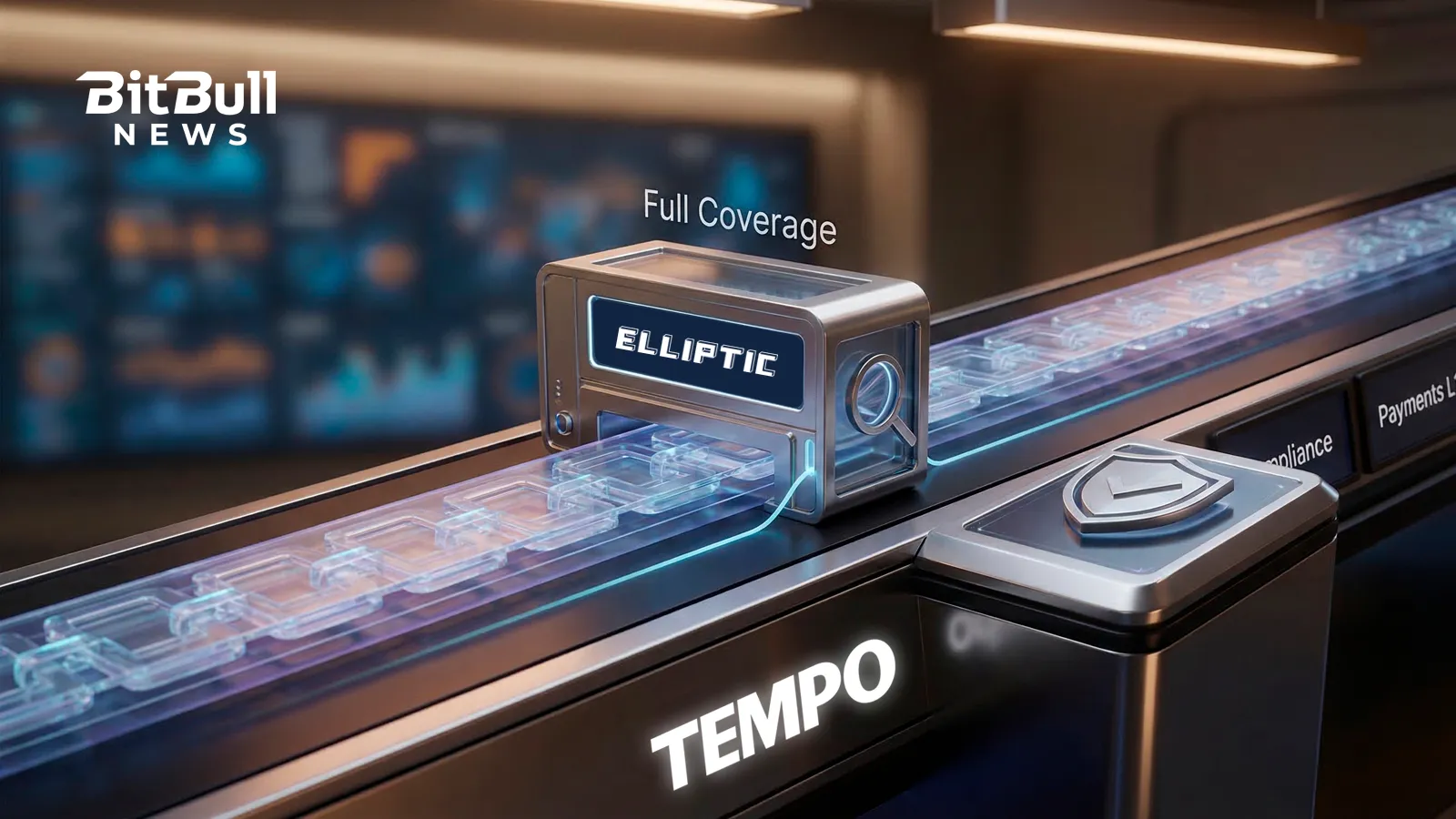
Elliptic has integrated with Tempo, a payments-focused Layer-1 blockchain, adding full blockchain coverage for the network from launch. The company said the move is meant to give compliance and investigation teams visibility into what it sees as a major expansion of real-world financial activity onto blockchain infrastructure.
Tempo is described in the release as a Layer-1 built for real-world payments at scale, with sub-second finality and high throughput, and incubated by Stripe and Paradigm. Elliptic is positioning its analytics stack as the compliance layer that can keep up with that kind of transaction volume.
What Elliptic announced
Elliptic said its customers now have the same monitoring and investigation coverage on Tempo that they already use across other supported blockchains. In practical terms, that means compliance teams can plug Tempo activity into existing risk, monitoring, and case-management workflows rather than treating it as a blind spot.
The release frames the integration as an early infrastructure move rather than a later add-on. Tempo’s team said Elliptic is providing compliance infrastructure “from day one,” which suggests the network wants regulatory tooling in place as payment activity starts to scale.
What the integration adds
According to Elliptic, customers can now screen Tempo wallet addresses in real time for sanctions exposure and illicit activity, trace cross-chain fund flows between Tempo and other networks, monitor stablecoin transactions on Tempo, and access both historical and real-time data for compliance and investigations. The company also said the integration helps institutions maintain consistent compliance standards across blockchain networks.
That feature set matters because the announcement is not about a consumer wallet or a payments app. It is about the monitoring layer behind them: the tools exchanges, financial institutions, and compliance teams need if payment activity is going to move onchain in a regulated way. The capabilities are stated in the release; the broader framing is a grounded inference from how Elliptic presents the product.
Why Tempo is the focus here
Tempo is described as a blockchain built specifically for payments, not a general-purpose chain later adapted for commerce. Elliptic’s CTO said the network is designed for more than 100,000 transactions per second as agents, businesses, and consumers increasingly transact onchain, underscoring the company’s view that payments infrastructure is moving from experimental to foundational.
That makes this integration a scale story as much as a compliance story. If Tempo is targeting global-commerce volumes, then screening, tracing, and stablecoin monitoring have to operate at that same speed and throughput. The transaction-speed claim comes from Elliptic’s release.
Why this matters now
The announcement reflects a broader shift in crypto infrastructure: payment-oriented blockchains increasingly need compliance tooling at launch, not after meaningful adoption arrives. Elliptic is effectively arguing that onchain payments only become durable financial infrastructure if compliance teams can monitor them in real time and across networks.
It also highlights where the next competition may be. The market is no longer only about launching faster chains or cheaper transactions. It is also about whether networks can support institutional-grade screening, investigations, and stablecoin monitoring as payment volumes rise. The first sentence is grounded in the release; the second is an inference based on the product positioning.
Why it matters for crypto
- It shows payments-focused blockchains are treating compliance infrastructure as core launch architecture, not a secondary feature.
- It gives institutions and investigators a way to monitor Tempo activity with the same tooling they use on other blockchain networks.
- It reinforces the importance of cross-chain tracing and stablecoin monitoring as real-world payment flows move onchain.
- It suggests the next phase of crypto payments will depend as much on compliance visibility as on throughput and settlement speed. The first part is sourced; the last point is a grounded inference from the release.
What to watch next
- Whether Tempo publishes live payment, wallet, or stablecoin activity metrics after launch. The release did not include adoption data.
- Whether Elliptic adds more Tempo-specific products or investigation features as usage grows. No expanded roadmap was disclosed in the announcement.
- Whether more payments-first chains adopt similar “day one” compliance integrations to attract institutions and regulated builders. This is an inference from the positioning in the release.
- Whether Tempo becomes a meaningful venue for real-world stablecoin payment flows rather than remaining an infrastructure promise. The release highlights capability, not usage.