


Content
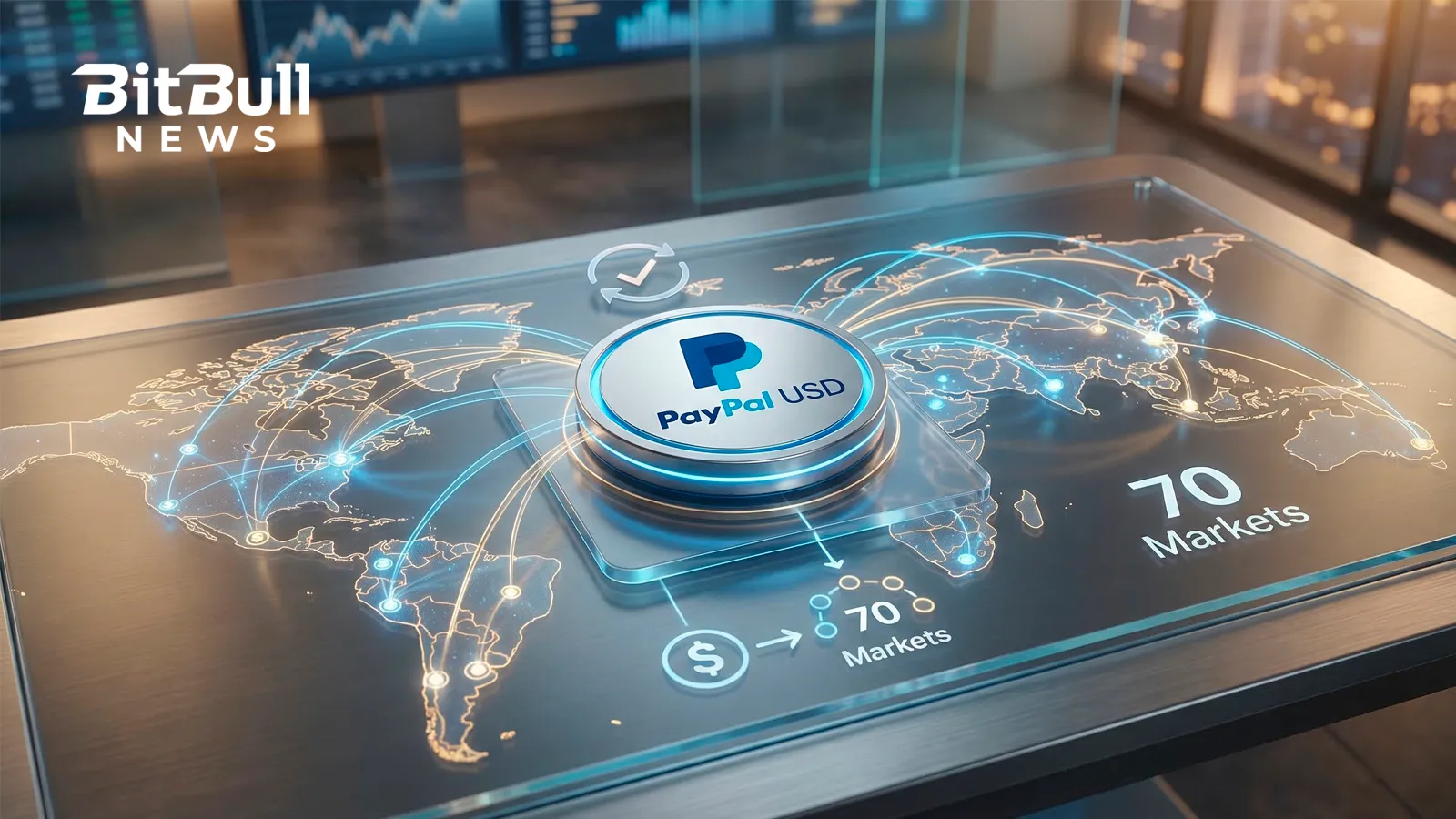
PayPal is taking PYUSD global. The company says its dollar-backed stablecoin is now being made available to users across 70 markets, giving millions of PayPal consumers and merchants broader access to stablecoin-based payments and transfers.
This is one of PayPal’s biggest PYUSD expansion moves so far. The company is clearly trying to push the stablecoin beyond its original U.S. launch and turn it into a more usable cross-border commerce tool.
What PayPal is rolling out
PayPal says users in newly supported markets can now buy, hold, send, and receive PYUSD directly inside their PayPal account.
The company also says eligible users can:
- earn rewards on PYUSD holdings,
- transfer PYUSD instantly to friends and family,
- send funds to third-party digital wallets,
- and convert PYUSD back into local currency when withdrawing for everyday spending.
In simple terms, PYUSD is being positioned less as a crypto experiment and more as a payment feature built into the normal PayPal account experience.
Why PayPal says this matters
PayPal’s message is straightforward: cross-border payments are still too slow, too expensive, and too dependent on outdated settlement systems.
The company says PYUSD can help solve that by offering:
- faster access to funds,
- lower-cost international transfers,
- and quicker settlement for businesses.
This is important because PayPal is not presenting PYUSD mainly as a trading asset. It is presenting it as a tool for global commerce, especially where traditional payment rails create delays and extra costs.
What changes for businesses
PayPal says businesses that accept PYUSD can access proceeds in minutes rather than days or weeks.
That is a major part of the pitch. Faster access to funds can help businesses:
- improve liquidity,
- manage working capital more efficiently,
- support cross-border operations,
- and reduce dependence on slower settlement cycles.
This is where PayPal is trying to make PYUSD feel practical. The company wants businesses to see it as a working capital and settlement tool, not just a digital token sitting in an account.
The bigger commercial goal
The company says the expansion is another step toward building the liquidity, utility, and ubiquity needed for PYUSD to support a more global and inclusive commerce system.
That language matters. PayPal is no longer talking about PYUSD as a product that merely exists. It is talking about distribution, usage, and network effects.
Where PYUSD is now available
PayPal says PYUSD is now accessible across multiple global regions including:
- Asia-Pacific
- Europe
- Latin America
- North America
The company specifically names markets such as:
- Colombia
- Costa Rica
- Dominican Republic
- Faroe Islands
- Greenland
- Guatemala
- Honduras
- Panama
- Peru
- Singapore
- the United Kingdom
- the United States
PayPal also says users in the remaining markets will gain access in the coming weeks.
Important limitations
The rollout is not identical everywhere.
PayPal says:
- rewards are not available to users in Singapore or the United Kingdom
- in Singapore, PYUSD will only be available to PayPal business account holders
- Singapore-based consumers will not have access to PYUSD
That means the expansion is broad, but still shaped by local regulatory and product constraints.
What PayPal says backs PYUSD
PayPal repeats that PYUSD is issued by Paxos Trust Company, N.A., a fully chartered trust company regulated by the Office of the Comptroller of the Currency.
The company also says reserves are fully backed by:
- U.S. dollar deposits,
- U.S. Treasuries,
- and similar cash equivalents.
That reserve structure remains central to PayPal’s effort to present PYUSD as a serious payment and settlement instrument rather than a more speculative digital asset.
Why it matters for crypto
- This is one of the biggest real-world distribution expansions for a major stablecoin issued through a mainstream payments brand.
- PayPal is clearly trying to position PYUSD as a cross-border payment and settlement tool, not just a crypto feature.
- Wider account-level access across 70 markets could give PYUSD more practical utility in international transfers and merchant flows.
- The move also increases pressure on other payment firms and fintechs to explain how their own stablecoin strategies fit into global commerce.
What to watch next
- How quickly user and merchant adoption grows now that PYUSD is available in more regions.
- Whether PayPal expands the rewards program beyond its current geographic limits.
- If more businesses start using PYUSD for real cross-border settlement and treasury management.
- How regulators in newly added markets respond as stablecoins become more embedded in consumer payment apps.
- Whether this expansion leads to deeper integrations with PayPal’s broader merchant and checkout ecosystem.