


Content
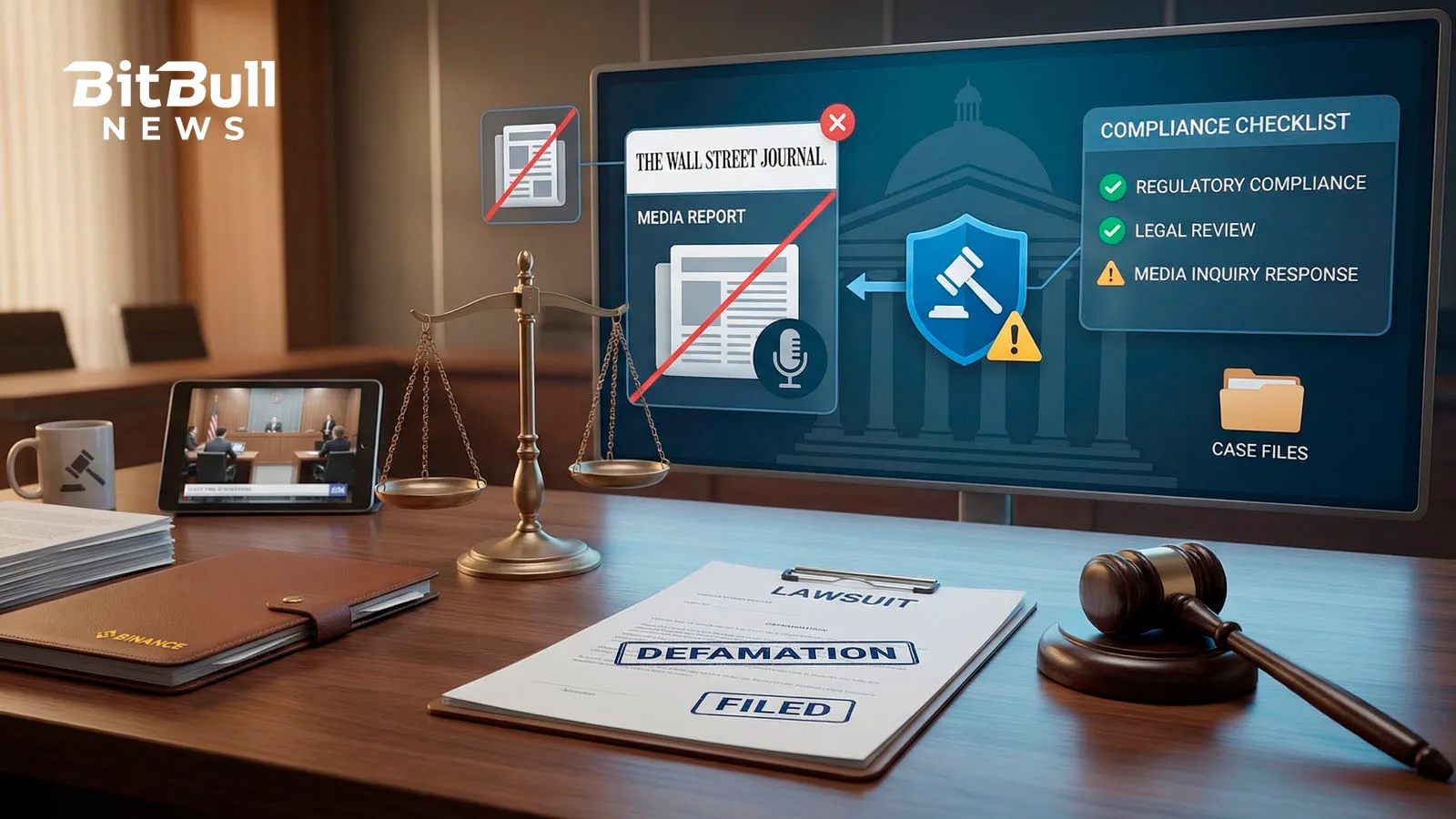
Binance says it has filed a lawsuit against The Wall Street Journal over what it calls false and defamatory reporting published on February 23, 2026. The exchange says the article damaged its reputation, triggered unnecessary scrutiny, and misrepresented the strength of its compliance program.
The company is framing the lawsuit as more than a media fight. Binance says it filed the complaint to defend its public record at a time when compliance credibility has become one of the biggest trust issues in crypto.
Why Binance says it filed the lawsuit
Binance says the WSJ article contained false statements and caused real business harm. In the post, the company says the reporting created confusion, undermined trust, and even led government officials to launch what Binance described as baseless and unnecessary inquiries.
The exchange’s Global Head of Litigation, Dugan Bliss, said the lawsuit is meant to correct the public record and hold the newspaper accountable for reputational damage. Binance also argues that inaccurate reporting hurts not only the company, but the broader digital asset industry.
Binance used the lawsuit announcement to defend its compliance program
A large part of the post is not about the lawsuit itself. It is about Binance’s attempt to show that its compliance operation is bigger and more measurable than critics suggest. The company says it has invested hundreds of millions of dollars into compliance, risk, investigations, and monitoring systems.
Binance says more than 1,500 employees, nearly a quarter of its global workforce, now work across compliance, investigative, and risk functions. It also says those teams cover sanctions compliance, counter-terrorist financing, financial crime investigations, and advanced on-chain tracing.
The message Binance is trying to send
In simple terms, Binance is using the lawsuit announcement to make a second point: judge us by our current controls and results, not by old assumptions. That is the real theme running through the post. This is an inference based on how much of the announcement is focused on compliance metrics rather than legal detail.
The numbers Binance wants the market to see
Binance says its sanctions-related exposure as a share of total exchange volume fell 96.8%, from 0.284% in January 2024 to 0.009% in July 2025. It also says direct exposure to the four major Iranian crypto exchanges dropped 97.3%, from $4.19 million in January 2024 to $110,000 in January 2026.
The company adds that it processed more than 71,000 law enforcement requests in 2025 and helped freeze and recover hundreds of millions of dollars linked to illicit activity during the year.
Binance also argues that crypto risk can never be reduced to absolute zero because anyone can send assets to an exchange deposit address without prior approval. Its position is that the real test is how fast an exchange can detect, investigate, mitigate, offboard, and report suspicious activity.
The bigger backdrop behind this fight
This post is really about trust. Binance says it now serves more than 300 million users worldwide and holds approvals or licenses in more than 20 jurisdictions. It also highlights that it was the first crypto exchange to secure full authorization under the Abu Dhabi Global Market financial regulatory framework.
That context matters because Binance is no longer speaking like a company trying to defend only its trading business. It is speaking like a global financial platform trying to protect its regulatory standing and institutional credibility. This is an inference supported by the way the post ties the lawsuit directly to compliance outcomes, user trust, and regulatory approvals.
Why it matters for crypto
- This is another sign that compliance reputation is now one of the core battlegrounds for large crypto exchanges.
- Binance is trying to shift the conversation from old criticism to measurable compliance outcomes, especially on sanctions exposure and law enforcement cooperation.
- A lawsuit against a major financial newspaper raises the stakes: this is not just a PR rebuttal, but an attempt to force a legal test of disputed claims.
- For the broader market, the case shows how media narratives, regulatory scrutiny, and exchange trust are now tightly linked. This is an inference based on Binance’s claim that the article triggered official inquiries and reputational harm.
What to watch next
- Whether Binance publishes more detail from the legal complaint beyond this blog summary.
- Whether The Wall Street Journal responds publicly or contests Binance’s factual claims in court.
- Whether regulators react to the lawsuit itself, especially where Binance says the article caused fresh inquiries.
- Whether Binance continues releasing compliance metrics as part of a broader campaign to reshape its public image.
What we don’t know yet
Binance’s post does not include the full complaint text, the specific legal claims in detail, or the WSJ’s side of the case. So at this stage, the public only has Binance’s version of the dispute from the official company announceme