


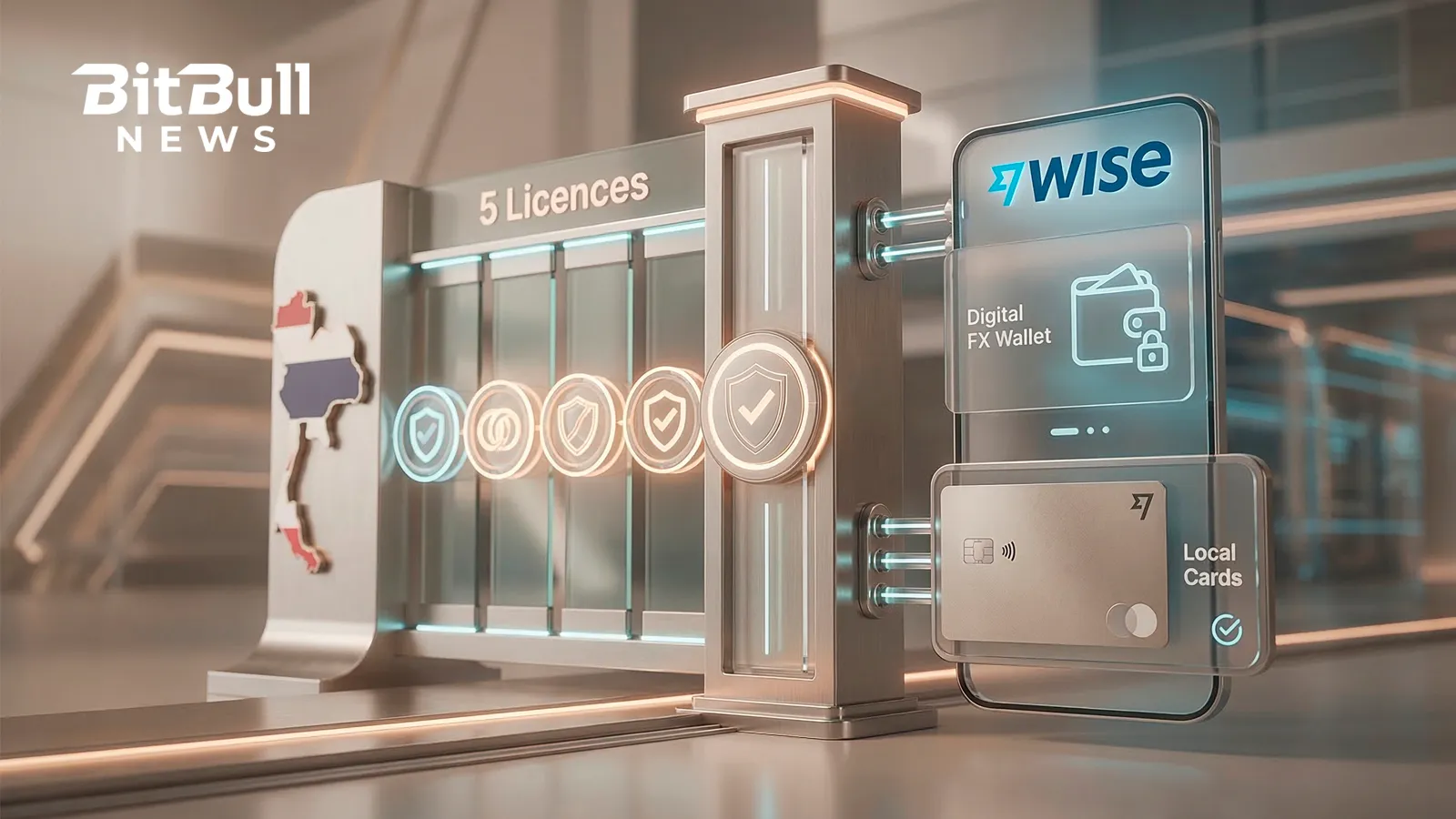
Wise has become the first non-bank in Thailand to secure the five licences needed to operate locally, opening the way for a digital foreign currency wallet and Wise card services in the country.
The company says Thai citizens, businesses, and foreign residents will eventually be able to use Thailand’s first fully digital foreign currency wallet for sending, receiving, and spending money across multiple currencies in one app. The rollout will happen in stages, with a waitlist already open.
What Wise just won in Thailand
Wise says it received regulatory approval from both the Bank of Thailand and the Ministry of Commerce. That approval gives it the local legal framework needed to launch services in a market that the company describes as one of the most complex in Asia for international payments firms.
According to Wise, the five approvals cover:
- an Electronic Money Service License
- an Electronic Fund Transfer Service License
- an Authorised Money Transfer Agent License
- an Authorised Electronic Money Business Operator License (FX e-Money License)
- a Foreign Business License
In simple terms, Wise is now cleared to move from “cross-border fintech with limited reach” to a more fully localized payments player in Thailand.
Why Thailand matters to Wise
Wise is making a clear bet on Thailand as a large cross-border payments market.
The company says more than $17 billion moves across Thailand’s borders each year. It also cites World Bank figures showing $9.46 billion flowed into Thailand from Thais and residents abroad in 2024, while $8.03 billion was sent out of the country.
That matters because Wise’s core business works best where people regularly move money across borders for travel, trade, education, work, and family support. Thailand checks many of those boxes.
What the product is supposed to offer
Wise says the new setup will give Thai users a digital foreign currency wallet where they can hold, send, receive, and spend multiple currencies in one place.
This is important because the company is not only talking about international transfers. It is talking about a broader money-management product that combines wallets, payments, and spending tools. That usually creates deeper customer use than a one-off remittance app.
Why Wise thinks it can win
Wise says traditional banks still make international payments expensive by layering transfer fees on top of hidden FX markups.
The company says its own pricing model is based on the mid-market exchange rate and transparent fees, and claims it saved its more than 15 million customers $2.6 billion in hidden fees in FY25.
For Thailand specifically, Wise says consumers could potentially save more than $1.04 billion a year in hidden fees by switching, based on Thai transaction volumes and World Bank global average costs.
Thailand is part of a bigger APAC push
Wise says Thailand is another step in its broader expansion across Asia-Pacific, which now accounts for more than 20% of global revenue and is one of its fastest-growing regions.
In FY25, the company says APAC revenue rose 22% to £263.8 million. It also notes that it now holds more than 75 regulatory licences globally, and recently received full approval in the UAE and conditional approval in South Africa.
That gives more context to this Thailand move. It is not a standalone launch. It is part of a wider strategy to deepen Wise’s regulatory footprint in high-demand cross-border markets.
Why it matters for crypto
- This is not a crypto story directly, but it matters for the same broader trend: cross-border money movement is becoming more digital, cheaper, and more app-based.
- Wise’s expansion shows that the biggest opportunity in global payments is still solving old problems like FX spreads, hidden fees, and slow settlement.
- For crypto and stablecoin firms, this is another reminder that mainstream fintech competition in cross-border payments is getting stronger, especially in Asia.
- Thailand’s licensing complexity also shows how hard it still is to scale regulated payment products market by market.
What to watch next
- How quickly Wise moves from the waitlist stage to a wider public rollout in Thailand.
- Whether the company adds more localized services beyond the foreign currency wallet and card.
- If Wise can turn Thailand into another major APAC growth market, similar to its other strong expansion regions.
- How traditional Thai banks and payment players respond as Wise brings cheaper cross-border pricing into the market.