


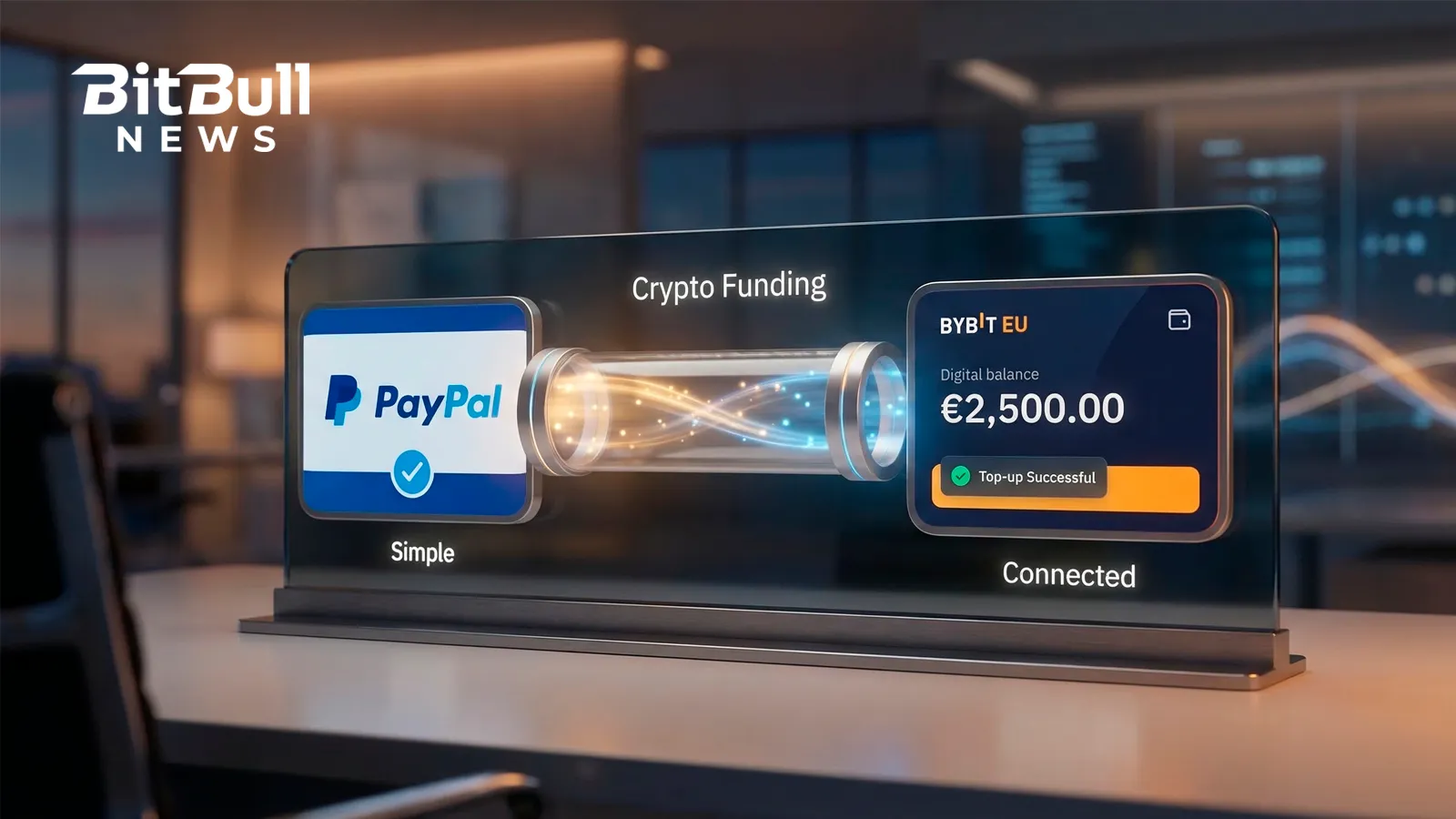
Bybit EU has added PayPal as a new funding option for users, making it easier to move fiat into crypto accounts. The company is pitching the update as a simpler and more familiar on-ramp for European customers who want to fund trades without relying only on cards or bank transfers.
The move matters because exchange competition in Europe is increasingly about convenience, not just listing breadth or fees. Adding a mainstream payment option like PayPal lowers friction at the exact point where many retail users still hesitate: getting money onto the platform.
What Bybit EU is adding
Bybit EU says users can now use PayPal to fund their accounts, expanding the platform’s fiat funding choices. The company frames the integration around speed, convenience, and a more familiar payment experience for users who already trust PayPal in everyday online transactions.
In simple terms, Bybit EU is trying to make the first step into crypto feel less like a crypto-specific process and more like a normal online payment flow. This is an inference based on the company’s emphasis on simplicity and familiar funding rails.
Why this matters for European users
For many users, funding an exchange account is still one of the least attractive parts of the crypto experience. Bank transfers can be slow, cards can fail, and regional payment options vary. Bybit EU is using PayPal to reduce that friction and make deposits feel more immediate and accessible.
That is especially relevant in Europe, where regulated exchanges are competing for users who want easier access to crypto but may not want to deal with extra funding complexity. This is an inference based on the product focus and market context described in the release.
The bigger strategy behind the move
This is not just a payments update. It fits a broader pattern across the industry: exchanges are increasingly partnering with major payment brands to make crypto onboarding look more like standard fintech onboarding. Bybit EU appears to be leaning into that same playbook. This is an inference based on the release’s focus on user-friendly funding and mainstream payment integration.
The message is clear: if users already trust PayPal, they may be more comfortable funding a crypto account through that route than through less familiar methods.
Why it matters for crypto
- Adding PayPal gives Bybit EU a more mainstream funding rail, which can help reduce onboarding friction for retail users.
- The integration shows how crypto exchanges are continuing to borrow from fintech’s user-experience playbook. This is an inference supported by the release’s convenience-focused framing.
- Easier fiat funding usually helps exchanges compete for first-time and casual users, not just active traders. This is an inference based on the purpose of the integration.
What to watch next
- Whether Bybit EU expands PayPal funding to more account types, regions, or product flows over time. This is an inference based on the strategic value of the integration.
- If other large exchanges in Europe respond with similar mainstream payment partnerships. This is an inference based on competitive market trends.
- Whether Bybit EU shares any user-adoption data showing how much PayPal improves conversion from fiat to funded crypto accounts. The release does not provide those metrics yet.